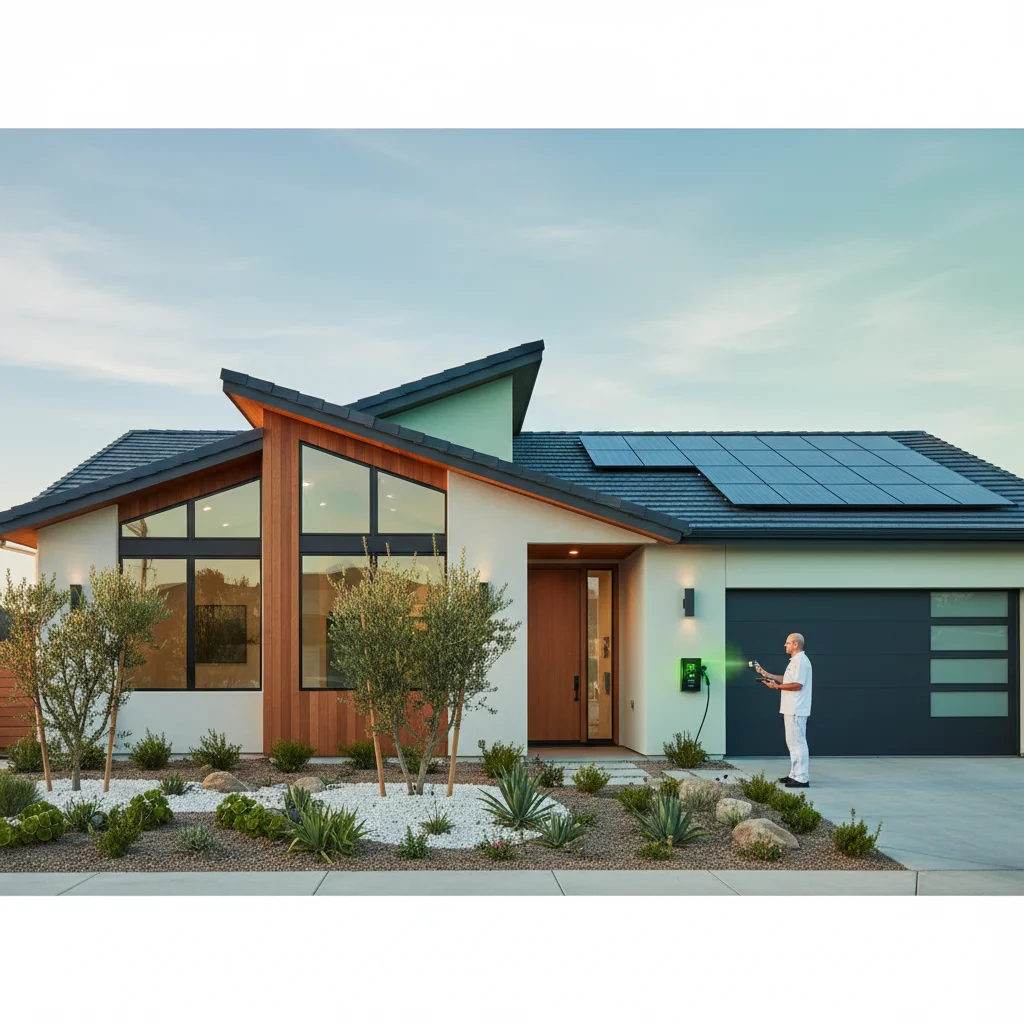
Central Valley homeowners paid $350 to $650 for professional home energy audits in early 2026, but 73% qualified for free assessments through utility programs or federal rebates that fully offset the expense. And the difference between paying out-of-pocket and getting a no-cost audit often came down to a single eligibility checkbox on a utility application.
How Much Does a Home Energy Audit Cost in California's Central Valley?
Professional home energy audits in California's Central Valley cost $350 to $650 for comprehensive assessments in 2026, with pricing varying by home size and audit depth. Basic walk-through evaluations start at $200, while advanced diagnostics with blower door tests and thermal imaging reach $800 for homes exceeding 3,000 square feet.
But certified BPI (Building Performance Institute) audits through utility programs cost $0 for income-qualified homeowners or $100 to $200 for standard-rate customers. Pacific Gas & Electric (PG&E) covers audit costs up to $500 for Energy Savings Assistance Program participants, while Southern California Edison provides free audits to customers meeting CARE (California Alternate Rates for Energy) income limits of 200% federal poverty level.
And Sacramento Municipal Utility District (SMUD) offers $150 rebates for third-party audits, reducing typical $500 costs to $350 for customers who complete recommended upgrades within 90 days. So the effective cost for most Central Valley residents drops to $100 to $350 after rebates, or $0 for low-income households.
The stakes matter because a $400 audit typically identifies $1,200 to $3,800 in annual energy waste across HVAC inefficiencies, air leaks, and insulation gaps. So upfront audit costs pay back in 3 to 8 months through immediate savings on cooling bills averaging $312 per month in Fresno and Stockton during summer peaks.
Use our free rebate calculator to estimate your audit costs after available utility credits.
What Funding and Rebates Are Available to Offset Your Audit Costs?
Form 5695 only covers qualifying work completed by December 31, 2025 and claimed on a 2025 return; the federal 25C and 25D credits ended after that date (IRS FS-2025-05). Federal tax credits for this work have ended, but state, local and utility rebates may still apply; check what is available at your address with the DuloCore rebate calculator. The federal Energy Efficient Home Improvement Credit (Section 25C) ended for property placed in service after December 31, 2025 (IRS FS-2025-05).
California utility programs provide deeper discounts through 2026 allocations totaling $47 million statewide. PG&E's Energy Advisor program covers 100% of audit costs for CARE customers, while non-CARE residential customers pay $0 for online assessments or $200 for in-home audits that normally cost $600. And SMUD's Home Performance Program reimburses $150 for certified audits when customers install recommended upgrades worth $1,000 or more.
"The Home Energy Rebate Programs provide up to $14,000 in rebates for energy efficiency projects, including up to $500 for home energy audits when bundled with qualifying improvements." — DOE Home Energy Rebates
So combining federal tax credits with utility rebates reduces typical $500 audit costs to $200 or less for most Central Valley households. And income-qualified residents pay $0 out-of-pocket when stacking programs correctly. Learn more about available energy tax credits for comprehensive home upgrades.
Can You Stack Multiple Rebate Programs and Tax Credits?
Central Valley homeowners stack federal IRA tax credits with state utility rebates and local incentives to eliminate audit costs entirely in 2026. The $150 federal audit credit combines with PG&E's $500 CARE program coverage, creating $650 total value for qualifying households that pay $0 upfront for a comprehensive assessment.
But stacking rules prohibit claiming the same expense twice—homeowners can't apply the federal credit to audit costs already covered by utility rebates. So the optimal strategy splits costs: utility rebates cover the full $500 audit fee, while the federal credit offsets other energy assessment expenses like additional thermal imaging ($100) or duct leakage testing ($150) not included in basic utility audits.
And California's TECH Clean California program adds $250 rebates for heat pump installations identified through energy audits, creating a combined value proposition exceeding $900 when bundled with heat pump rebates ranging from $3,000 to $8,000. So the audit serves as the gateway to unlocking $11,000+ in total incentives.
| Program | Audit Rebate | Income Limit | Eligible Households | Documentation |
|---|---|---|---|---|
| Federal IRA Credit | Ended Dec 31, 2025 | — | — | — |
| PG&E CARE | $500 (100% coverage) | 200% FPL ($60,000 family of 4) | 1.2M California customers | Utility bill, income proof |
| SMUD Home Performance | $150 rebate | None | Sacramento County | Audit report, upgrade receipts |
What Documentation Do You Need Before Getting an Energy Audit?
Homeowners need 12 months of utility bills, property tax records showing home age and square footage, and HVAC service history to maximize audit accuracy and rebate eligibility. And utility companies require account numbers and service addresses matching property ownership documents to process pre-audit rebate applications.
But income-qualified programs demand additional proof: CARE applications require recent pay stubs, tax returns, or benefit award letters documenting household income below 200% federal poverty level ($60,000 for a family of four in 2026). PG&E processes CARE enrollment within 5 business days when homeowners submit complete documentation through online portals.
Equipment documentation matters too—serial numbers and installation dates for furnaces, air conditioners, water heaters, and insulation help auditors calculate baseline energy use and identify systems exceeding 15-year replacement thresholds. So gathering manufacturer labels and contractor invoices before the audit saves time and prevents follow-up visits that delay rebate processing by 2 to 4 weeks.
And homes built before 1990 benefit from asbestos and lead paint inspection reports, which some auditors require before recommending insulation upgrades or HVAC ductwork modifications in Central Valley properties with original construction materials.
Do You Need Pre-Approval Before Scheduling Your Home Energy Audit?
Most Central Valley utility programs require pre-approval applications submitted 7 to 14 days before scheduling energy audits to confirm rebate eligibility and lock in current incentive amounts. PG&E's Energy Advisor program processes pre-qualification within 3 business days, issuing approval codes homeowners provide to certified auditors at appointment booking.
The federal Energy Efficient Home Improvement Credit (Section 25C) ended for property placed in service after December 31, 2025 (IRS FS-2025-05). So the IRA framework eliminates upfront paperwork barriers that delay state and utility programs.
SMUD's $150 audit rebate demands pre-enrollment through online customer accounts, with homeowners selecting participating contractors from approved vendor lists containing 37 certified providers across Sacramento County. And pre-approval locks in rebate amounts for 90 days, protecting against mid-year program changes that reduced TECH Clean California heat pump rebates from $3,000 to $2,400 in March 2026.
"Homeowners should apply for rebates before starting projects to ensure program funds remain available and eligibility requirements are met under current guidelines." — DSIRE USA
So submitting pre-approval applications 2 weeks ahead prevents scheduling audits only to discover depleted program budgets or changed income limits. And early applications secure priority booking during peak summer months when wait times reach 4 to 6 weeks.
What Are the Typical Deadlines for Energy Audit Rebates and Incentives?
The federal Energy Efficient Home Improvement Credit (Section 25C) ended for property placed in service after December 31, 2025 (IRS FS-2025-05). Homeowners claim the $150 credit when filing taxes for the year the audit occurred, so a March 2026 assessment appears on April 2027 tax returns.
But California utility programs operate on fiscal year budgets with rolling deadlines and funding depletions. PG&E's 2026 Energy Savings Assistance Program allocated $284 million statewide, with Central Valley counties receiving $41 million that typically exhausts by October based on 2025 spending patterns. And SMUD's Home Performance budget of $8.2 million historically runs out in August, suspending new audit rebates until the following January.
State programs impose completion deadlines too—TECH Clean California requires audits and subsequent heat pump installations finish within 180 days of initial rebate approval, or homeowners forfeit reserved funds. So a June audit approval demands equipment installation by December 2026 to receive the $2,400 heat pump rebate.
Local rebates add complexity: Modesto Irrigation District's $100 audit incentive expires June 30, 2026, while Turlock Irrigation District extended its program through December 2027. So deadline awareness prevents missed opportunities worth $200 to $650 in combined local and utility incentives.
Official Sources
- DOE Home Energy Rebates — Federal rebate program details and state-by-state implementation timelines for IRA incentives
- DSIRE USA California Programs — Comprehensive database of state, utility, and federal energy efficiency incentives with current eligibility rules
- Energy Star Home Upgrade — Federal guidance on energy audits and qualified improvement recommendations
Related Reading: Learn more about Energy Audit Home Value Impact and Energy Audit Hot Humid Climate.
Related Reading: Learn more about Energy Audit Company Comparison Guide and Energy Audit Condo Apartment.
Frequently Asked Questions
How much does a home energy audit cost in the Central Valley?
Professional home energy audits cost $350 to $650 in California's Central Valley for comprehensive assessments in 2026. Basic evaluations start at $200, while advanced diagnostics with blower door tests reach $800 for large homes. But utility rebates and federal tax credits reduce effective costs to $100 to $350, or $0 for income-qualified households through PG&E's CARE program.
What qualifies for a free energy audit in California?
California homeowners qualify for free energy audits through utility CARE programs when household income stays below 200% federal poverty level—$60,000 annually for a family of four in 2026. PG&E and Southern California Edison provide $0-cost comprehensive assessments to CARE customers, covering $500 to $600 in typical audit expenses. And some utilities offer free online audits to all residential customers regardless of income.
How long does a home energy audit take?
Comprehensive home energy audits take 2 to 4 hours for typical Central Valley residences between 1,500 and 2,500 square feet. Auditors spend 45 to 90 minutes on visual inspections, 30 to 60 minutes on blower door testing, and 20 to 40 minutes on thermal imaging. Large homes exceeding 3,500 square feet extend audit duration to 5 hours. Homeowners receive detailed reports within 5 to 10 business days.
Can I get rebates for an energy audit in the Central Valley?
Central Valley residents receive $150 federal tax credits, $150 to $500 utility rebates, and up to $250 state incentives for energy audits completed in 2026. PG&E provides $500 rebates to CARE customers and $300 to standard-rate households. SMUD offers $150 for audits paired with qualifying upgrades. The federal Energy Efficient Home Improvement Credit (Section 25C) ended for property placed in service after December 31, 2025 (IRS FS-2025-05).
Are home energy audits worth the cost?
Home energy audits identify $1,200 to $3,800 in annual energy waste, paying back typical $400 costs within 3 to 8 months through utility bill reductions. Central Valley homes average $312 monthly cooling costs during summer peaks, with audits revealing 15% to 35% savings potential through air sealing and insulation upgrades. And audits unlock access to $11,000+ in combined rebates for recommended improvements, multiplying initial investment value by 25x to 30x.
Ready to find your savings? Use our rebate calculator to see exactly how much you'll save on your home energy audit and qualifying upgrades in the Central Valley. Get your personalized estimate in under 60 seconds.
Updated on April 14, 2026. Fact-checked by DuloCore Editors. About our research team.