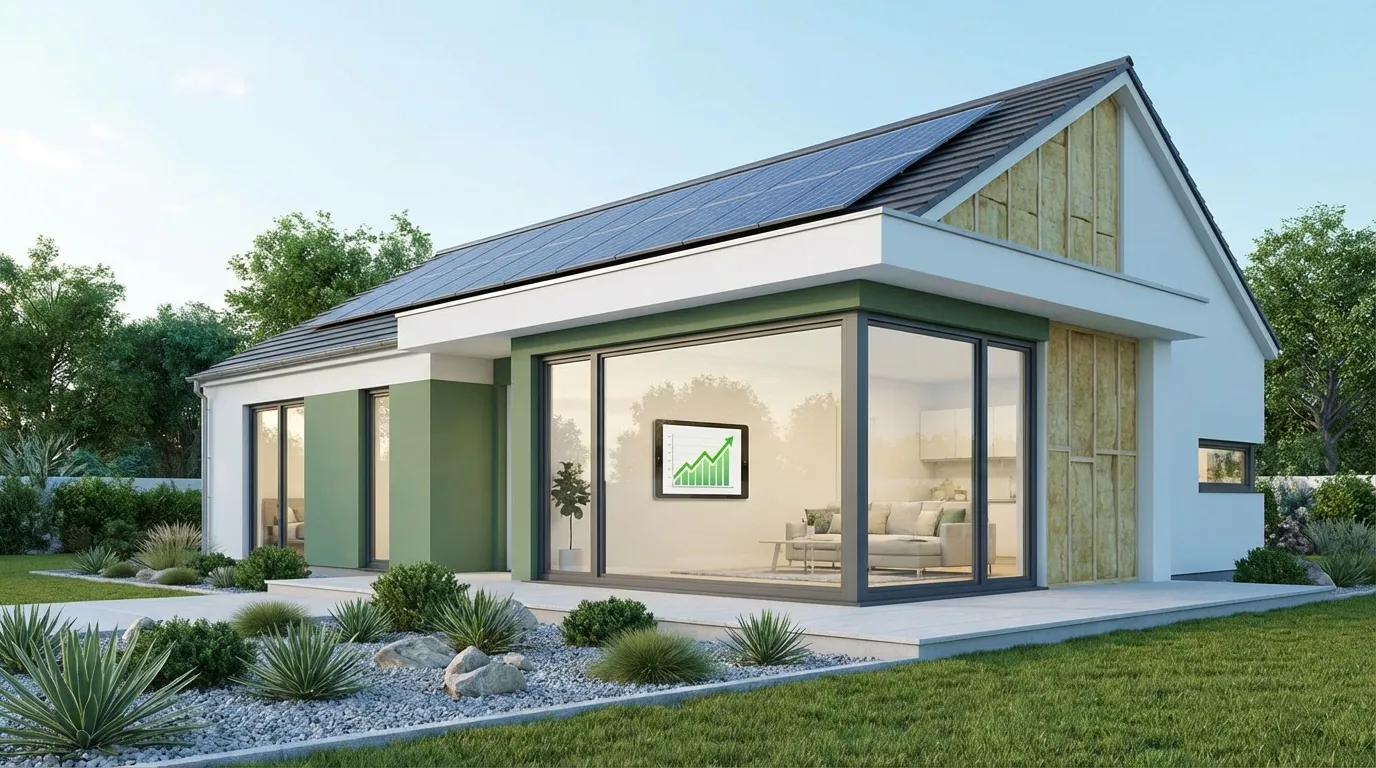
Up to 75% of a home's energy loss occurs through its attic, walls, and windows. So with residential electricity prices jumping 13% in the last two years, sealing your home’s thermal envelope isn't just about comfort—it's a direct financial countermeasure. And new government programs are designed to pay you for taking action now, before the next utility bill arrives.
How Much Can I Save by Combining Insulation and Window Rebates in My State?
Combined insulation and window replacement rebates are state-administered financial incentives offering homeowners up to $2,800 or more in 2026, depending on location, income level, and specific project scope.
The total savings comes from stacking multiple programs. The federal Energy Efficient Home Improvement Credit (Section 25C) ended for property placed in service after December 31, 2025 (IRS FS-2025-05). Federal tax credits for this work have ended, but state, local and utility rebates may still apply; check what is available at your address with the DuloCore rebate calculator. But state and local utility programs often add thousands more to that total. For example, some states provide an additional $1,600 for insulation and air sealing. And when you add new ENERGY STAR certified windows, you tap into another layer of incentives. The exact amount depends entirely on your zip code and utility provider, as funds are allocated locally. A homeowner in a high-cost state like Massachusetts often sees a combined rebate total exceeding $2,800, while a resident in a state with fewer local programs will receive a smaller amount. So using a rebate calculator is the only way to get an accurate estimate for your specific address.
Am I Eligible? Understanding Income Limits, Qualified Equipment, and Location-Specific Rules
Eligibility for combined weatherization rebates is determined by income, property type, and equipment standards, with many programs in 2026 requiring homeowners to be at or below 80% of their Area Median Income (AMI) for maximum benefits.
Your eligibility hinges on three main factors. First is income, with programs like the Home Efficiency Rebates (HOMES) offering double the rebate amount for households earning less than 80% of the Area Median Income. Second, the equipment must meet strict criteria. So windows must be ENERGY STAR certified for your specific climate zone, and insulation must meet minimum R-value requirements. And third, the property must be your primary residence; vacation homes and rental properties typically don't qualify for these specific programs. But some programs have different rules for multi-family homes.
So checking program-specific guidelines on state energy office websites before purchasing materials or hiring a contractor is a critical step. Our guide to insulation rebates breaks down these requirements further.
What is the Application Process, Deadlines, and Required Contractor Qualifications?
The application process for combined rebates involves pre-approval, installation by a qualified contractor, and submission of invoices by program-specific deadlines, which often fall at the end of the calendar or fiscal year.
Navigating the application process requires careful planning. So you must first confirm your eligibility and get pre-approval from the rebate administrator, which is often your state's energy office or a third-party organization. And then, you must hire a contractor who is licensed, insured, and often certified by the program itself. They will perform the installation according to program standards. After the work is complete, you'll submit a detailed application package. This includes paid invoices, equipment specification sheets proving ENERGY STAR compliance, and sometimes photos of the completed work. But be aware of deadlines. Most programs operate on a "first-come, first-served" basis until funds are depleted, with firm submission deadlines at the end of the year. The process is similar for other upgrades, like heat pump rebates.
How Do Stacking Rules and Current Funding Status Impact My Combined Rebate Amount?
Stacking rules dictate which federal, state, and utility rebates are combinable, while funding status, which is updated quarterly for many programs, determines the availability of the total $8.8 billion allocated for home energy rebates.
Stacking rules determine your final rebate amount. For example, the 30% federal credit (this federal credit ended for property placed in service after December 31, 2025) up to $1,200 for weatherization is combinable with a $1,600 state insulation rebate. But you often can't combine a state rebate with a utility rebate for the same project. The program with the higher payout is the one to choose. And funding status is the other critical variable. These programs have finite budgets.
"Many states offer incentives for renewable energy and energy efficiency. The amount and type of incentive varies from state to state." — DSIRE (See also: insulation rebates for veterans.) (See also: insulation rebates 2026.) (See also: whole home insulation upgrade rebates.) (See also: geothermal tax credit.)
Once the allocated money runs out for the year, no more applications are accepted until the next funding cycle. So applying early in the calendar year gives you the best chance of securing your full rebate amount before the funds are exhausted.
Rebate Program Comparison
| Program Name | Max Incentive (Combined) | Key Eligibility Requirement | Typical Deadline |
|---|---|---|---|
| Federal 25C (now expired, replaced by the Energy Efficient Home Improvement Credit) Tax Credit | $1,200/year (weatherization) | Primary Residence, ENERGY STAR | December 31 |
| State Weatherization | $1,600 - $4,000+ | Varies by State (often income-based) | Varies (often Q4) |
| Utility Rebate | $200 - $1,000 | Must be a customer of the utility | Varies (often rolling) |
Frequently Asked Questions
Can I combine rebates for both insulation and window replacement projects?
Yes, homeowners can combine rebates for insulation and window replacement. Federal energy tax credits allow for a combined annual limit for weatherization projects, and many state and utility programs are designed to be stacked for a whole-home energy efficiency upgrade.
What are the eligibility requirements for receiving combined insulation and window rebates?
Eligibility typically requires that the property is your primary residence, the products (insulation R-value, window U-factor) meet specific ENERGY STAR or program standards, and your household income may need to fall below a certain threshold, often 80% or 150% of the Area Median Income, for maximum rebate amounts.
How much can I save by applying for insulation and window replacement rebates together?
By combining federal, state, and utility incentives, homeowners can save from $1,200 to over $4,000. The federal tax credit provides up to $1,200, while state programs can add another $1,600 or more for the combined projects.
What is the application process for simultaneous insulation and window replacement rebates?
The process involves getting pre-approval, using a program-qualified contractor for installation, and submitting a single application with itemized invoices and product specification sheets for both the insulation and windows to the rebate administrator before the deadline.
Are there specific deadlines to apply for combined insulation and window upgrade rebates?
Yes, deadlines are critical. But state and utility programs have specific application deadlines, often at the end of the calendar year or when program funds are exhausted, whichever comes first.
Ready to Save on Your Home Improvement?
Use our free rebate calculator to find every federal, state, and utility incentive you qualify for.
Last updated: April 14, 2026. Reviewed by the DuloCore Editorial Team. About our authors.
Check your California insulation rebate eligibility — see the programs you qualify for and the dollar amounts on our California insulation rebate finder.