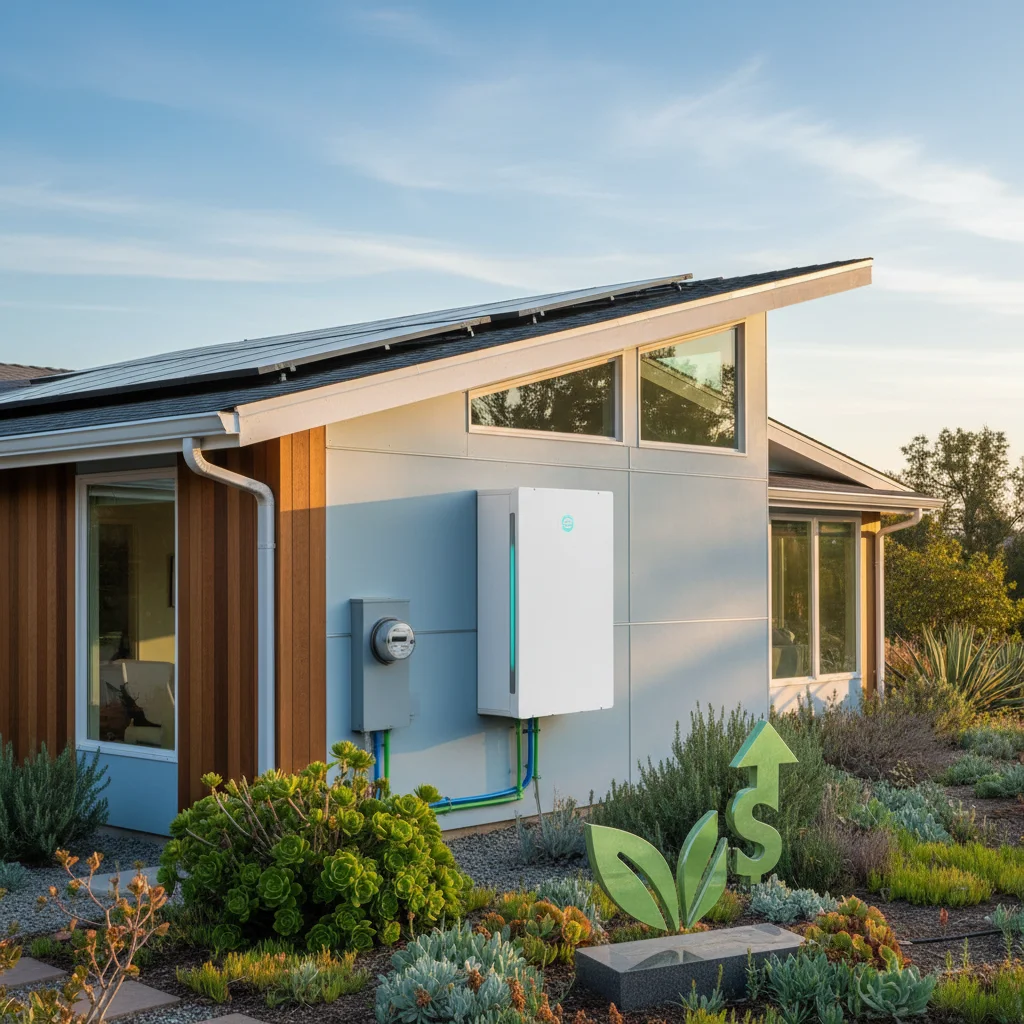
California homeowners spent $847 million on mini split heat pump installations in 2025, and in 2026, rebate programs cover $3,000 to $14,000 per system. The state's new Tech Clean California program launched March 2026 with the largest-ever incentive structure for ductless heat pumps, stacking with federal IRA credits that return 30% of installation costs through 2032.
So why the sudden expansion? California's building decarbonization mandate requires all new residential HVAC sales to be electric starting January 2030. And the state allocated $603 million in federal HEEHRA funds specifically for heat pump conversions in 2026-2028, creating the richest incentive environment in state history.
How Much Do Mini Split Heat Pumps Cost in California?
Installation costs for mini split heat pumps in California average $5,400 to $18,500 depending on system capacity and number of zones. Single-zone 12,000 BTU systems start at $5,400 installed, while four-zone 36,000 BTU configurations with professional design reach $18,500 before rebates.
Equipment makes up 40-45% of total project cost. Labor runs $85-$145 per hour across California markets, with Bay Area contractors charging the highest rates. Electrical upgrades add $800-$2,300 when service panels require expansion for new heat pump circuits. But coastal climate zones see faster payback than inland regions due to milder heating loads that reduce runtime hours by 35%.
Popular brands like Mitsubishi, Daikin, and Fujitsu dominate California installations. Their cold-climate models maintain full heating capacity down to 5°F outdoor temperature, critical for Sierra foothill and mountain communities. And ENERGY STAR certified models qualify for every available rebate program, while non-certified units receive zero state incentives as of January 2026.
Which California Rebate Programs Cover Mini Split Systems?
Tech Clean California launched March 2026 as the state's flagship heat pump incentive, offering $3,000 for qualified mini split installations replacing fossil fuel systems. The program serves all income levels but increases to $7,000 for households earning below 80% Area Median Income. Applications open on a rolling basis through December 2028 with funds awarded first-come, first-served.
Bay Area Air Quality Management District adds $4,000 for natural gas furnace replacements in its nine-county jurisdiction. So homeowners in San Francisco, Oakland, and San Jose stack Tech Clean California's $3,000 with BAAQMD's $4,000 for total state/regional rebates of $7,000. But BAAQMD requires complete gas appliance removal—keeping a gas stove disqualifies the entire heat pump rebate.
Municipal utility programs layer additional incentives. Silicon Valley Power offers $1,500 per ton of cooling capacity, reaching $6,000 for a four-ton system. Sacramento Municipal Utility District provides $3,500 for ducted heat pumps but only $2,000 for mini splits, creating a $1,500 advantage for central systems in SMUD territory. And Pasadena Water and Power's $3,000 incentive explicitly covers ductless configurations with no capacity restrictions.
"The Tech Clean California initiative represents the largest state investment in residential electrification, with $603 million allocated specifically for heat pump conversions through 2028." — California Energy Commission
Southern California Edison serves 5 million customers across central and Southern California. Their 2026 heat pump rebate pays $500-$1,000 depending on system efficiency, far below northern utility incentives. Pacific Gas & Electric discontinued direct heat pump rebates in 2025 but offers $75 bill credits for ENERGY STAR installations through its Marketplace platform.
What Federal Tax Credits Apply to Mini Split Heat Pumps?
The federal Energy Efficient Home Improvement Credit (Section 25C) ended for property placed in service after December 31, 2025 (IRS FS-2025-05). Federal tax credits for this work have ended, but state, local and utility rebates may still apply; check what is available at your address with the DuloCore rebate calculator. Mini split systems qualify when they meet ENERGY STAR Most Efficient criteria and serve primary heating purposes. And the credit covers equipment, labor, and required electrical upgrades in a single tax year.
Form 5695 only covers qualifying work completed by December 31, 2025 and claimed on a 2025 return; the federal 25C and 25D credits ended after that date (IRS FS-2025-05). The $2,000 cap applies to all home efficiency improvements combined—heat pumps, insulation, windows, and doors share the limit. The federal Energy Efficient Home Improvement Credit (Section 25C) ended for property placed in service after December 31, 2025 (IRS FS-2025-05).
The federal Residential Clean Energy Credit (Section 25D) ended for expenditures made after December 31, 2025, and the IRS treats an expenditure as made when installation is completed (IRS FS-2025-05). Pairing a mini split with rooftop solar triggers both credits—$2,000 for the heat pump plus 30% of solar costs uncapped. This combination drives California's 67% heat pump adoption rate among new solar customers.
Low and moderate-income households access superior benefits through HEEHRA (High-Efficiency Electric Home Rebate Act) point-of-sale rebates. California received $482 million in HEEHRA funding, offering up to $8,000 for heat pump installations to households earning below 150% AMI. These rebates apply at purchase, reducing upfront costs immediately rather than waiting for tax season refunds.
Which Mini Split Brands Qualify for the Highest Rebates?
ENERGY STAR Most Efficient certification determines rebate eligibility across all California programs. Mitsubishi's Hyper-Heating H2i series, Daikin's Aurora line, and Fujitsu's Halcyon models all carry this designation and qualify for maximum incentives. Standard ENERGY STAR certification became insufficient for Tech Clean California rebates as of March 2026—systems must reach the Most Efficient tier.
Coefficient of Performance (COP) ratings separate qualifying models. Most Efficient heat pumps deliver COP ≥2.0 at 5°F outdoor temperature, meaning they produce 2 units of heat per unit of electricity consumed. Budget brands claiming ENERGY STAR status often achieve only COP 1.4-1.6 in cold conditions, failing Tech Clean California's performance threshold.
And warranty terms affect long-term value beyond initial rebates. Mitsubishi offers 12-year compressor warranties on Hyper-Heating models versus 5-6 years from economy brands. Contractor networks matter too—Daikin's 1,200 California dealers provide faster service response than boutique brands with 50-100 installers statewide.
Inverter-driven compressors appear in all qualifying mini splits. This technology modulates speed continuously rather than cycling on/off like traditional systems, reducing electricity consumption by 30-40% compared to fixed-speed heat pumps. But inverter systems cost $1,200-$2,000 more upfront, paid back through rebates and lower utility bills within 3-4 years in California's high electricity rate environment of $0.32-$0.51 per kWh.
How Much Energy Can a Mini Split Save Compared to Central HVAC?
Mini split heat pumps consume 25-40% less energy than ducted central systems due to elimination of duct losses. California building stock averages 25% energy waste through ductwork in attics and crawlspaces where temperatures reach 140°F in summer. Ductless systems deliver conditioned air directly to occupied zones, capturing that lost efficiency.
Zone control creates additional savings by heating/cooling only occupied rooms. A four-zone mini split system serving a 2,000 sq ft home can shut off three zones during daytime when the family occupies one area, reducing runtime by 60% compared to whole-house central air. And California's Title 24 energy code awards compliance credits for zoned ductless systems, potentially avoiding costly building envelope upgrades in remodels.
Seasonal Energy Efficiency Ratio (SEER2) ratings quantify cooling performance. Top mini splits reach SEER2 33, meaning they produce 33 BTUs of cooling per watt-hour of electricity. Compare this to California's minimum SEER2 15 for new central AC—the 33 SEER2 system uses 55% less electricity per BTU delivered.
But heating efficiency matters more in California's mild climate where cooling represents only 15% of annual HVAC energy use. Heating Seasonal Performance Factor (HSPF2) measures this, and the best mini splits achieve HSPF2 13.5 versus 8.0 for code-minimum central heat pumps. This 69% efficiency advantage translates to $340-$890 annual savings on heating bills depending on climate zone and home size.
| System Type | SEER2 | HSPF2 | Annual Energy Cost | Duct Loss |
|---|---|---|---|---|
| Mini Split Heat Pump (Most Efficient) | 30-33 | 12.5-13.5 | $580-$920 | 0% |
| Central Heat Pump (ENERGY STAR) | 16-18 | 9.0-10.0 | $890-$1,340 | 25% |
| Gas Furnace + Central AC | 15 | N/A | $1,240-$1,680 | 25% |
What Are the Installation Requirements for Rebate Eligibility?
California contractor licensing requires HVAC installations by C20 Warm-Air Heating, Ventilating and Air-Conditioning or C10 Electrical contractors depending on scope. Mini split projects under $500 need no license, but all rebate programs mandate licensed contractor completion. And Tech Clean California specifically requires C20 or C10 license numbers on rebate applications, rejecting handyman or homeowner installations.
Building permits ensure code compliance and maintain rebate eligibility. Local jurisdictions require mechanical permits for all new HVAC equipment plus electrical permits when service panel modifications occur. Inspection failures delay rebate processing—programs won't release funds until permit finalization. But permit costs of $120-$380 represent less than 3% of total project expense.
Pre-installation inspections document baseline conditions for some programs. BAAQMD requires photographic proof of gas furnace removal before approving heat pump rebates. And HEEHRA income-qualified rebates mandate whole-home energy assessments by certified auditors, adding $300-$500 to project timelines though this cost is rebatable.
Contractor certification varies by program. Tech Clean California accepts all licensed C20 contractors with no additional training. BayREN's Home+ program requires contractors complete 8-hour heat pump design coursework. So contractor selection affects which rebates stack—not all installers qualify for all programs.
Electrical service adequacy determines installation feasibility. Mini splits draw 15-30 amps depending on capacity, and homes with 100-amp service panels often require upgrades to accommodate new circuits. Panel replacement costs $1,800-$3,200 but qualifies for the federal 30% tax credit. And California's 2026 reach codes in 15 cities now mandate 200-amp minimum service in major remodels, forcing electrical upgrades that benefit heat pump installations.
Load calculation software like Manual J determines proper sizing. Oversized systems short-cycle, reducing efficiency and comfort while voiding manufacturer warranties. Undersized units run continuously without reaching set temperatures. Tech Clean California's 2026 rules require contractors submit Manual J reports with rebate applications, rejecting rule-of-thumb sizing that dominated pre-2026 installations.
Official Sources
- Tech Clean California Program — State heat pump rebate details, eligibility, and application portal
- IRS Energy Efficient Home Improvement Credit — Federal tax credit guidance for heat pumps and home efficiency upgrades (note: the federal 25C and 25D credits ended for projects completed after December 31, 2025)
- ENERGY STAR Heat Pump Tax Credits — Certification requirements and qualified product lists for federal incentives
Use our free rebate calculator to estimate your total incentives across federal, state, and local programs. The tool accounts for income qualifications, geographic location, and system specifications to show your exact rebate stack.
Related Reading: Learn more about Home Energy Audit California Programs and Pool Pump Energy Audit Savings.
Frequently Asked Questions
How much can I save with mini split heat pump rebates california 2026?
California homeowners save $5,000 to $16,000 on mini split installations through combined 2026 programs. Tech Clean California provides $3,000-$7,000, municipal utilities add $1,500-$6,000, air quality districts contribute up to $4,000, and federal IRA tax credits return 30% of costs up to $2,000. Low-income households access additional $8,000 HEEHRA rebates, reaching $16,000 total on qualifying projects. Actual savings depend on household income, location, and existing heating system type.
What are the eligibility requirements for mini split heat pump rebates california 2026?
Eligible installations require ENERGY STAR Most Efficient certified equipment installed by licensed C20 or C10 contractors with completed building permits. The system must replace fossil fuel heating or serve as primary heat source in new construction. Tech Clean California mandates Manual J load calculations and restricts rebates to owner-occupied primary residences. Income documentation applies for enhanced rebates—households submit tax returns proving income below 80% or 150% Area Median Income thresholds. And BAAQMD requires complete natural gas system removal in the nine-county Bay Area.
Can I combine mini split heat pump rebates california 2026 with other incentives?
Yes, California programs explicitly allow stacking federal tax credits with state rebates and local utility incentives. Homeowners routinely combine Tech Clean California's $3,000, BAAQMD's $4,000, municipal utility rebates of $1,500-$6,000, and the federal 30% tax credit up to $2,000 on single installations. HEEHRA low-income rebates of $8,000 replace rather than stack with Tech Clean California, creating two parallel tracks—standard rebates or income-qualified rebates plus federal credits. Calculate your specific combination using our rebate calculator for accurate projections.
Do mini split heat pumps work in California's hot inland valleys?
Mini split systems maintain full cooling capacity in 110°F+ conditions common to Central Valley, Inland Empire, and desert communities. Top models like Mitsubishi's M-Series deliver rated BTU output at 115°F outdoor temperature, unlike central AC units that lose 15-20% capacity above 105°F. And multi-zone configurations allow bedroom-only cooling at night while shutting off living areas, reducing electricity costs by 40% compared to whole-house central systems. California Title 24 specifically recognizes mini splits for code compliance in Climate Zones 12-16 covering Fresno, Bakersfield, and Palm Springs.
How long does rebate processing take for mini split installations?
Tech Clean California processes rebates within 45-60 days of complete application submission including contractor invoices, permit finalization, and equipment documentation. Municipal utility programs average 30-45 days for payment. BAAQMD's natural gas replacement rebates require 60-90 days due to mandatory field verification of appliance removal. Federal tax credits provide refunds or reduce tax liability when filing returns, taking 21-30 days for e-filed returns. And HEEHRA point-of-sale rebates apply immediately at purchase through approved contractors participating in the state's rebate aggregator platform launching June 2026.
Ready to calculate your exact savings? Use our rebate calculator to see how much you'll save with 2026's heat pump programs. Enter your zip code, income level, and current heating system to get personalized rebate amounts from federal, state, and local programs that stack on your project.
Check your California heat pump rebate eligibility — see the programs you qualify for and the dollar amounts on our California heat pump rebate finder.