An oversized air conditioner cycles on and off 4-6 times per hour instead of the optimal 2-3 cycles, wasting $200-$400 annually in energy costs while failing to dehumidify the home properly. And undersized systems run continuously during peak demand, driving up bills by 30-50% while never reaching the target temperature. The difference between correct and incorrect HVAC sizing determines whether a $15,000 installation delivers comfort and efficiency or becomes a decade-long financial drain.
Why Does HVAC System Sizing Matter for Efficiency and Rebates?
Proper HVAC sizing determines whether homeowners qualify for $2,000-$14,000 in federal tax credits and state rebates available through 2032 under the Inflation Reduction Act. Systems sized using Manual J calculations operate at peak SEER2 ratings, while oversized or undersized equipment loses 15-30% efficiency regardless of the unit's rated performance. And utility rebate programs in California require Manual J documentation for all heat pump installations to prevent the efficiency losses that plagued earlier rebate programs when contractors used square footage estimates alone.
"Manual J load calculations ensure HVAC systems are neither oversized nor undersized, maximizing energy efficiency and occupant comfort." — U.S. Department of Energy
What Is a Manual J Load Calculation?
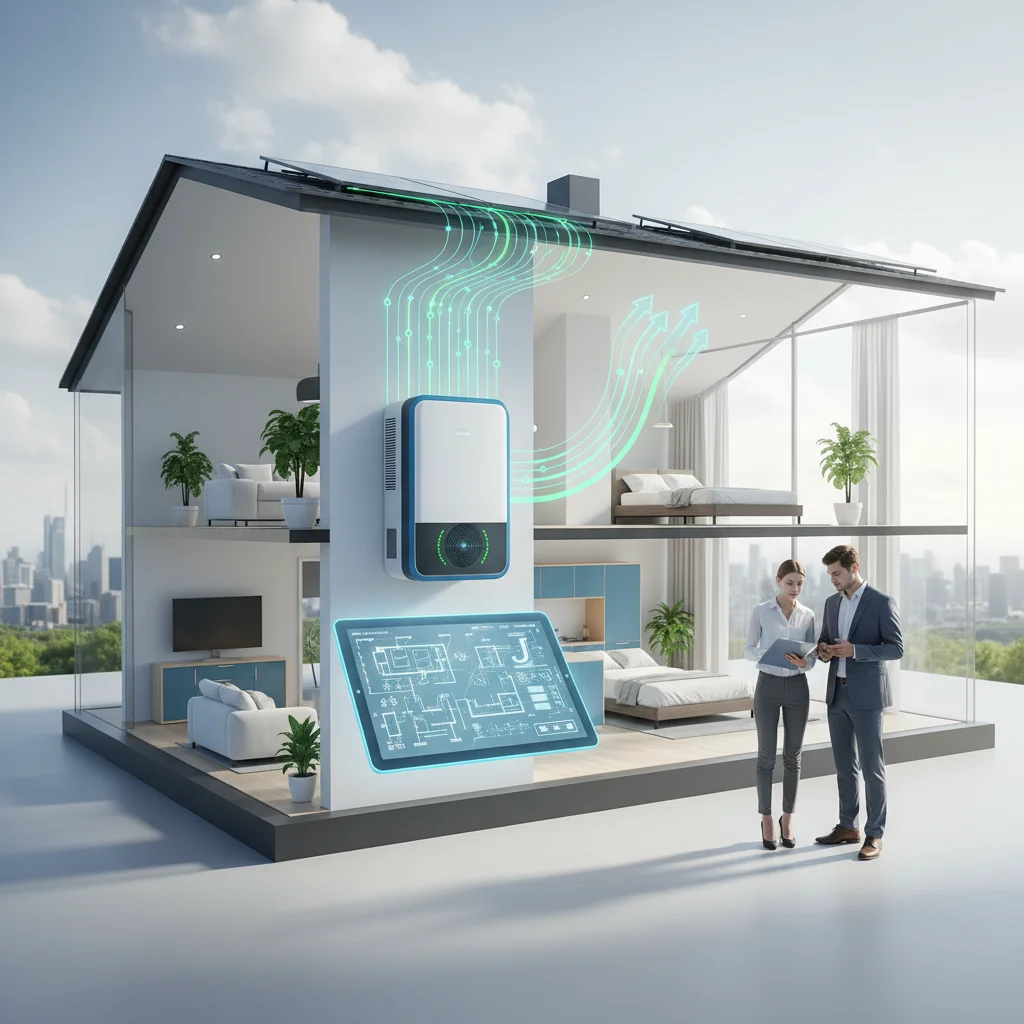
A Manual J load calculation is the ACCA-standardized method for determining the exact heating and cooling capacity a home requires, measured in BTUs per hour. The calculation analyzes 17 variables including wall and ceiling R-values, window U-factors and solar heat gain coefficients, air infiltration rates, occupant density, and appliance heat generation. Professional HVAC contractors use ACCA-approved software that processes these inputs against climate data for the specific location, generating room-by-room load requirements. So a 2,000-square-foot home in Sacramento might require a 36,000 BTU/hr cooling system, while an identical floor plan in San Diego needs only 28,000 BTU/hr due to milder peak temperatures and ocean breezes.
Which Factors Determine the Right HVAC System Size?
Climate zone determines baseline heating and cooling loads, with California's 16 climate zones ranging from coastal Zone 3 (minimal cooling, moderate heating) to desert Zone 15 (extreme cooling, minimal heating). Insulation levels in walls, ceilings, and floors reduce thermal transfer by 40-60%, directly lowering required system capacity by similar percentages. Window orientation and glazing type affect solar heat gain, with west-facing single-pane windows adding 3,000-5,000 BTU/hr to cooling loads versus north-facing double-pane low-E glass. And air sealing reduces infiltration-driven loads by 20-35%, which is why energy audit cost assessments often precede HVAC replacement to avoid sizing systems for preventable heat loss.
But ductwork design and condition matters as much as equipment sizing. Leaky or poorly insulated ducts lose 20-40% of conditioned air before it reaches living spaces, forcing oversized equipment installations to compensate. So Manual J calculations paired with duct sealing and insulation upgrades allow homeowners to install smaller, less expensive systems that outperform larger units in inefficient distribution networks.
What Happens When an HVAC System Is Oversized or Undersized?
Oversized air conditioners reach the thermostat setpoint in 3-7 minutes, shutting off before completing a full cooling cycle that removes humidity. Short-cycling causes indoor relative humidity to climb to 60-70% even when temperature targets are met, promoting mold growth and requiring separate dehumidification equipment. And compressor wear accelerates by 40-60% when systems cycle 5-8 times per hour instead of the design standard of 2-3 cycles, reducing equipment lifespan from 15-20 years to 8-12 years.
Undersized heating systems fail to maintain temperature during the coldest 1% of hours in the year, which Manual J calculations specifically design for. A system sized for average winter conditions runs continuously during cold snaps, driving auxiliary electric resistance heat that costs 3-4 times more than heat pump operation. So the $1,500 saved by installing a 2-ton heat pump instead of the required 3-ton unit converts to $300-$600 in excess annual heating costs in Northern California's coldest zones.
Use our free rebate calculator to find savings on properly sized HVAC systems that qualify for federal and state incentives.
How Much Does a Professional Manual J Calculation Cost?
Standalone Manual J calculations from licensed HVAC contractors cost $200-$500 for single-family homes under 3,000 square feet. Comprehensive whole-home energy audits that include Manual J alongside blower door testing and thermal imaging cost $300-$800 but qualify for utility rebates covering 50-100% of the audit fee in PG&E, SCE, and SDG&E territories. And contractors typically include Manual J calculations at no additional charge when homeowners commit to equipment installation, though this bundling can create conflicts of interest where sizing favors higher-priced larger units.
Some California utilities offer free Manual J calculations through their HVAC Quality Installation programs, which also verify refrigerant charge, airflow rates, and duct leakage after installation. These programs increased heat pump rebates uptake by 35% in 2024-2025 by removing the upfront cost barrier that discouraged homeowners from pursuing proper sizing documentation.
Do You Need a Manual J to Qualify for HVAC Rebates?
Federal tax credits under the Inflation Reduction Act require HVAC systems to meet ENERGY STAR Most Efficient criteria but don't explicitly mandate Manual J documentation. California's TECH Clean California program and utility rebates require Manual J calculations for all central heat pump installations to ensure the 15 SEER2 / 9 HSPF2 minimum performance translates to real-world efficiency. And local building departments in 12 California counties now require Manual J reports for HVAC replacement permits, making the calculation a de facto requirement regardless of rebate participation.
The calculation also determines whether a home qualifies for cold-climate heat pumps rated to -5°F or requires a dual-fuel backup system. Systems sized too small to handle design heating loads without auxiliary heat lose eligibility for maximum energy tax credits that reward whole-home electrification without fossil fuel backup.
| Program | Rebate Amount | Manual J Required | Income Limits |
|---|---|---|---|
| Federal Heat Pump Tax Credit | Ended Dec 31, 2025 | — | — |
| California TECH Clean California | $1,000-$3,000 | Yes | Varies by installer |
| PG&E Home Upgrade Program | $2,000-$5,250 | Yes | 80% AMI for bonus |
| Low-Income HEAR Rebate | Up to $14,000 | Yes | 80% AMI |
Official Sources
- U.S. Department of Energy Home Energy Rebate Programs — Federal rebate program details and state implementation status
- IRS Energy Efficient Home Improvement Credit — Federal tax credit guidance for HVAC and heat pump installations (note: the federal 25C and 25D credits ended for projects completed after December 31, 2025)
- ENERGY STAR Federal Tax Credits — Qualified equipment lists and certification requirements
Frequently Asked Questions
How much can I save with proper HVAC system sizing?
Correctly sized HVAC systems reduce annual energy costs by 15-30% compared to oversized or undersized equipment, saving $300-$900 per year for typical California homes. And properly sized heat pumps maximize federal tax credits up to $2,000 plus state rebates of $1,000-$5,250, reducing net installation costs from $15,000-$18,000 to $8,000-$12,000. Equipment lifespan extends from 8-12 years to 15-20 years when systems operate at design cycle rates.
What are the eligibility requirements for HVAC sizing calculations?
All California homeowners replacing central HVAC systems can obtain Manual J calculations, though rebate programs require professional calculations performed by ACCA-certified technicians using approved software. Manual J documentation becomes mandatory for building permits in counties including Alameda, Contra Costa, Marin, Sacramento, San Diego, San Francisco, San Mateo, Santa Clara, Sonoma, Ventura, and all Bay Area Air Quality Management District jurisdictions. So DIY calculations using free online tools won't satisfy permit or rebate requirements.
Can I combine HVAC sizing rebates with other incentives?
Manual J calculations enable stacking of federal tax credits, state rebates, and utility incentives that together cover 40-60% of total installation costs. Homeowners earning below 80% area median income qualify for the Home Efficiency Rebates program offering up to $14,000 for heat pump installations, which combines with utility rebates but not the federal tax credit. And whole-home retrofits that include air conditioner efficiency testing and duct sealing alongside proper HVAC sizing access additional performance-based incentives worth $2,000-$4,000.
How long does a Manual J calculation take?
Professional Manual J calculations require 2-4 hours for the technician to measure room dimensions, count and measure windows and doors, assess insulation levels in accessible areas, and input data into ACCA-approved software. The software generates the load calculation report within minutes after data entry. So total turnaround time from initial home visit to receiving the completed report runs 3-7 business days, though some contractors provide same-day preliminary results for straightforward installations.
Does every room need separate sizing calculations?
Manual J calculates heating and cooling loads for each room individually, then aggregates total building load to determine overall system capacity. Room-by-room loads guide duct sizing and register placement to ensure proportional airflow delivery. But single-zone systems serve the entire conditioned space with one thermostat, while multi-zone systems use the room loads to size individual air handlers or ductless heads. So a 2,000-square-foot home might have a total cooling load of 32,000 BTU/hr distributed across 8 rooms ranging from 2,000 to 6,500 BTU/hr each.
Ready to find rebates for a properly sized HVAC system? Use the DuloCore rebate calculator to discover federal tax credits, California state rebates, and utility incentives worth $3,000-$16,000 for heat pump installations in your climate zone. Get personalized savings estimates in under 2 minutes.
Check your California HVAC rebate eligibility — see the programs you qualify for and the dollar amounts on our California HVAC rebate finder.