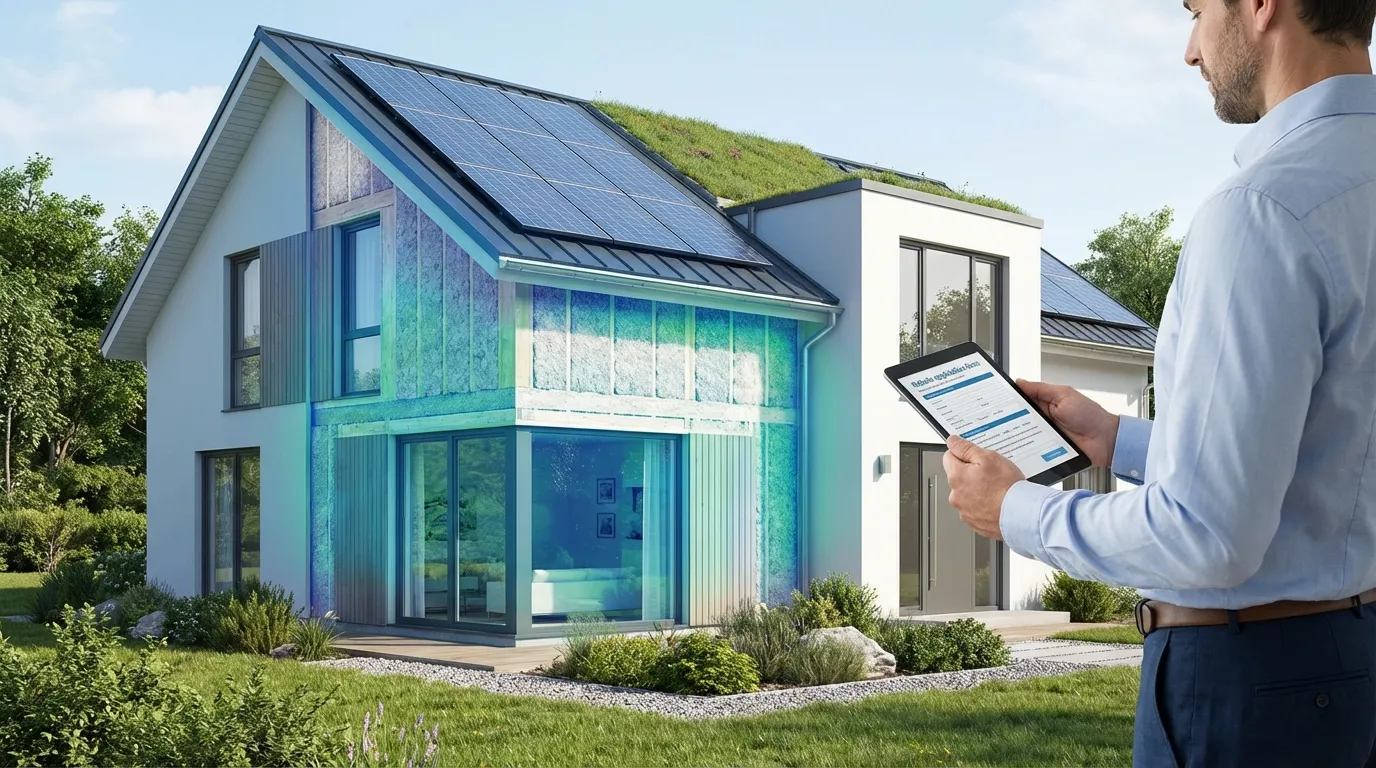
Up to 45% of a home's energy loss occurs through an under-insulated attic and walls, directly increasing monthly heating and cooling bills. Homeowners are now addressing this thermal waste by upgrading to high-performance materials like cellulose, and they are using government and utility incentives to pay for a portion of the project cost.
How Much Can You Save: What Are the Typical Rebate Amounts and Eligible Cellulose Insulation Equipment?
Cellulose insulation rebates reduce project costs through direct cash-back offers from utilities and states, often ranging from $0.50 to $1.50 per square foot. The federal government offers a 30% tax credit (this federal credit ended for property placed in service after December 31, 2025), capped at $1,200 annually, for qualifying insulation material and installation costs.
Rebate amounts are directly tied to the project scope and location. So a homeowner in a cold climate receives a rebate of $1.00 per square foot for adding R-30 of loose-fill cellulose to a 1,000-square-foot attic, resulting in a $1,000 incentive. But another homeowner in a milder climate receives just $0.50 per square foot for the same project. Eligible equipment includes loose-fill, dense-pack, and wet-spray cellulose products that meet specific R-value requirements set by the program administrator. The federal 25C (now expired, replaced by the Energy Efficient Home Improvement Credit) tax credit, for example, requires the insulation to meet the 2021 International Energy Conservation Code (IECC) standards. And many utility programs mandate that the insulation be installed in specific areas, such as attics, walls, or crawl spaces, to qualify for the full range of available insulation rebates.
The core issue is that heating and cooling account for nearly 55% of the energy used in a typical U.S. home. So leaving attics and walls under-insulated is like leaving a window open year-round. These rebates and tax credits directly address this financial drain by lowering the upfront cost of a permanent fix, turning a necessary home improvement project into a financially sound investment with a payback period of 3-5 years.
Am I Eligible? Understanding Income Limits, State-Specific Programs, and Utility Provider Requirements for Cellulose Insulation Rebates
Eligibility for cellulose insulation rebates depends on your income level, geographic location, and utility provider. Federal tax credits are broadly available to most taxpayers, while state and utility programs often have specific income caps, requiring households to be at or below 150% of the Area Median Income.
Your eligibility hinges on three main factors. First, federal energy tax credits are available to homeowners for their primary residence, with no income limit. Second, state-level programs, often managed by a state energy office, require proof of residency and sometimes a pre-installation energy audit. Third, utility rebates are restricted to active customers of that specific electric or gas company. For example, the Home Energy Rebates program, funded by the Inflation Reduction Act, provides enhanced rebates covering up to 100% of project costs for low-income households (below 80% of Area Median Income). And you must verify these specific requirements through program documentation before purchasing materials or hiring a contractor to ensure you qualify.
How Do I Apply? Navigating the Application Process, Deadlines, and Contractor Requirements for Cellulose Insulation Rebates
The application process for cellulose insulation rebates involves submitting proof of purchase, contractor invoices, and program-specific forms by a set deadline. Most utility and state programs require the installation to be completed by a licensed and insured contractor from an approved network to qualify for incentives.
Applying for these incentives is a multi-step process. First, you must confirm your eligibility and the program's funding status. Next, you select a qualified contractor, as many programs won't accept DIY installations. So you'll need to obtain a detailed invoice that itemizes labor and material costs. After the project is complete, you submit the application online or by mail, including the invoice and any required photos or energy audit reports. Form 5695 only covers qualifying work completed by December 31, 2025 and claimed on a 2025 return; the federal 25C and 25D credits ended after that date (IRS FS-2025-05). Federal tax credits for this work have ended, but state, local and utility rebates may still apply; check what is available at your address with the DuloCore rebate calculator.
Can I Combine Offers? Checking Funding Status and Stacking Rules for Cellulose Insulation Rebates with Other Incentives (See also: attic insulation cost and savings.) (See also: insulation rebates for manufactured homes.) (See also: whole home insulation upgrade rebates.) (See also: geothermal tax credit.)
Homeowners can often combine, or "stack," a federal tax credit with a state or utility rebate for the same cellulose insulation project. But stacking two different state-level grants or two separate utility rebates is frequently prohibited, so you must review each program's specific rules.
Combining incentives maximizes your total savings. For instance, you can claim the 30% federal tax credit (up to $1,200) on the out-of-pocket cost of your insulation project after applying a $1,000 rebate from your local utility company. This layering of incentives significantly lowers the net cost. Always check the funding status before starting a project, as many state and local programs operate on a first-come, first-served basis and run out of funds before the official deadline. So it's critical to confirm that your heat pump rebates and insulation incentives are both still available.
"DSIRE is the most comprehensive source of information on incentives and policies that support renewables and energy efficiency in the United States." — DSIREUSA.org
Insulation Rebate Program Comparison
| Program Name | Maximum Incentive | Key Eligibility Requirement | Typical Deadline |
|---|---|---|---|
| Federal 25C Tax Credit | Ended Dec 31, 2025 | — | Ended Dec 31, 2025 |
| State Energy Office Rebate | $500 - $2,000 | State residency, income limits | Varies (e.g., June 30) |
| Utility Provider Rebate | $0.50 - $1.50 / sq. ft. | Must be a customer of the utility | Varies by provider |
Frequently Asked Questions
Cellulose insulation rebate programs offer financial incentives, but navigating their rules requires understanding eligibility, application steps, and deadlines. These programs reduce the upfront cost of improving home energy efficiency, with savings varying by location and income level. Homeowners must follow specific guidelines to successfully claim their funds.
What are the eligibility requirements for cellulose insulation rebates?
Eligibility typically requires being a homeowner, meeting location-specific criteria (state residency or utility customer), and sometimes falling within certain income brackets. For the federal tax credit, the property must be your primary residence.
How much money can you get back from cellulose insulation rebates?
The federal Energy Efficient Home Improvement Credit (Section 25C) ended for property placed in service after December 31, 2025 (IRS FS-2025-05). State and utility rebates vary, often offering between $0.50 and $1.50 per square foot, which can total $500 to $2,000 or more depending on the project size.
What is the process to apply for a cellulose insulation rebate?
The process involves confirming eligibility, hiring a qualified contractor, completing the installation, and submitting an application with itemized invoices and required documentation before the deadline. Form 5695 only covers qualifying work completed by December 31, 2025 and claimed on a 2025 return; the federal 25C and 25D credits ended after that date (IRS FS-2025-05).
Are there any deadlines for cellulose insulation rebate programs?
Yes. The federal tax credit has an annual deadline of December 31st. State and utility programs have their own specific deadlines and often operate on a first-come, first-served basis until funds are depleted.
How do cellulose insulation rebates compare to those for other insulation types?
Rebates for cellulose are generally comparable to those for fiberglass and spray foam insulation. The incentive amount is usually based on the R-value improvement and square footage treated, not the specific material type.
Ready to see exactly how much you can save? Use our free rebate calculator to find every cellulose insulation incentive available for your home.
Ready to Save on Your Home Improvement?
Use our free rebate calculator to find every federal, state, and utility incentive you qualify for.
Last updated: April 14, 2026. Reviewed by the DuloCore Editorial Team. About our authors.
Check your California insulation rebate eligibility — see the programs you qualify for and the dollar amounts on our California insulation rebate finder.