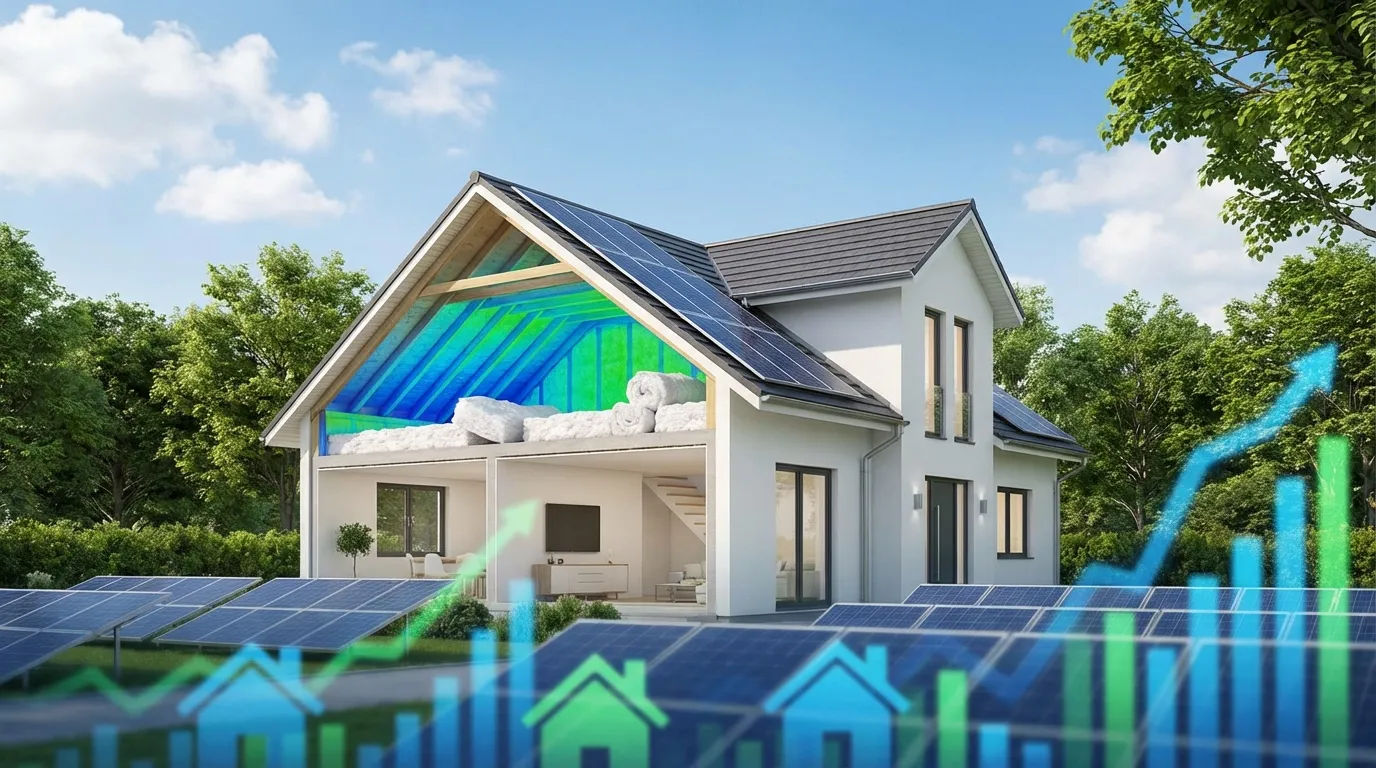
A staggering 90% of U.S. homes are under-insulated, allowing conditioned air to escape directly through the roof. This single inefficiency forces HVAC systems to work overtime, inflating utility bills by up to 20% annually. So sealing and insulating your attic isn't just a home improvement project; it's a direct countermeasure against wasted energy and escalating household costs.
The core tension for homeowners is balancing the upfront installation expense against long-term utility savings. But with an average return on investment of 107.7%, attic insulation is one of the few home upgrades that consistently pays for itself. So the real question isn't whether to insulate, but how to do it cost-effectively.
What is the True Cost of Attic Insulation, Including Installation?
Attic insulation projects typically cost between $1.50 and $3.50 per square foot, including materials and professional installation. So for a 1,000-square-foot attic, the total project cost ranges from $1,500 to $3,500, with fiberglass batts at the lower end and spray foam at the higher end.
The final price depends on several factors. And the R-value, or thermal resistance, required for your climate zone is the primary driver; higher R-values demand more material or denser insulation. But the type of insulation chosen—fiberglass, cellulose, or spray foam—also heavily influences the cost. So does the accessibility of your attic and the amount of prep work needed, such as removing old, damaged insulation or air sealing gaps and cracks before installation. Air sealing alone adds $350 to $1,500 to the project but is essential for maximizing efficiency. This step prevents air leakage, which accounts for up to 40% of a home's energy loss. Finding local insulation rebates is the first step to reducing this initial project cost.
How Can I Maximize Savings with Rebates and Tax Credits, and Which Brands Qualify?
Homeowners maximize savings by combining federal tax credits with local utility rebates for attic insulation projects. The federal Energy Efficient Home Improvement Credit (Section 25C) ended for property placed in service after December 31, 2025 (IRS FS-2025-05). Federal tax credits for this work have ended, but state, local and utility rebates may still apply; check what is available at your address with the DuloCore rebate calculator. And many state and utility programs offer additional cash-back rebates of several hundred dollars. (See also: best insulation for energy savings.) (See also: attic insulation rebate programs.) (See also: insulation rebates for landlords.) (See also: geothermal tax credit.)
To qualify for these incentives, the insulation must meet specific efficiency standards. And the most common requirement is a minimum R-value that varies by climate zone. So brands like Owens Corning (Pink Panther), Johns Manville, and Knauf Insulation are widely available and produce products that meet these federal and local specifications. But always verify the exact product requirements with your local utility provider before purchasing materials. The Department of Energy specifies the importance of proper installation to achieve these savings.
"Sealing and insulating the “shell” of your home—its outer walls, ceiling, windows, doors, and floors—is often the most cost effective way to improve energy efficiency and comfort." — U.S. Department of Energy
Many homeowners combine insulation upgrades with other efficiency projects, like installing high-efficiency furnaces or new heat pump rebates, to maximize their annual tax credit benefits.
Related Reading: Learn more about Air Sealing Cost And Savings and Attic Insulation Cost.
What's the ROI Payback Period for Attic Insulation, and How Long Does It Last?
The return on investment (ROI) for attic insulation is exceptionally high, with a payback period typically ranging from 5 to 7 years. And this calculation is based on an average annual energy savings of 15% to 20%. So the project often pays for itself relatively quickly.
The longevity of attic
Ready to Save on Your Home Improvement?
Use our free rebate calculator to find every federal, state, and utility incentive you qualify for.
Last updated April 14, 2026 — reviewed by DuloCore Editorial. About our authors.
Check your California insulation rebate eligibility — see the programs you qualify for and the dollar amounts on our California insulation rebate finder.