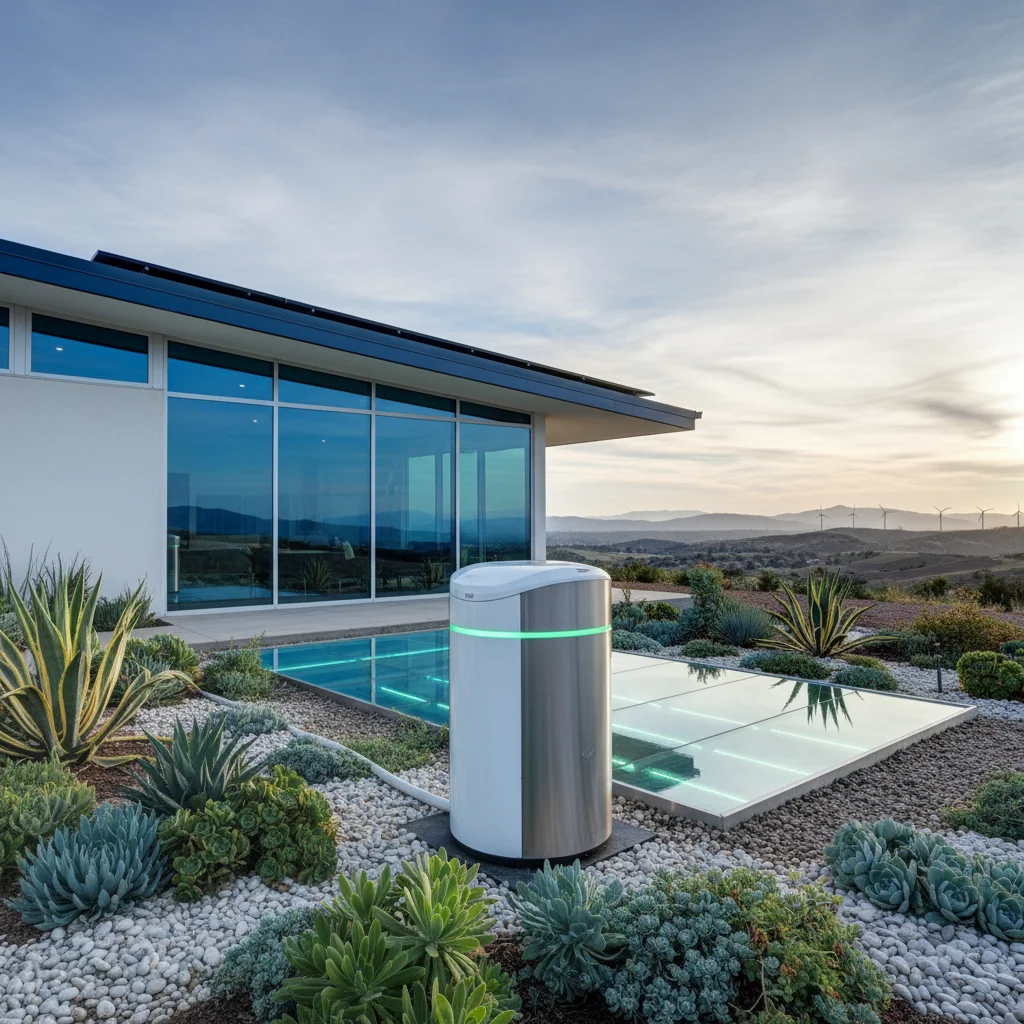
The federal Residential Clean Energy Credit (Section 25D) ended for expenditures made after December 31, 2025, and the IRS treats an expenditure as made when installation is completed (IRS FS-2025-05). Federal tax credits for this work have ended, but state, local and utility rebates may still apply; check what is available at your address with the DuloCore rebate calculator. This credit covers equipment, labor, and permitting fees under the Inflation Reduction Act's Section 25D replacement framework, stacking with California utility rebates and TECH Clean California incentives to reduce net costs by 40-55% for qualifying households.
The federal Residential Clean Energy Credit (Section 25D) ended for expenditures made after December 31, 2025, and the IRS treats an expenditure as made when installation is completed (IRS FS-2025-05). Form 5695 only covers qualifying work completed by December 31, 2025 and claimed on a 2025 return; the federal 25C and 25D credits ended after that date (IRS FS-2025-05).
What Percentage Tax Credit Can You Get for Geothermal Systems in the Inland Empire?
The federal Residential Clean Energy Credit (Section 25D) ended for expenditures made after December 31, 2025, and the IRS treats an expenditure as made when installation is completed (IRS FS-2025-05). The credit applies to equipment costs, professional installation labor, permitting fees, and soil testing required for ground loop design.
The federal Residential Clean Energy Credit (Section 25D) ended for expenditures made after December 31, 2025, and the IRS treats an expenditure as made when installation is completed (IRS FS-2025-05). So a $25,000 ground-source heat pump system generates a $7,500 tax credit that directly reduces federal income tax owed. But homeowners must have sufficient tax liability in the installation year to capture the full credit value, though unused portions carry forward to subsequent tax years indefinitely.
The federal Residential Clean Energy Credit (Section 25D) ended for expenditures made after December 31, 2025, and the IRS treats an expenditure as made when installation is completed (IRS FS-2025-05).
What Are the Annual and Equipment Caps for Geothermal Tax Credits?
The federal home energy tax credits (Sections 25C and 25D) ended for projects completed after December 31, 2025 (IRS FS-2025-05). This unlimited structure makes ground-source systems particularly attractive for high-cost installations in the Inland Empire's varied terrain, where drilling depths of 150-400 feet drive total project costs to $20,000-$35,000.
And homeowners can claim the full 30% on multiple properties in the same tax year if installing geothermal systems at primary residences, vacation homes, or qualifying rental properties. But the credit applies per system installed, not per household, so simultaneous installations at different addresses each generate separate credits. So a homeowner installing a $28,000 system at their Riverside primary residence and a $22,000 system at a Temecula vacation home claims $15,000 in combined credits for that tax year.
Or homeowners spreading installation across tax years can strategically time equipment purchases and commissioning dates to optimize tax liability matching, since the credit applies in the year the system begins operating rather than when contracts are signed.
Which Geothermal Equipment Qualifies for the Tax Credit?
Ground-source heat pump systems meeting ENERGY STAR Most Efficient criteria qualify for the 30% federal credit (this federal credit ended for expenditures made after December 31, 2025), including closed-loop (vertical or horizontal), open-loop, and hybrid configurations. And the credit covers the heat pump unit, ground heat exchanger (loop field), circulation pumps, antifreeze fluids, and all indoor air handling equipment directly connected to the geothermal system.
But conventional air-source heat pumps don't qualify under the geothermal credit structure—those systems fall under separate residential energy credits capped at $2,000 annually. Form 5695 only covers qualifying work completed by December 31, 2025 and claimed on a 2025 return; the federal 25C and 25D credits ended after that date (IRS FS-2025-05).
Equipment must be installed at an existing residence or newly constructed home that serves as the taxpayer's primary or secondary residence. And commercial properties, pure rental investments without owner occupancy, and speculative construction don't qualify. So Inland Empire homeowners should confirm their geothermal heat pump installation meets the "used as a residence" threshold before claiming the credit.
| Equipment Type | Federal Credit | Annual Cap | ENERGY STAR Required |
|---|---|---|---|
| Ground-source heat pump | 30% | No cap | Yes (Most Efficient) |
| Air-source heat pump | 30% | $2,000 | Yes |
| Solar water heater | 30% | $2,000 | Yes |
Are There Income Limits That Affect Your Geothermal Tax Credit Eligibility?
The federal Residential Clean Energy Credit (Section 25D) ended for expenditures made after December 31, 2025, and the IRS treats an expenditure as made when installation is completed (IRS FS-2025-05). But starting in 2033, the credit phases down to 26% for single filers earning above $150,000 and joint filers above $300,000, then drops to 22% in 2034 before expiring entirely in 2035 under current legislation.
And the credit operates as a non-refundable tax credit, meaning homeowners must have federal income tax liability to offset. So taxpayers owing $5,000 in federal taxes who install a $20,000 system ($6,000 credit) can eliminate their entire tax bill and carry forward the unused $1,000 to the following year. But households with zero tax liability receive no immediate benefit, though unused credit amounts carry forward indefinitely until fully utilized.
How Do You Claim the Geothermal Tax Credit on Your Tax Return?
Form 5695 only covers qualifying work completed by December 31, 2025 and claimed on a 2025 return; the federal 25C and 25D credits ended after that date (IRS FS-2025-05).
But taxpayers must retain manufacturer certification statements confirming ENERGY STAR Most Efficient compliance, itemized contractor invoices showing equipment and labor costs separately, and building permit documentation for at least three years after filing. So Inland Empire residents should request detailed invoices from installers that break down the heat pump unit ($8,000-$12,000), ground loop field ($10,000-$18,000), and ancillary equipment costs to support IRS audits.
Form 5695 only covers qualifying work completed by December 31, 2025 and claimed on a 2025 return; the federal 25C and 25D credits ended after that date (IRS FS-2025-05). Calculate your potential savings with our free rebate calculator before starting your installation project.
When Does the Geothermal Tax Credit Start and End?
The federal Residential Clean Energy Credit (Section 25D) ended for expenditures made after December 31, 2025, and the IRS treats an expenditure as made when installation is completed (IRS FS-2025-05). And "placed in service" means the system actively heats or cools the residence, not merely when contracts are signed or equipment is delivered—so year-end installations must be commissioned before midnight on December 31 to qualify for that tax year's credit.
But the credit rate steps down after 2032: 26% in 2033, 22% in 2034, and zero in 2035 under current law, creating incentive to complete installations before the phase-down begins. The federal Residential Clean Energy Credit (Section 25D) ended for expenditures made after December 31, 2025, and the IRS treats an expenditure as made when installation is completed (IRS FS-2025-05).
The federal Residential Clean Energy Credit (Section 25D) ended for expenditures made after December 31, 2025, and the IRS treats an expenditure as made when installation is completed (IRS FS-2025-05). Check current energy tax credits to verify your installation timeline aligns with available programs.
Can You Stack Geothermal Tax Credits With Other Energy Incentives?
Geothermal tax credits stack with California utility rebates, TECH Clean California incentives, and local air quality district programs, but the combined value reduces the cost basis for calculating the federal credit. And Southern California Edison, Riverside Public Utilities, and other Inland Empire providers offer $1,000-$3,000 rebates for ENERGY STAR ground-source heat pumps, which must be subtracted from total installation costs before applying the 30% federal credit (this federal credit ended for expenditures made after December 31, 2025).
So a $25,000 geothermal system receiving a $2,000 utility rebate qualifies for a federal credit calculated on the reduced $23,000 basis, yielding $6,900 instead of $7,500. But homeowners still capture $8,900 in combined incentives (35.6% total reduction), and the stacking order matters—utility rebates are received first, then the federal credit is claimed at tax time based on net costs.
Or homeowners can layer manufacturer rebates, contractor promotions, and zero-interest financing programs from Clean Energy Connection or HERO without affecting federal credit calculations, since those incentives aren't classified as government subsidies. Compare available heat pump rebates in your service territory before finalizing contractor agreements.
How do property tax exemptions interact with federal geothermal credits?
California excludes the added home value from geothermal installations from property tax reassessment under Revenue and Taxation Code Section 73, meaning homeowners don't pay higher property taxes on the $20,000-$30,000 system value. This exemption operates independently of the federal tax credit and doesn't reduce the credit amount, providing dual tax benefits that improve long-term ROI for Inland Empire installations.Official Sources
- IRS Energy Efficient Home Improvement Credit — Federal tax credit guidance, Form 5695 instructions, and qualified equipment standards (note: the federal 25C and 25D credits ended for projects completed after December 31, 2025)
- Department of Energy Geothermal Heat Pumps — Technical specifications, efficiency ratings, and federal incentive program details
- ENERGY STAR Most Efficient — Certified equipment database and manufacturer compliance verification
Frequently Asked Questions
What is the geothermal tax credit for Inland Empire homeowners?
The federal Residential Clean Energy Credit (Section 25D) ended for expenditures made after December 31, 2025, and the IRS treats an expenditure as made when installation is completed (IRS FS-2025-05). Inland Empire homeowners installing a $25,000 system claim $7,500 in direct tax liability reduction via IRS Form 5695, covering equipment, labor, permitting, and ground loop installation. The credit applies to primary residences, secondary homes, and owner-occupied rental properties.
Are geothermal heat pumps eligible for tax credits in 2026?
The federal Residential Clean Energy Credit (Section 25D) ended for expenditures made after December 31, 2025, and the IRS treats an expenditure as made when installation is completed (IRS FS-2025-05). Systems must meet ENERGY STAR Most Efficient criteria and be placed in service (operational) during the 2026 tax year. And the credit covers both new construction and retrofit installations at existing Inland Empire residences.
How much can you save with a geothermal tax credit in California?
California homeowners combining the 30% federal credit (this federal credit ended for expenditures made after December 31, 2025) with $1,000-$3,000 utility rebates save $7,000-$12,000 on typical $25,000-$35,000 installations. And annual heating and cooling cost reductions of $1,200-$1,800 (50-70% lower than conventional HVAC) generate payback periods of 8-12 years for Inland Empire climate zones. But extreme temperature regions like Desert Hot Springs see faster payback of 6-9 years due to higher baseline energy costs.
What are the income limits for geothermal tax credits in the Inland Empire?
The federal Residential Clean Energy Credit (Section 25D) ended for expenditures made after December 31, 2025, and the IRS treats an expenditure as made when installation is completed (IRS FS-2025-05). But starting in 2033, single filers earning above $150,000 and joint filers above $300,000 receive reduced 26% credits instead of 30%, with further reductions to 22% in 2034. And the credit operates as non-refundable, requiring sufficient tax liability to capture the full benefit.
Do I need to install geothermal before December 31 to claim the tax credit?
Homeowners must install and commission (place in service) the geothermal system before midnight on December 31 of the tax year to claim the credit on that year's return. And signing contracts or making deposits doesn't qualify—the system must actively heat or cool the residence by year-end. So Inland Empire installations typically require 8-12 weeks from contract to commissioning, meaning September-October starts for December completions.
Ready to maximize your geothermal savings? Use our free rebate calculator to see exactly how much you'll save with federal credits, California utility rebates, and energy cost reductions. Get your personalized estimate in under 60 seconds and connect with certified Inland Empire installers.
Last reviewed: April 14, 2026. Reviewed by DuloCore Energy Specialists. About the team.
Check your California heat pump rebate eligibility — see the programs you qualify for and the dollar amounts on our California heat pump rebate finder.