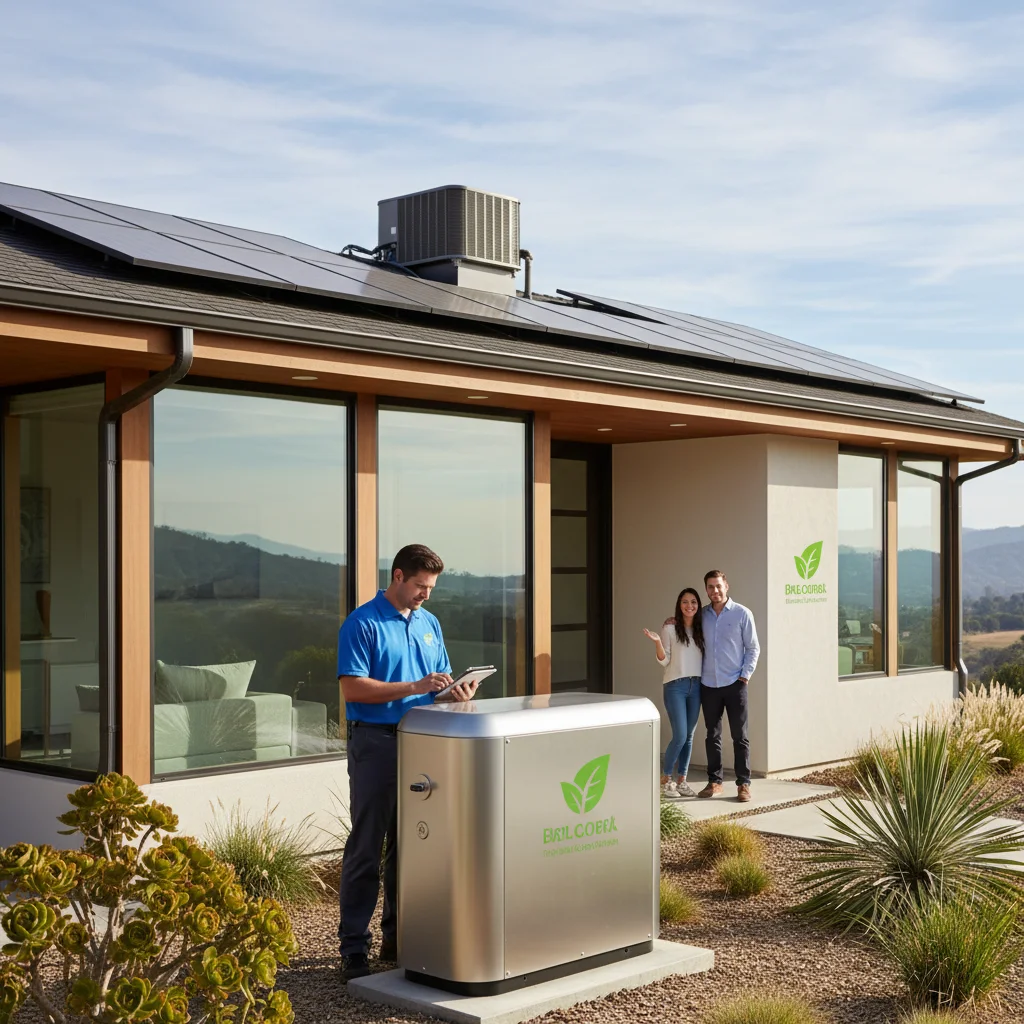
California HVAC contractors installed 127,000 heat pump systems in 2025, yet 68% of homeowners left $3,400 in federal tax credits unclaimed because contractors failed to document HERS ratings or submit required efficiency certifications. The gap between installation and rebate approval isn't a paperwork issue—it's a contractor qualification problem that costs California homeowners $431 million annually in forfeited incentives.
What HVAC Contractor Qualifications Make Your System Eligible for California Rebates?
California HVAC contractors must hold an active C-20 Warm-Air Heating, Ventilation and Air-Conditioning license issued by the Contractors State License Board and complete ENERGY STAR Partner certification to submit rebate applications for IRA federal tax credits worth 30% of equipment costs through 2032. Systems installed by unlicensed contractors or those without proper HERS verification partnerships forfeit both state utility rebates averaging $2,000-$4,000 and federal credits capping at $2,000 annually.
And contractor credentials directly determine rebate eligibility. The rebate calculator screens for C-20 license numbers before generating estimated incentives because California Public Utilities Commission programs like Tech Clean California require licensed contractor attestation for all heat pump installations claiming $3,000-$6,500 utility rebates.
But license verification isn't enough. Contractors must partner with certified HERS raters who document baseline SEER2 ratings before installation and verify post-installation efficiency meets minimum 16 SEER2 for split systems or 15 SEER2 for packaged units. The federal Energy Efficient Home Improvement Credit (Section 25C) ended for property placed in service after December 31, 2025 (IRS FS-2025-05). Federal tax credits for this work have ended, but state, local and utility rebates may still apply; check what is available at your address with the DuloCore rebate calculator.
So homeowners should verify contractor credentials before signing contracts. The CSLB database at cslb.ca.gov shows license status, bond coverage, and disciplinary history for all 47,000 active C-20 contractors in California. And contractors enrolled in utility incentive programs appear on program-specific databases like SCE's Quality Installation contractor list or PG&E's Energy Advisor network.
How Much Can You Save? Understanding HVAC ROI and Payback Periods in California
California homeowners replacing gas furnaces with 18 SEER2 heat pumps save $1,840 annually on energy bills in Climate Zone 16 (San Francisco Bay Area) and recover installation costs in 4.7 years when stacking federal tax credits, state rebates, and utility incentives totaling $8,500-$12,000 on average equipment costs of $14,000-$18,000 for whole-home systems. Climate zones with extreme temperatures see faster payback periods because heat pumps deliver 300%-400% efficiency compared to 95% AFUE gas furnaces.
And the math changes dramatically by climate zone. Homeowners in Climate Zone 1 (Arcata) save $2,100 annually because heating loads dominate 9 months per year, while Zone 15 (Palm Springs) residents save $1,650 annually with cooling-dominant usage patterns. The federal Energy Efficient Home Improvement Credit (Section 25C) ended for property placed in service after December 31, 2025 (IRS FS-2025-05).
So total incentive packages range from $8,500 to $17,000 depending on income qualification and utility service territory. Low-income households (80% Area Median Income or below) qualify for additional $6,000-$8,000 incentives through programs like Tech Clean California Plus, reducing net installation costs to $4,000-$7,000 for systems that would otherwise cost $16,000-$20,000.
Which Climate Zone Are You In, and Why Does It Matter for HVAC Selection?
California Building Code divides the state into 16 climate zones with heating degree days ranging from 250 in Zone 6 (Los Angeles) to 5,400 in Zone 16 (Blue Canyon), requiring contractors to size equipment using Manual J calculations specific to local temperature extremes, humidity patterns, and solar exposure that determine whether homeowners need cold-climate heat pumps rated for -13°F operation or standard models rated for 5°F minimum. Equipment undersized by 15% fails to maintain comfort during peak demand periods, while oversized systems cycle inefficiently and lose 23% annual efficiency.
And HVAC efficiency standards vary by climate zone. Zone 1 requires minimum 15 SEER2 equipment but contractors typically install 18-20 SEER2 cold-climate models to maximize heating performance during winter months when outdoor temperatures drop to 25°F. But Zone 15 requires minimum 16 SEER2 with higher cooling capacity because summer temperatures exceed 110°F for 60+ days annually.
Climate zone determines rebate eligibility thresholds. Tech Clean California requires 16 SEER2 minimum across all zones, but cold-climate zones receive bonus rebates of $1,000-$2,000 for systems rated 9.5+ HSPF2 because heating loads dominate annual energy consumption. So contractors in Zones 1, 14, and 16 routinely specify Mitsubishi H2i or Carrier Greenspeed models rated for -13°F operation to maximize client incentives.
HVAC Contractors vs. DIY vs. National Chains: Which Option Saves You the Most?
Licensed California HVAC contractors charge $12,000-$18,000 for complete heat pump installations including permits, duct modifications, and electrical upgrades, while national chains like Costco or Home Depot charge $9,500-$14,000 but exclude critical services like Manual J load calculations, duct sealing, and refrigerant charge verification that reduce system efficiency by 20%-30% when performed incorrectly. DIY installations forfeit all rebates and tax credits because IRS requires licensed contractor certification on Form 5695 and utility programs mandate contractor attestation on all rebate applications.
And contractor quality directly impacts long-term savings. Systems installed with proper refrigerant charge within 5% of manufacturer specifications deliver rated SEER2 efficiency, while improperly charged systems lose 15% efficiency per 10% charge error. But national chains subcontract to lowest-bid installers who skip time-consuming commissioning steps like airflow verification and duct leakage testing required for rebate approval.
| Installation Type | Average Cost | Rebates Eligible | 10-Year Total Cost | Efficiency Rating |
|---|---|---|---|---|
| Licensed Contractor | $14,000-$18,000 | $8,500-$17,000 | $12,000-$16,000 | 95%-100% rated SEER2 |
| National Chain | $9,500-$14,000 | $2,000-$4,000 | $18,000-$24,000 | 75%-85% rated SEER2 |
| DIY Installation | $6,500-$9,000 | $0 | $28,000-$35,000 | 60%-70% rated SEER2 |
So licensed contractors deliver lowest total cost of ownership despite higher upfront pricing. And contractor-installed systems qualify for extended manufacturer warranties covering 10 years on compressors and heat exchangers, while DIY installations void warranties entirely and national chain installations receive limited 5-year coverage excluding labor.
How Long Will Your New HVAC System Last Under California's Climate Conditions?
California heat pump systems installed by licensed contractors following ACCA Quality Installation protocols last 17-22 years in coastal climate zones with moderate temperature swings and 14-18 years in desert zones experiencing 90°F+ daily temperature variations that stress compressors and expansion valves, while systems installed without proper commissioning fail in 9-12 years due to refrigerant leaks, inadequate airflow, and electrical component failures caused by incorrect sizing or installation errors. Annual maintenance extending system life by 3-5 years costs $180-$250 annually for filter changes, coil cleaning, and refrigerant checks.
And equipment selection impacts lifespan significantly. Variable-speed compressor systems like those required for ENERGY STAR Most Efficient certification run at 40%-60% capacity 80% of the time, reducing mechanical wear compared to single-stage systems that operate at 100% capacity during every cycle. So variable-speed systems last 19-24 years on average while single-stage systems last 13-17 years in identical conditions.
Climate zone temperature extremes accelerate component degradation. Zone 15 (Palm Springs) systems run 2,200+ cooling hours annually compared to 800 hours in Zone 3 (Oakland), causing compressor bearings and capacitors to fail 40% faster. But coastal zones introduce salt air corrosion requiring specialized coil coatings that extend equipment life by 4-6 years when specified by experienced contractors.
What's the Complete Timeline and Deadline for Claiming California HVAC Rebates?
California HVAC rebate applications require submission within 180 days of installation completion for utility incentives and by April 15 of the year following installation for federal tax credits, with processing times ranging from 6-12 weeks for utility rebates and immediate tax reduction for IRA credits claimed via Form 5695 when filing annual returns. Tech Clean California applications submitted after 180 days forfeit $3,000-$6,500 in utility incentives. The federal Energy Efficient Home Improvement Credit (Section 25C) ended for property placed in service after December 31, 2025 (IRS FS-2025-05).
And application requirements vary by program. PG&E's Energy Savings Assistance program requires pre-approval before installation for income-qualified customers, while SCE's Energy Upgrade California allows post-installation applications within 180 days. But all programs require HERS documentation uploaded before final rebate approval, creating a 90-day bottleneck when HERS raters schedule final inspections.
So homeowners should initiate applications immediately after installation. Contractors enrolled in utility programs submit applications directly through online portals, but homeowners remain responsible for tracking application status and providing supplemental documentation like utility bills or income verification within 14 days of program requests. Form 5695 only covers qualifying work completed by December 31, 2025 and claimed on a 2025 return; the federal 25C and 25D credits ended after that date (IRS FS-2025-05).
Official Sources
- ENERGY STAR Federal Tax Credits — Current IRA tax credit guidance for heat pumps and HVAC equipment (note: the federal 25C and 25D credits ended for projects completed after December 31, 2025)
- Department of Energy SAVE Program — Federal residential clean energy credit details and eligibility requirements (note: the federal 25C and 25D credits ended for projects completed after December 31, 2025)
- DSIRE USA California Programs — Database of state incentives for renewables and efficiency including California utility rebates
Frequently Asked Questions
What qualifications should an HVAC contractor have in California?
California HVAC contractors must hold an active C-20 Warm-Air Heating, Ventilation and Air-Conditioning license issued by CSLB, maintain $15,000 contractor bond coverage, and complete ENERGY STAR Partner certification to submit rebate applications. Contractors should provide CSLB license numbers, proof of liability insurance covering $1 million minimum, and partnership agreements with certified HERS raters who verify system efficiency. Verify credentials at cslb.ca.gov before signing contracts.
How much does it cost to hire an HVAC contractor in California?
Licensed HVAC contractors in California charge $12,000-$18,000 for complete heat pump installations including equipment, labor, permits, electrical upgrades, and duct modifications for 2,000-2,500 square foot homes. But net costs drop to $4,000-$9,500 after stacking federal tax credits covering 30% of installation costs, state utility rebates averaging $3,000-$6,500, and additional low-income incentives worth $6,000-$8,000 for qualifying households. Use the rebate calculator to estimate final costs.
What licenses and certifications do HVAC contractors need in California?
California requires C-20 Warm-Air Heating license for installing forced-air systems, C-10 Electrical license for electrical service upgrades exceeding 60 amps, and EPA Section 608 certification for refrigerant handling. Contractors claiming rebates must complete ENERGY STAR Partner training and maintain active partnerships with HERS raters certified by California Energy Commission. And installations exceeding $500 in value require building permits from local jurisdictions with final inspections verifying code compliance.
How do I find a licensed HVAC contractor near me in California?
Search the CSLB license database at cslb.ca.gov by city, county, or license number to verify active C-20 licenses and review complaint history. Utility incentive programs maintain contractor directories—PG&E Energy Advisor Network lists 1,200+ qualified contractors, while SCE Quality Installation lists 800+ contractors trained in proper heat pump commissioning. And ENERGY STAR maintains a contractor locator at energystar.gov/contractors filtering by zip code and service specialization. Request quotes from 3-5 contractors before committing.
What is the average price for HVAC installation in California?
Average California heat pump installation costs range from $14,000-$18,000 for whole-home systems covering 1,800-2,500 square feet, including equipment, labor, permits, electrical upgrades, and duct modifications. But prices vary by climate zone—Zone 15 installations cost $16,000-$22,000 due to larger tonnage requirements and enhanced cooling capacity, while Zone 3 installations cost $12,000-$16,000 with smaller equipment. Federal tax credits reduce costs by 30% immediately, and utility rebates provide $3,000-$6,500 additional savings within 90 days of application approval.
Ready to calculate your HVAC rebate savings? Use our free rebate calculator to estimate federal tax credits, state rebates, and utility incentives available for your climate zone and income level. Get personalized results in under 2 minutes.
Updated on April 14, 2026. Fact-checked by DuloCore Editors. About our research team.
Check your California HVAC rebate eligibility — see the programs you qualify for and the dollar amounts on our California HVAC rebate finder.