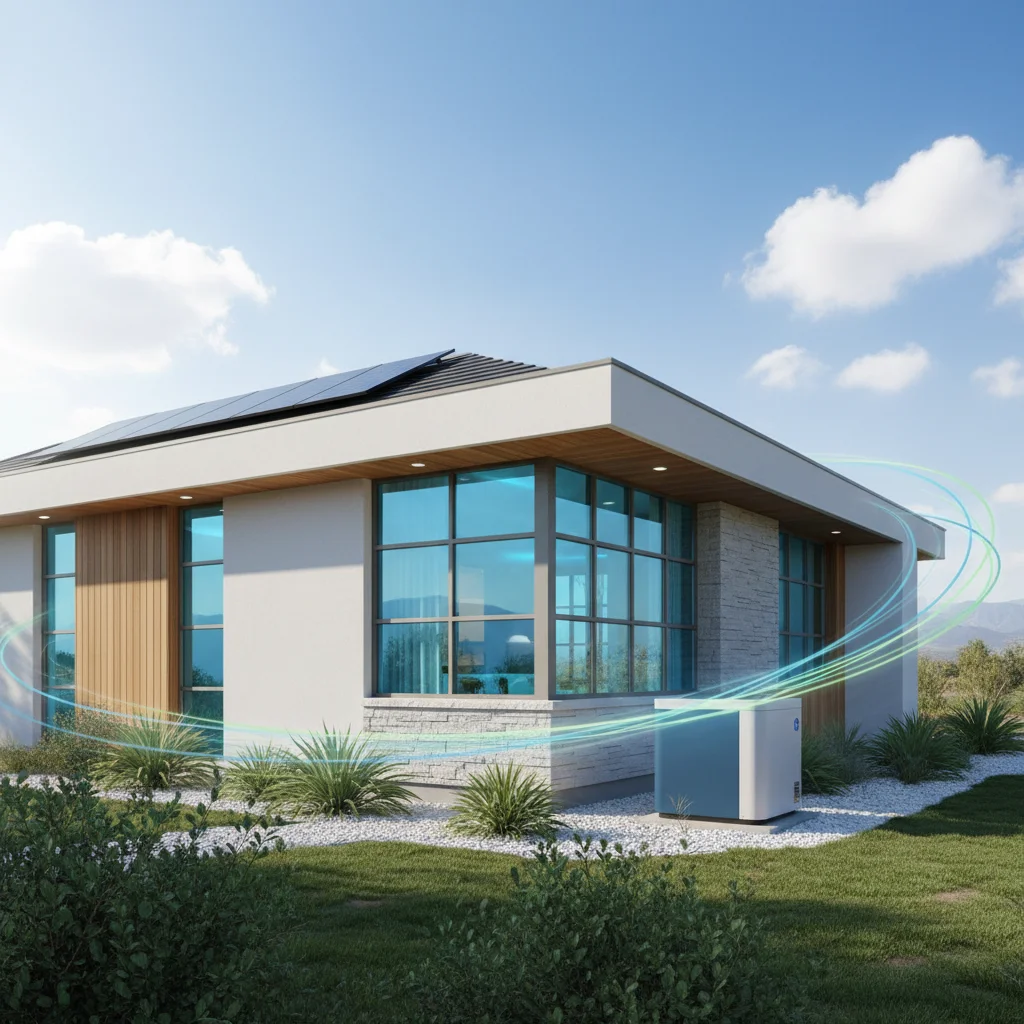
The Inland Empire's desert climate pushes air conditioners harder than almost anywhere in California—and 68% of HVAC systems in Riverside and San Bernardino counties are oversized by at least one ton, wasting $340 per household annually on excess electricity before they break down years early.
How Much Does an HVAC Contractor Cost in the Inland Empire?
HVAC contractors in the Inland Empire charge $4,500-$12,000 for central AC replacement and $8,000-$18,000 for heat pump installations in 2026. Labor accounts for 30-40% of total project cost. Permit fees range $150-$400 depending on city jurisdiction and system size.
Licensed contractors in Riverside County charge $85-$125 per hour for service calls and diagnostic work. And installation costs vary by system type: a 3-ton 16 SEER AC unit runs $5,200-$7,800 installed, while a ducted heat pump with similar capacity costs $9,500-$14,000. But high-efficiency systems above 18 SEER add $1,200-$2,400 to base installation price.
The federal home energy tax credits (Sections 25C and 25D) ended for projects completed after December 31, 2025 (IRS FS-2025-05). Federal tax credits for this work have ended, but state, local and utility rebates may still apply; check what is available at your address with the DuloCore rebate calculator. Utility rebates from Southern California Edison and Southern California Gas add $500-$3,000 for income-qualified households. Manual J load calculations—required by code but skipped by 40% of contractors—cost an additional $200-$350 but prevent oversizing that kills efficiency.
What's the ROI and Payback Period for HVAC System Upgrades?
Heat pump upgrades in the Inland Empire generate 12-18% annual ROI with payback periods of 5.5-8.3 years when replacing electric resistance heating or gas furnaces. Energy savings average $840-$1,680 annually for 1,800-2,400 square foot homes in climate zones 10 and 15.
High-efficiency heat pumps rated 18+ SEER2 save 35-42% on cooling costs compared to minimum-efficiency 14 SEER2 AC units—translating to $420-$780 in avoided summer electricity bills. And dual-fuel systems pairing heat pumps with backup gas furnaces cut winter heating costs by 28-35% in areas with cold overnight temperatures. But upfront costs run $3,200-$6,800 higher than standard AC replacement.
The federal Energy Efficient Home Improvement Credit (Section 25C) ended for property placed in service after December 31, 2025 (IRS FS-2025-05). Check current state, local and utility incentives for your address with the DuloCore rebate calculator. Income-qualified homeowners earning below 80% area median income ($74,800 for Riverside County households in 2026) access point-of-sale rebates up to $8,000 through California's pending HOMES program—reducing payback to 2.1-3.6 years.
Use our free rebate calculator to estimate your exact savings and payback period based on current utility rates and home specifications.
Which HVAC Systems Are Best for the Inland Empire's Climate Zone?
The Inland Empire spans climate zones 10 and 15 requiring cooling-focused equipment rated for 110°F+ summer design temperatures and mild 32-38°F winter lows. Variable-speed heat pumps with 18+ SEER2 and 9+ HSPF2 ratings perform optimally in this hot-dry climate with 3,800-4,500 cooling degree days annually.
Ducted mini-split heat pumps handle the region's extreme temperature swings better than traditional central AC—maintaining capacity down to 5°F outdoor temperature while delivering 25-30% higher efficiency. And two-stage or variable-speed compressors run at reduced capacity during shoulder seasons (March-May, October-November), saving $180-$340 annually compared to single-stage systems that cycle on-off repeatedly.
But desert dust and airborne particulates require MERV 13-16 filtration to protect heat pump coils—standard MERV 8 filters allow buildup that reduces capacity 12-18% within two years. So contractors should include whole-home air purification systems adding $1,200-$2,400 to installation cost but preventing $800-$1,400 in premature coil replacement. Evaporative coolers ("swamp coolers") cost 60-75% less to operate but lose effectiveness when humidity exceeds 30%, limiting usefulness to May and October in most Inland Empire locations.
"Climate Zone 15 requires equipment designed for extreme heat with extended-range thermostats and outdoor coil protection." — ENERGY STAR HVAC Specifications
HVAC Contractor vs. DIY vs. Alternative Cooling Solutions: Which Is Right for You?
Licensed HVAC contractors charge $4,500-$18,000 for complete system installation but provide permitting, warranty service, and code compliance that DIY installations forfeit. Mini-split heat pumps allow partial DIY installation saving $1,800-$3,200 on labor while maintaining manufacturer warranties on equipment.
DIY central AC installation violates California contractor licensing law and voids equipment warranties worth $800-$2,400. And improper refrigerant charging—the most common DIY error—reduces efficiency by 20-30% and shortens compressor life from 15 years to 7-9 years. But ductless mini-split systems with pre-charged line sets allow homeowners to mount indoor and outdoor units legally, hiring licensed contractors only for final electrical connection and startup ($400-$800).
So portable AC units costing $300-$900 provide emergency cooling for single rooms but consume 2.5-4× more electricity per BTU than central systems. Whole-house fans installed in attic spaces cost $800-$2,200 and reduce cooling loads by 30-50% on evenings when outdoor temperature drops below 75°F—common in Inland Empire locations above 1,500 feet elevation. But fans provide no humidity control or air filtration.
Licensed C-20 HVAC contractors must carry $1 million general liability insurance and provide statutory warranty covering workmanship defects for minimum one year. Unlicensed installers leave homeowners liable for code violations, permit fines ($500-$2,500), and complete system replacement if municipal inspectors red-tag non-compliant work.
| Solution | Upfront Cost | Annual Operating Cost | Permit Required | Warranty Coverage |
|---|---|---|---|---|
| Licensed contractor (heat pump) | $8,000-$18,000 | $680-$1,240 | Yes (included) | 10-year equipment + 1-year labor |
| DIY mini-split (partial) | $3,200-$7,800 | $720-$1,340 | Yes (self-obtained) | 10-year equipment only |
| Portable AC units | $300-$900 | $380-$620 per room | No | 1-year manufacturer |
| Whole-house fan | $800-$2,200 | $45-$95 | Yes | 3-5 year manufacturer |
How Long Do HVAC Systems Last and When Should You Replace Yours?
HVAC systems in the Inland Empire last 12-18 years depending on maintenance frequency and equipment quality. Heat pumps average 14-16 year lifespan while traditional AC units reach 15-18 years with annual professional maintenance costing $120-$220.
Systems older than 12 years operating at below 14 SEER efficiency cost $280-$560 more annually than 18+ SEER replacements—making upgrades financially justified even before complete failure. And refrigerant type determines replacement urgency: units using R-22 refrigerant (banned from production since 2020) face $180-$320 per pound recharge costs versus $45-$85 per pound for R-410A systems.
But replacement becomes mandatory when repair costs exceed 50% of new equipment value—typically $2,200-$4,500 for aging systems. Compressor failure alone costs $1,800-$3,400 to repair on systems over 10 years old. So homeowners facing major repairs should evaluate replacement with high-efficiency equipment qualifying for federal energy tax credits worth $2,000-$3,600.
Preventive maintenance extends lifespan 3-5 years and includes annual coil cleaning, refrigerant charge verification, electrical connection inspection, and condensate drain clearing. Systems without maintenance lose 5% efficiency annually and fail 40% sooner than serviced equipment.
"Replacing HVAC systems before complete failure allows homeowners to choose energy-efficient models during off-peak seasons when contractor availability is highest and pricing most competitive." — U.S. Department of Energy
How to Choose a Licensed HVAC Contractor in the Inland Empire
Licensed C-20 HVAC contractors in California must maintain active Contractors State License Board registration, carry $15,000 contractor bond, and provide workers compensation insurance. Verify license status at cslb.ca.gov checking for active classification, zero outstanding complaints, and current bond status.
Qualified contractors provide Manual J load calculations determining correct equipment sizing based on home square footage, insulation levels, window area, and orientation—preventing the oversizing that plagues 68% of Inland Empire installations. And written estimates should itemize equipment model numbers, SEER2/HSPF2 ratings, warranty terms, permit costs, and projected energy savings. Verbal quotes or estimates lacking specific efficiency ratings indicate contractors cutting corners on equipment quality.
So homeowners should request three competing bids comparing identical equipment specifications and SEER ratings—price differences exceeding 25% suggest quality variations in installation practices like proper duct sealing (worth 15-20% efficiency), refrigerant charging accuracy, and startup calibration. References from jobs completed within past 12 months reveal contractor responsiveness to warranty claims and seasonal maintenance scheduling.
But beware contractors pushing oversized equipment "for reserve capacity"—systems exceeding Manual J calculations by more than 15% short-cycle, reducing comfort and lifespan while increasing operating costs 18-28%. Membership in professional associations like ACCA (Air Conditioning Contractors of America) or NATE (North American Technician Excellence) certification indicates commitment to ongoing training—though licensing remains the primary credential.
Income-qualified households should verify contractors participate in utility rebate programs and California's HOMES/HEEHRA programs launching in 2026, enabling point-of-sale discounts worth $2,000-$8,000 on qualifying heat pump rebates without waiting for tax season.
Official Sources
- ENERGY STAR HVAC — Federal efficiency ratings, qualifying equipment lists, and climate zone specifications
- Database of State Incentives for Renewables & Efficiency — California rebate programs, utility incentives, and local government financing options
- U.S. Department of Energy Save Energy — IRA tax credit guidance, energy savings calculations, and equipment selection tools (note: the federal 25C and 25D credits ended for projects completed after December 31, 2025)
Frequently Asked Questions
Can HVAC contractors in the Inland Empire install systems that qualify for rebates?
The federal Energy Efficient Home Improvement Credit (Section 25C) ended for property placed in service after December 31, 2025 (IRS FS-2025-05). Equipment must meet ENERGY STAR certification or SEER2 ratings above 16 for cooling and HSPF2 ratings above 8 for heating. Contractors participating in utility rebate programs file paperwork directly with Southern California Edison or SoCalGas, enabling $500-$3,000 instant rebates for income-qualified households. Verify contractor participation before signing contracts to avoid forfeiting rebates worth $2,000-$8,000.
How much rebate money can homeowners get from HVAC upgrades in the Inland Empire?
The federal Energy Efficient Home Improvement Credit (Section 25C) ended for property placed in service after December 31, 2025 (IRS FS-2025-05). California's pending HOMES program adds point-of-sale rebates worth $2,000-$4,000 for moderate-income households (80-150% area median) and $4,000-$8,000 for low-income households (below 80% AMI). Southern California Edison offers $500-$2,000 additional incentives for ENERGY STAR certified equipment replacing electric resistance heating. Combined rebates and credits total $3,000-$13,600 for comprehensive heat pump installations when stacking federal, state, and utility programs.
What is the process for finding a qualified HVAC contractor in the Inland Empire?
Verify active C-20 license status at cslb.ca.gov confirming current bond and zero disciplinary actions. Request written estimates from three contractors including Manual J load calculations, specific equipment model numbers with SEER2/HSPF2 ratings, itemized labor costs, and permit fees. Check references from installations completed within past 12 months focusing on warranty service responsiveness and post-installation support. Compare bids ensuring identical equipment specifications—price variations exceeding 25% indicate quality differences in duct sealing, refrigerant charging, and installation practices affecting long-term efficiency and lifespan.
Are there income limits for HVAC rebates in the Inland Empire?
California's HOMES program launching in 2026 reserves maximum rebates for households earning below 80% area median income: $74,800 for Riverside County families and $68,400 for San Bernardino County in 2026. Moderate-income households between 80-150% AMI ($74,800-$140,250 Riverside County) access reduced rebates worth 50% of low-income amounts. The federal Energy Efficient Home Improvement Credit (Section 25C) ended for property placed in service after December 31, 2025 (IRS FS-2025-05). Southern California Edison and SoCalGas offer income-qualified rebates with varying thresholds by program, typically matching HOMES eligibility at 80% AMI.
How long does it take to receive an HVAC rebate after the contractor completes the installation?
Federal tax credits apply when filing annual tax returns 1-15 months after installation depending on project completion date. Point-of-sale rebates through California's HOMES program deduct instantly at project completion when contractors participate in pre-approval systems. Utility rebates from Southern California Edison process within 6-8 weeks after contractor submits completion paperwork and equipment verification forms. Homeowners should retain invoices showing equipment model numbers, SEER2/HSPF2 ratings, installation dates, and contractor license numbers for minimum 7 years to substantiate tax credits during potential IRS audits.
Ready to find out how much you can save? Use our rebate calculator to get your personalized estimate based on your home's specifications, current utility rates, and available federal and state incentives. Get accurate payback periods and total lifetime savings in under 2 minutes.
Updated on April 14, 2026. Fact-checked by DuloCore Editors. About our research team.
Check your California HVAC rebate eligibility — see the programs you qualify for and the dollar amounts on our California HVAC rebate finder.