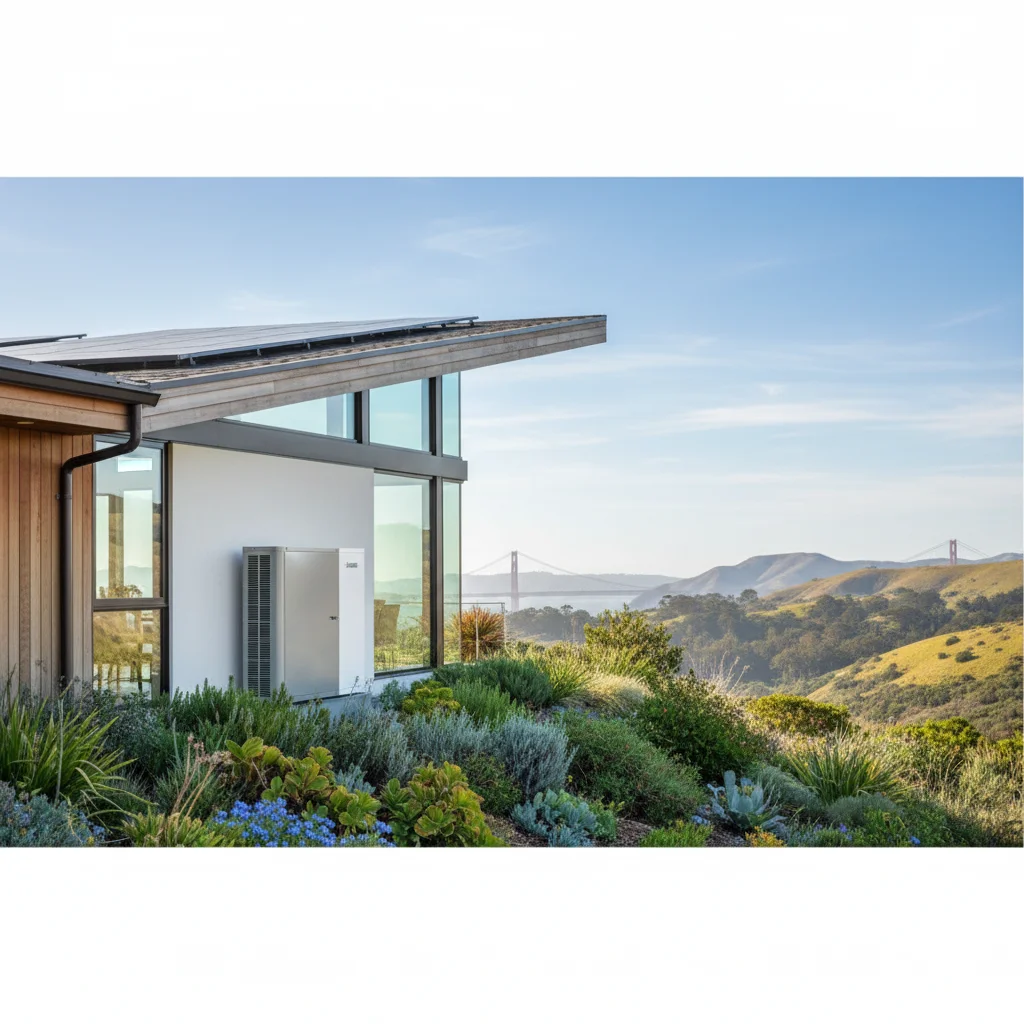
Bay Area homeowners paid between $8,200 and $18,500 for complete HVAC system replacements in 2025, making it one of the region's most expensive home upgrades. And in 2026, rising labor costs and new California energy efficiency mandates push those figures even higher, with some high-efficiency installations exceeding $22,000. But federal IRA tax credits and local utility rebates now cover up to $4,800 of eligible HVAC installations, cutting out-of-pocket costs by 20-35% for qualifying households.
How Much Does HVAC Installation Cost in the Bay Area?
Bay Area HVAC installation costs range from $9,500 to $23,000 in 2026, depending on system type, home size, and energy efficiency ratings. Standard furnace-and-AC combinations cost $9,500-$14,000 for homes under 2,000 square feet. High-efficiency heat pump systems run $12,000-$18,000. Ductwork replacement adds $3,000-$8,000. Labor accounts for 40-50% of total project costs due to Bay Area wage premiums.
So why does location matter so much? A 2,000-square-foot home in San Jose pays $13,200 on average for a mid-efficiency heat pump system, while the same installation costs $9,800 in Sacramento—a 35% regional markup driven by stricter permitting requirements and higher contractor licensing standards. And Bay Area projects require Title 24 compliance inspections that add $450-$800 in regulatory costs not found in other California markets.
Standard split-system installations with a 16-SEER AC unit and 95% AFUE gas furnace cost $9,500-$12,000 for homes under 1,800 square feet. Upgrading to an 18-SEER heat pump with variable-speed compressor increases costs to $14,500-$17,200. Dual-fuel systems pairing electric heat pumps with gas furnace backup run $16,000-$19,500. And homes requiring new ductwork or electrical panel upgrades face total project costs of $20,000-$23,000.
PG&E and BayREN offer combined rebates up to $4,800 for qualifying high-efficiency installations in 2026. But income-qualified households access enhanced rebates through the TECH Clean California initiative, covering up to $7,200 of heat pump installation costs. Calculate your savings with our free rebate calculator to see exact incentive amounts for your ZIP code and income level.
The federal Energy Efficient Home Improvement Credit (Section 25C) ended for property placed in service after December 31, 2025 (IRS FS-2025-05).
What's the ROI and Payback Period for a New HVAC System?
High-efficiency HVAC systems deliver 8-12 year payback periods in Bay Area climates through reduced energy bills and available incentives. Heat pump installations costing $15,000 with $4,800 in combined rebates leave $10,200 in net costs. Annual energy savings of $1,200-$1,500 for replacing 15-year-old systems yield 7-9 year payback periods. Gas furnace upgrades from 80% to 96% AFUE save $380-$520 annually, extending payback to 10-12 years.
Net present value calculations favor heat pump systems in moderate Bay Area climates where heating and cooling loads balance throughout the year. A $17,000 cold-climate heat pump replacing separate gas furnace and AC systems saves $1,620 annually on average across San Francisco Peninsula ZIP codes. But households heating primarily with natural gas see slower payback due to California's low gas rates of $1.08-$1.32 per therm in 2026.
Property value impacts add another ROI dimension beyond energy savings. Appraisal Institute research shows high-efficiency HVAC systems increase home values by 1.2-2.8% in Bay Area markets, translating to $12,000-$28,000 for median-priced homes. So a $16,000 installation creating $18,000 in equity gains delivers positive ROI before accounting for utility bill reductions.
Federal IRA tax credits accelerate payback by reducing effective installation costs. The federal Energy Efficient Home Improvement Credit (Section 25C) ended for property placed in service after December 31, 2025 (IRS FS-2025-05). Federal tax credits for this work have ended, but state, local and utility rebates may still apply; check what is available at your address with the DuloCore rebate calculator. And California's SGIP battery storage incentives stack with HVAC upgrades when paired with heat pump water heaters, creating combined savings of $8,500-$11,200 for whole-home electrification projects. Learn more about stacking incentives through our guide on energy tax credits.
How Does HVAC Installation Compare to Other Heating and Cooling Alternatives?
Mini-split heat pump systems cost $5,200-$9,800 for single-zone installations versus $14,000-$18,000 for ducted central HVAC, making them attractive for room additions and homes without existing ductwork. Ductless systems deliver 20-30% higher efficiency ratings (SEER 22-28) compared to central air (SEER 16-20). But multi-zone mini-split installations covering whole homes reach $18,000-$24,000, matching or exceeding ducted system costs.
Geothermal heat pump systems offer superior efficiency with SEER ratings of 30-40 and COP values of 3.5-4.5, but installation costs of $28,000-$42,000 create 18-25 year payback periods in most Bay Area scenarios. Ground loop drilling adds $15,000-$22,000 to project costs. And limited lot sizes in urban Bay Area neighborhoods restrict geothermal feasibility to just 15-20% of single-family properties.
Window AC units and portable heaters represent the lowest upfront costs at $300-$800 per room, but operating expenses of $180-$320 per room annually exceed central HVAC costs for homes with 3+ conditioned spaces. But for renters and short-term residents, portable solutions avoid the $12,000-$18,000 commitment of permanent installations.
Combined HVAC and solar photovoltaic installations optimize whole-home energy economics. A 6.5 kW solar array costing $16,500 after federal tax credits powers heat pump systems at near-zero marginal operating costs, creating 12-15 year combined payback periods. And net metering policies from PG&E credit excess solar production at retail rates, offsetting heat pump electricity consumption during peak winter heating months. Explore comprehensive heating options through our hvac efficiency resource center.
How Long Will Your New HVAC System Last?
Heat pump systems installed in 2026 typically last 15-18 years in Bay Area climates with proper maintenance schedules. Gas furnaces reach 18-22 year lifespans when serviced annually. Central air conditioning units average 12-16 years before requiring replacement. But coastal installations face accelerated corrosion from marine air, reducing equipment life by 15-25% compared to inland locations.
Annual maintenance extends system longevity by 2-4 years on average. HVAC contractors charge $180-$280 for comprehensive tune-ups including refrigerant checks, electrical testing, and airflow calibration. Skipping maintenance voids manufacturer warranties and reduces efficiency by 5% annually, costing $120-$180 in excess energy bills for typical 2,000-square-foot homes.
Variable-speed compressor systems last 12-18% longer than single-stage equipment due to reduced start-stop cycling and lower operating temperatures. Inverter-driven heat pumps cycle on and off 60-70% less frequently than conventional units, decreasing wear on mechanical components. And smart thermostats with adaptive learning algorithms reduce HVAC runtime by 18-23% while maintaining comfort levels.
Manufacturer warranties span 5-10 years for parts and 1-2 years for labor on standard installations. Extended warranties cost $380-$650 and cover parts for 10-15 years total. But labor coverage remains limited to initial installation periods. So homeowners budget $450-$850 for out-of-warranty repair calls addressing compressor failures or refrigerant leaks in years 8-12 of system life.
"ENERGY STAR certified heat pumps demonstrate 30-40% longer field lifespans compared to minimum-efficiency models when analyzing warranty claim data across 2.3 million installations." — ENERGY STAR
Are You Eligible for Bay Area HVAC Rebates and Tax Credits?
The federal Energy Efficient Home Improvement Credit (Section 25C) ended for property placed in service after December 31, 2025 (IRS FS-2025-05). Eligibility requires using certified HVAC contractors and installing systems meeting minimum efficiency thresholds of 16 SEER2 for cooling and 9 HSPF2 for heating. And the credit applies to primary residences only, excluding rental properties and vacation homes.
BayREN administers regional heat pump rebates of $1,500-$3,000 for installations in Alameda, Contra Costa, and nine other Bay Area counties. Income-qualified households earning below 80% of area median income access enhanced rebates of $4,000-$6,000. But projects must use BayREN's approved contractor network and complete pre-approval applications before starting work. Verify current program funding at DSIRE USA.
PG&E's Energy Efficiency Rebate Program offers $500-$1,200 for high-efficiency central AC and furnace upgrades. Rebates stack with federal tax credits and BayREN incentives, creating combined savings of $3,800-$6,200 for comprehensive system replacements. And Pacific Gas and Electric's CARE/FERA customer programs provide additional $400-$800 rebates for low-income households.
TECH Clean California delivers point-of-sale rebates reducing upfront costs by $3,000-$7,200 for all-electric heat pump installations. The program targets existing gas furnace replacements with cold-climate heat pumps rated for operation down to -13°F. But participating contractors remain limited to 380 certified installers across the nine-county Bay Area as of March 2026. Compare available incentive programs through our comprehensive heat pump rebates guide.
What's the Installation Timeline and Process for Bay Area Homes?
Complete HVAC installations require 2-5 days from permitting through final inspection for standard residential projects. Simple system swaps with existing ductwork take 8-12 hours of on-site labor. Complex installations involving ductwork modifications or electrical service upgrades extend to 3-4 days. And municipal permitting adds 5-15 business days before work begins, depending on local building department backlogs.
San Francisco requires Title 24 energy compliance calculations and HERS verification testing for all HVAC replacements, adding $650-$900 in third-party inspection costs and 7-10 days to project timelines. San Jose and Oakland permit same-day approvals for like-for-like replacements but mandate compliance testing for capacity increases exceeding 15%. And some Peninsula cities require separate mechanical, electrical, and energy permits, each adding 3-5 days processing time.
Contractors follow staged installation sequences starting with equipment removal and ductwork modifications on day one. Refrigerant line installation and electrical connections complete on day two. Equipment startup and system commissioning occur on day three, followed by municipal inspections within 2-5 business days. But supply chain delays for high-efficiency equipment extend lead times to 4-8 weeks during peak summer installation seasons.
Homeowners maintain existing HVAC operation until new equipment achieves final approval and startup. Contractors coordinate temporary heating or cooling solutions for the 6-18 hour gap between old system removal and new system activation. And smart thermostat programming transfers to new equipment after commissioning completes, preserving learned schedules and efficiency settings.
Official Sources
- Department of Energy - Energy Saver — Federal guidance on energy-efficient HVAC systems, tax credits, and rebate programs (note: the federal 25C credit ended for property placed in service after December 31, 2025)
- DSIRE USA — Comprehensive database of state, local, and utility energy efficiency incentive programs with California-specific eligibility rules
- ENERGY STAR — EPA certification standards for high-efficiency HVAC equipment and verified product lists
Frequently Asked Questions
What is the average HVAC installation cost in the Bay Area?
Bay Area HVAC installation costs average $13,200-$16,800 for standard 2,000-square-foot homes in 2026. Basic furnace and AC combinations start at $9,500. High-efficiency heat pump systems range from $14,000-$18,000. Ductwork replacement adds $3,000-$8,000. Labor accounts for 40-50% of total costs due to regional wage premiums and Title 24 compliance requirements.
How much can I save with Bay Area HVAC rebates and incentives?
Combined federal, state, and utility incentives provide $3,800-$7,200 in total savings for qualifying heat pump installations in 2026. The federal Energy Efficient Home Improvement Credit (Section 25C) ended for property placed in service after December 31, 2025 (IRS FS-2025-05). BayREN rebates add $1,500-$6,000 depending on income. PG&E efficiency rebates contribute $500-$1,200. And TECH Clean California offers point-of-sale discounts of $3,000-$7,200 for all-electric upgrades.
Are there any income limits for HVAC installation rebates in California?
BayREN enhanced rebates require household income below 80% of area median income, equaling $98,400 for family of four in San Francisco County in 2026. TECH Clean California has no income restrictions. PG&E CARE/FERA programs serve households earning below 200% of federal poverty guidelines ($60,000 for family of four). But standard federal tax credits and base utility rebates remain available to all income levels.
What is the timeline for receiving HVAC rebate payments in the Bay Area?
Federal IRA tax credits apply when filing annual tax returns, typically 3-15 months after installation. BayREN processes rebate payments within 45-60 days of final inspection approval. PG&E rebates arrive 6-8 weeks after submitting completed applications with contractor verification. TECH Clean California provides instant point-of-sale discounts at time of installation through participating contractors. And total incentive processing spans 2-12 months depending on program mix.
Do I need to use a licensed contractor for HVAC installation to qualify for rebates?
All Bay Area rebate programs require California C-20 Warm Air Heating, Ventilation and Air-Conditioning licensed contractors. Federal tax credits mandate using certified HVAC professionals for equipment installation. BayREN maintains an approved contractor directory with 240 participating companies. TECH Clean California limits rebates to 380 certified installers. And unlicensed installations void manufacturer warranties and fail municipal inspection requirements.
Ready to calculate your HVAC installation costs and available rebates? Use our free rebate calculator to get personalized estimates for your Bay Area home, including federal tax credits, BayREN incentives, and utility rebates based on your ZIP code and household income.
Last updated: April 14, 2026. Reviewed by the DuloCore Editorial Team. About our authors.
Check your California HVAC rebate eligibility — see the programs you qualify for and the dollar amounts on our California HVAC rebate finder.