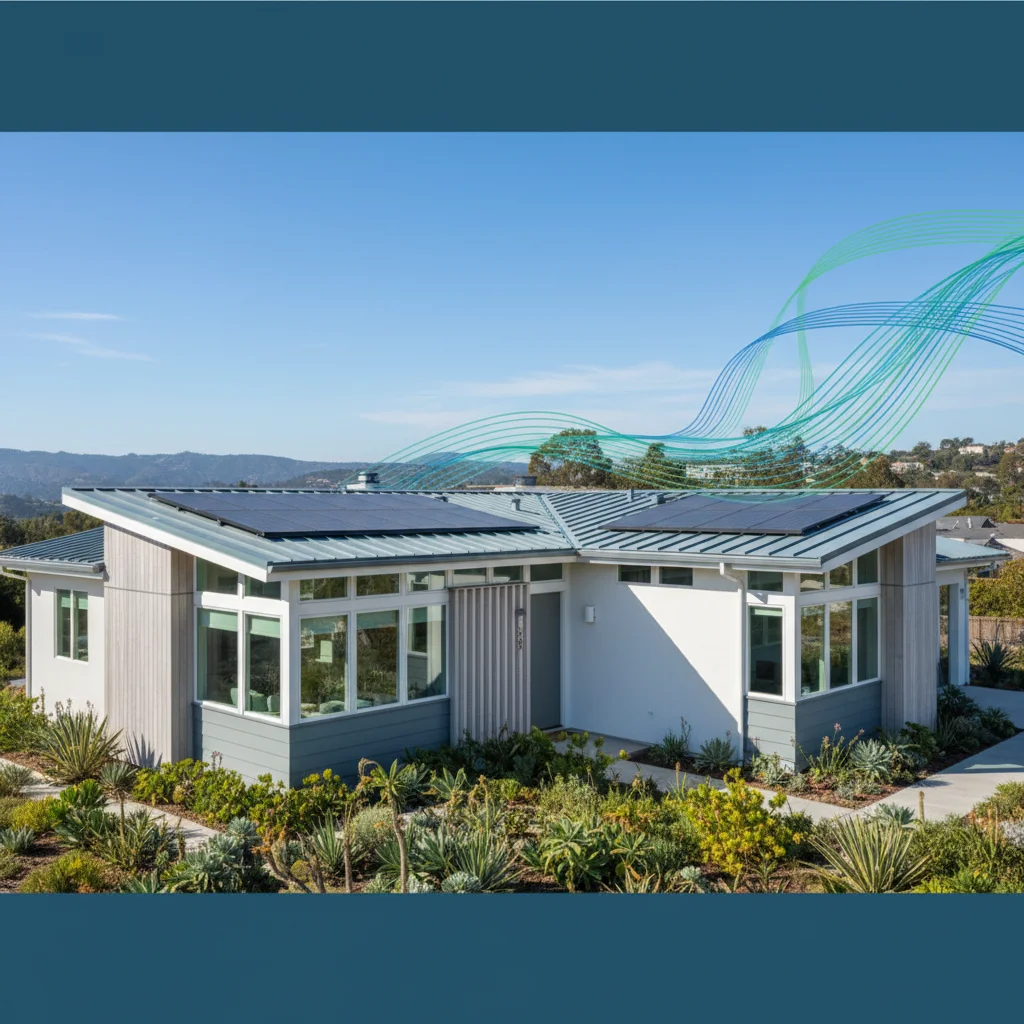
San Diego homeowners spent $847 million on cooling costs in 2025, and 40% of that energy escaped through poorly insulated attics and walls. But installing upgraded insulation now triggers rebates from San Diego Gas & Electric, California state programs, and federal tax credits totaling $1,500 to $4,200 per project. And those rebates stack.
What insulation rebates are available in San Diego right now?
San Diego Gas & Electric offers $0.20 per square foot for attic insulation and $0.30 per square foot for wall insulation through the 2026 Energy Efficiency Rebate Program. California's Building Initiative for Low Emissions Development (BUILD) provides $2,000 to $4,000 for comprehensive insulation upgrades in homes built before 2006. The federal Energy Efficient Home Improvement Credit (Section 25C) ended for property placed in service after December 31, 2025 (IRS FS-2025-05). Federal tax credits for this work have ended, but state, local and utility rebates may still apply; check what is available at your address with the DuloCore rebate calculator. San Diego County Water Authority also offers $500 rebates for insulation projects paired with water heater upgrades. And the California Public Utilities Commission's TECH Clean California program adds $1,000 for insulation installed alongside heat pump systems. So homeowners installing $5,000 worth of insulation capture $2,700 to $4,200 in combined rebates depending on project scope and eligibility tier.
Answer Capsule: San Diego insulation rebates in 2026 include SDG&E's $0.20-$0.30 per square foot payment, California BUILD's $2,000-$4,000 for pre-2006 homes, and federal IRA tax credits covering 30% of costs up to $1,200 annually through 2032.
How much money can you get back with San Diego insulation rebates?
SDG&E rebates for a typical 1,500-square-foot attic insulation project pay $300, while wall insulation for a 2,000-square-foot home generates $600. California BUILD rebates range from $2,000 for moderate-income households to $4,000 for low-income applicants. The federal tax credit adds $1,200 for projects exceeding $4,000 in total costs. So a complete attic and wall insulation upgrade costing $8,000 returns $900 from SDG&E, $2,000 from BUILD, and $1,200 from the IRS, totaling $4,100. And homeowners pairing insulation with a heat pump capture an additional $1,000 from TECH Clean California. But SDG&E rebates cap at $1,000 per household annually, and BUILD funds deplete by September in most years. Water Authority rebates require simultaneous water heater replacement, limiting eligibility to comprehensive retrofit projects.
"Insulation improvements can reduce heating and cooling costs by up to 20 percent annually while improving comfort and indoor air quality." — U.S. Department of Energy
Am I eligible for San Diego insulation rebates?
SDG&E rebates require active residential electric service in the utility's territory, which covers San Diego, Orange, and Riverside counties. California BUILD restricts eligibility to homes built before January 1, 2006, with household income below 80% of area median income ($89,600 for a family of four in San Diego County as of 2026). And TECH Clean California limits participation to single-family homes and duplexes, excluding condominiums and apartments. Renters qualify for SDG&E and TECH programs with landlord permission documented through a signed authorization form. But the federal tax credit flows exclusively to property owners who paid for the installation. San Diego County Water Authority rebates require enrollment in the Landscape Transformation Program before project start dates. And all programs mandate professional installation by licensed contractors—DIY projects don't qualify for any rebates.
So homeowners earning under $89,600 in pre-2006 homes access the full $4,200 rebate stack, while higher earners in newer homes capture $2,100 from SDG&E and federal credits alone.
What documentation do you need to claim your rebate?
SDG&E requires itemized contractor invoices showing insulation R-value, square footage, and installation date within 180 days of project completion. California BUILD demands pre-inspection reports from certified energy auditors, post-installation verification photos, and California Contractor's State License Board documentation. Form 5695 only covers qualifying work completed by December 31, 2025 and claimed on a 2025 return; the federal 25C and 25D credits ended after that date (IRS FS-2025-05). And TECH Clean California mandates before-and-after utility bills proving baseline energy consumption. Homeowners submit SDG&E applications online through the Business Customer Center portal with photos of attic or wall installations. BUILD applications go through California Alternative Energy and Advanced Transportation Financing Authority's online portal. The federal Energy Efficient Home Improvement Credit (Section 25C) ended for property placed in service after December 31, 2025 (IRS FS-2025-05).
Water Authority rebates need landscape irrigation audits performed by certified WaterSmart contractors. And all programs retain rights to post-installation inspections within 12 months of rebate payment.
Do you need pre-approval before starting your insulation project?
SDG&E rebates require no pre-approval—homeowners apply after completing installation. But California BUILD mandates pre-enrollment applications submitted 30 to 90 days before project start. TECH Clean California requires reservation applications before contractor selection, with approval timelines ranging from 14 to 45 days depending on funding availability. And the federal tax credit operates on a post-installation claim basis with zero pre-approval requirements. So homeowners pursuing BUILD or TECH programs delay construction until receiving approval emails confirming reserved rebate amounts. SDG&E and IRS programs permit immediate installation followed by retroactive applications. Water Authority rebates need pre-enrollment in the Landscape Transformation Program but don't require project-specific pre-approval.
Contractors often handle BUILD and TECH pre-approvals as part of installation contracts, reducing homeowner administrative burden. And missing pre-approval deadlines for BUILD disqualifies projects entirely, even if installations meet technical standards.
What are the deadline dates for San Diego insulation rebates in 2026?
SDG&E accepts applications year-round with no fixed deadline, but funding depletes in Q3 of most years. California BUILD applications close September 30, 2026, or when the $85 million statewide allocation exhausts—whichever occurs first. The federal Energy Efficient Home Improvement Credit (Section 25C) ended for property placed in service after December 31, 2025 (IRS FS-2025-05). And TECH Clean California operates on a first-come, first-served basis until the $120 million budget depletes, typically by November. So homeowners maximize rebate capture by applying in Q1 or Q2 of 2026 before peak summer demand exhausts BUILD and TECH funds. Water Authority rebates follow the fiscal year calendar, resetting July 1, 2026, with applications accepted through June 30, 2027.
Contractors report BUILD waitlists exceeding 120 days during peak season from May through August. And SDG&E processes applications within 45 days when submitted before June, but processing times extend to 90 days after July 1.
Can you stack multiple rebates for the same project?
California law permits stacking SDG&E utility rebates with BUILD state incentives and federal tax credits for the same insulation project. And TECH Clean California explicitly allows combining its $1,000 heat pump bonus with SDG&E and BUILD payments. But Water Authority rebates prohibit stacking with other utility programs from SDG&E. So homeowners installing insulation plus heat pumps claim SDG&E, BUILD, TECH, and IRS credits totaling $5,200, while those adding water heater upgrades choose between SDG&E or Water Authority rebates—not both. The federal tax credit calculates as 30% of net costs after subtracting state and utility rebates. And SDG&E caps total annual rebates at $1,000 per address across all energy efficiency programs.
Use our free rebate calculator to model exact stacking scenarios based on project costs and household income.
"Federal tax credits for energy efficiency improvements can be combined with state and local utility rebates to maximize savings on home upgrades." — Database of State Incentives for Renewables & Efficiency
Official Sources
- U.S. Department of Energy - Save Energy, Save Money — Federal guidance on insulation standards, R-values, and energy efficiency rebates
- DSIRE USA — Comprehensive database of state and local incentives for energy efficiency and renewable energy
- SDG&E Energy Efficiency Programs — Official rebate information for San Diego Gas & Electric customers
Related Reading: Learn more about How To Apply For Insulation Rebates and Insulation And Air Sealing Rebates.
Frequently Asked Questions
What types of insulation qualify for San Diego rebates?
SDG&E rebates cover fiberglass batts, blown-in cellulose, spray foam, and rigid foam board insulation meeting ENERGY STAR R-value minimums of R-38 for attics and R-15 for walls. California BUILD accepts all insulation types installed by licensed contractors in conjunction with whole-home energy upgrades including air sealing and duct improvements. And the federal tax credit requires insulation products with Manufacturer Certification Statements confirming compliance with 2021 International Energy Conservation Code standards. Reflective barriers and radiant barriers don't qualify for SDG&E rebates but count toward BUILD program eligibility when paired with traditional insulation materials.
How much money can I get for insulation rebates in San Diego?
Homeowners capture $900 to $4,200 depending on project scope and income eligibility. SDG&E pays $0.20 to $0.30 per square foot up to $1,000 annually. California BUILD provides $2,000 to $4,000 for moderate- and low-income households in pre-2006 homes. The federal Energy Efficient Home Improvement Credit (Section 25C) ended for property placed in service after December 31, 2025 (IRS FS-2025-05). So a $8,000 attic and wall insulation project returns $4,100 when stacking SDG&E, BUILD, and IRS credits. But higher-income homeowners in newer homes access only SDG&E and federal credits totaling $2,100.
Do I need a contractor to apply for San Diego insulation rebates?
All SDG&E, BUILD, and TECH rebates require professional installation by California-licensed contractors with active C-2 Insulation or C-61 Limited Specialty classifications. The federal tax credit permits DIY installations for homeowners who purchase materials directly, but DIY projects forfeit eligibility for state and utility rebates. And BUILD programs mandate HERS (Home Energy Rating System) verification by certified raters, which contractors arrange as part of installation contracts. So homeowners attempting DIY insulation projects claim only the $1,200 federal credit, losing access to $2,000 to $3,000 in state and utility payments.
What is the deadline to apply for San Diego insulation rebates?
SDG&E accepts applications year-round with no fixed deadline until funds deplete, typically in September or October. California BUILD closes applications September 30, 2026, or when the $85 million allocation exhausts. The federal Energy Efficient Home Improvement Credit (Section 25C) ended for property placed in service after December 31, 2025 (IRS FS-2025-05). TECH Clean California operates first-come, first-served until the $120 million budget depletes, usually by November. So submitting applications in Q1 or Q2 maximizes approval odds before peak demand exhausts limited state and utility funding.
Are San Diego insulation rebates the same as federal tax credits?
No—SDG&E and BUILD programs provide direct cash rebates or bill credits within 45 to 90 days of approval. Form 5695 only covers qualifying work completed by December 31, 2025 and claimed on a 2025 return; the federal 25C and 25D credits ended after that date (IRS FS-2025-05). Rebates require no tax liability and flow to renters with landlord permission. But the federal credit benefits only homeowners with sufficient tax bills to offset. And rebates subtract from project costs before calculating the 30% federal credit (this federal credit ended for property placed in service after December 31, 2025) percentage. Check our energy tax credits guide for detailed federal credit requirements and IRS filing instructions.
Ready to calculate your insulation rebate savings? Use our rebate calculator to estimate exact rebate amounts based on your San Diego address, home age, and household income. Get personalized results in under 60 seconds showing SDG&E, BUILD, and federal credit eligibility for your specific project.
Last reviewed: April 14, 2026. Reviewed by DuloCore Energy Specialists. About the team.
Check your California insulation rebate eligibility — see the programs you qualify for and the dollar amounts on our California insulation rebate finder.