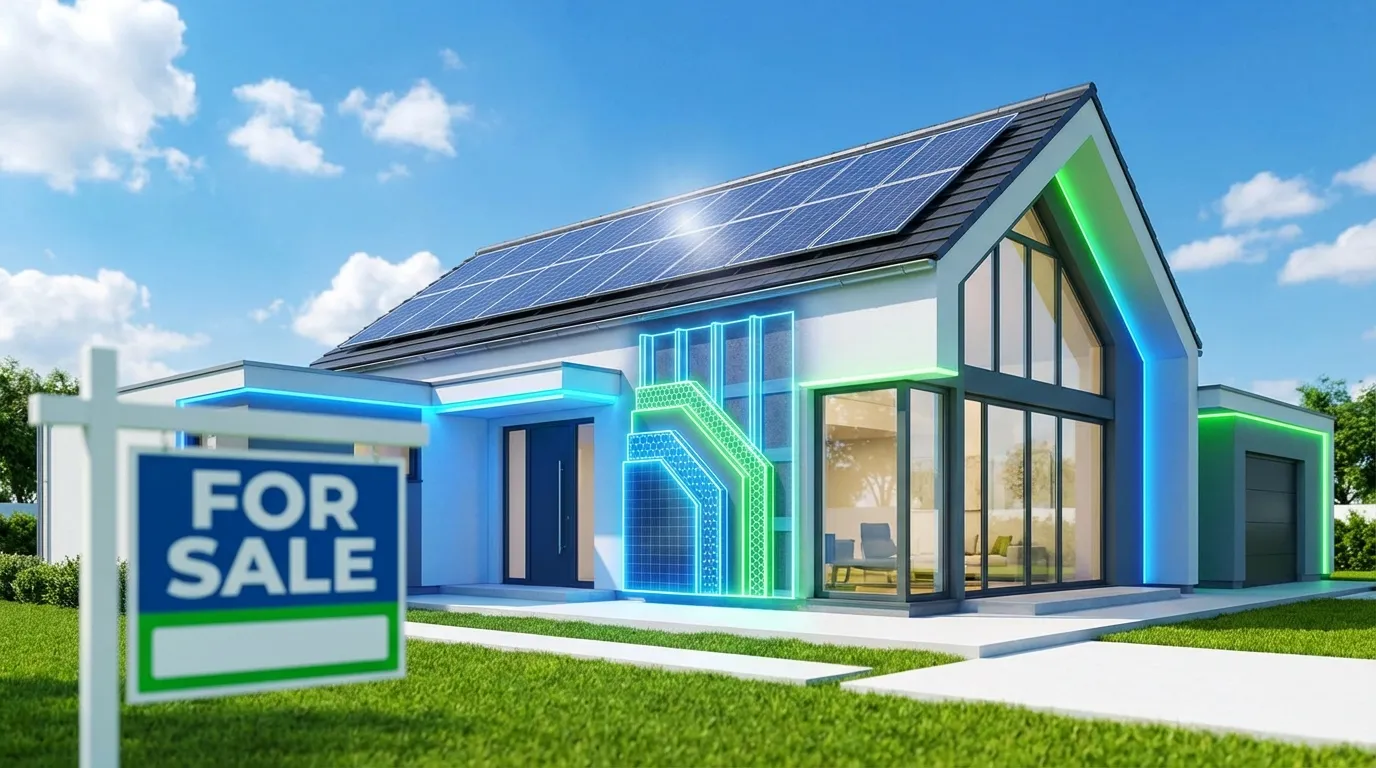
Up to 90% of U.S. homes are under-insulated, leading to an average energy loss equivalent to leaving a window open every day of the year. For homeowners preparing to sell, this isn't just a comfort issue; it's a direct impact on the final sale price and the time the property spends on the market. Buyers are now armed with thermal cameras and energy audit reports, making hidden inefficiencies a glaring negotiation point. So addressing this energy leak before listing translates directly into retaining home value.
What is the typical cost of an insulation upgrade before selling, and what is the ROI payback period?
An insulation upgrade is a pre-sale improvement with a national average cost of $1,900 for professional installation of fiberglass or cellulose insulation in an attic. And its return on investment (ROI) for home resale value is 108%, making it one of the few projects that returns more than its initial cost.
The primary expense for an insulation upgrade is determined by the material and square footage. So blown-in cellulose or fiberglass costs between $1.50 and $3.50 per square foot, while spray foam insulation runs from $2.00 to $5.00 per square foot. But sellers don't focus on the long-term energy savings payback period of 3-5 years. Instead, the immediate value comes from the increased appraisal value and marketability. A properly insulated home is a key feature in listings, often highlighted in energy efficiency reports that justify a higher asking price. And many local utility programs offer upfront insulation rebates of up to $500, which further reduces the net cost and boosts the final ROI for the seller, making the decision a purely financial one.
Which insulation efficiency ratings, specifications, and brands qualify for rebates and incentives?
Rebate-eligible insulation is defined by its compliance with ENERGY STAR specifications and the current International Energy Conservation Code (IECC) standards for the home's climate zone. And materials must meet specific R-value targets, typically R-38 to R-60 for attics, to qualify for federal and state incentives.
To qualify for programs like the federal 25C (now expired, replaced by the Energy Efficient Home Improvement Credit) tax credit, the insulation material itself must be a certified product. So homeowners should look for brands like Owens Corning, Johns Manville, CertainTeed, and Knauf Insulation, which all offer products that meet these stringent requirements. But the product alone isn't enough. The installation must also include proper air sealing of all gaps and cracks in the building envelope.
"Sealing air leaks in your home's envelope and adding insulation are two of the most cost-effective ways to improve energy efficiency and comfort in your home." — U.S. Department of Energy
Proof of purchase, including brand and R-value, is required for all rebate applications. So retaining manufacturer certification statements and contractor invoices is essential for a successful claim.
How do I choose the right insulation for my climate zone, and what is its expected lifespan?
Choosing insulation for a specific climate zone requires consulting the Department of Energy's R-value recommendations, which dictate thermal resistance needs from Zone 1 (hot) to Zone 8 (subarctic). And its expected lifespan for common materials like fiberglass and cellulose is over 80 years if it remains dry and undisturbed.
For example, a home in Miami (Zone 1) requires an attic R-value of R-30 to R-49, whereas a home in Minneapolis (Zone 6) needs R-49 to R-60. So selecting the correct R-value is the most critical factor for performance and rebate eligibility. And while materials like fiberglass have a long physical lifespan, their thermal performance degrades if compressed or exposed to moisture. But spray foam insulation offers a lifespan of 80+ years and also acts as an air and moisture barrier, though its upfront cost is 50-75% higher. The key is matching the DOE's R-value map to the product specifications. Using an online rebate calculator can help determine which R-values provide the best financial incentive in a specific zip code.
What are the best comparison alternatives to a full insulation upgrade, and what are their maintenance requirements? (See also: insulation rebates for landlords.) (See also: insulation rebates for renters.) (See also: insulation rebates for veterans.) (See also: geothermal tax credit.)
The best alternative to a full insulation upgrade is comprehensive air sealing, a project that costs between $400 and $1,200 and offers an immediate, high-impact improvement on home efficiency. And its maintenance requirement is a visual inspection of caulking and weatherstripping every 2-3 years.
While a full insulation project has a 108% ROI, air sealing specifically targets drafts and energy leaks that insulation alone can't stop. So this makes it a powerful standalone project or a necessary first step before adding new insulation. Another alternative is installing a radiant barrier in the attic, which costs $0.50-$2.00 per square foot and is most effective in hot climates (Zones 1-3). But it doesn't replace the need for traditional insulation. For a more comprehensive approach, homeowners also compare insulation to higher-cost projects like window replacements ($300-$1,000 per window) or new HVAC systems, which often qualify for heat pump rebates. Air sealing, however, provides the best value-to-cost ratio for a pre-sale upgrade with minimal ongoing maintenance.
Insulation Upgrade Rebate Comparison
| Program Name | Max Rebate/Credit Amount | Key Eligibility Requirement | Typical Deadline |
|---|---|---|---|
| Federal 25C Tax Credit | Ended Dec 31, 2025 | — | Ended Dec 31, 2025 |
| State Energy Programs | $200 - $1,500 | Varies by state; often requires energy audit | Varies; check DSIRE |
| Local Utility Rebates | $0.15 - $0.75 per sq. ft. | Must be a customer of the utility | Often program-based funding |
Related Reading: Learn more about Free Home Energy Audit and Home Energy Assessment.
Related Reading: Learn more about Home Energy Audit and Home Energy Audit Before Selling.
Frequently Asked Questions
What insulation upgrades qualify for rebates when selling my home?
Insulation upgrades that meet specific R-value requirements for your climate zone and include comprehensive air sealing typically qualify. And products must usually be ENERGY STAR certified. The most common qualifying projects are attic insulation, wall insulation, and basement or crawl space insulation. So check your local utility and state programs for specific material requirements.
How much money can I get back from insulation rebates before selling my house?
The federal Energy Efficient Home Improvement Credit (Section 25C) ended for property placed in service after December 31, 2025 (IRS FS-2025-05). And state and local utility rebates add another $200 to $1,500, depending on location and project scope. So the total combined incentive often covers 50% or more of the initial installation cost.
What is the application process for insulation rebates if I'm preparing to sell?
The application process involves submitting contractor invoices, manufacturer certification statements for the insulation, and photos of the completed work. And for federal energy tax credits, you file Form 5695 with your tax return. But utility rebates often require pre-approval before work begins, so always check their specific process first.
Are there specific deadlines for insulation rebate applications when a home is on the market?
Yes, deadlines are critical. Federal tax credits must be claimed for the year the installation is completed, with a filing deadline of April 15 of the following year. And local utility and state rebate programs often have limited funding and operate on a first-come, first-served basis, with deadlines typically at the end of the calendar or fiscal year.
Does upgrading insulation for rebates significantly increase my home's resale value?
Yes, upgrading insulation increases a home's resale value. The National Association of Realtors finds that attic insulation projects recoup 108% of their cost at resale. And an energy-efficient home is a distinct marketing advantage that appeals to 61% of modern buyers, often resulting in a faster sale and a higher final offer.
Calculate Your Rebates
Ready to Save on Your Home Improvement?
Use our free rebate calculator to find every federal, state, and utility incentive you qualify for.
Last updated April 14, 2026 — reviewed by DuloCore Editorial. About our authors.
Check your California insulation rebate eligibility — see the programs you qualify for and the dollar amounts on our California insulation rebate finder.