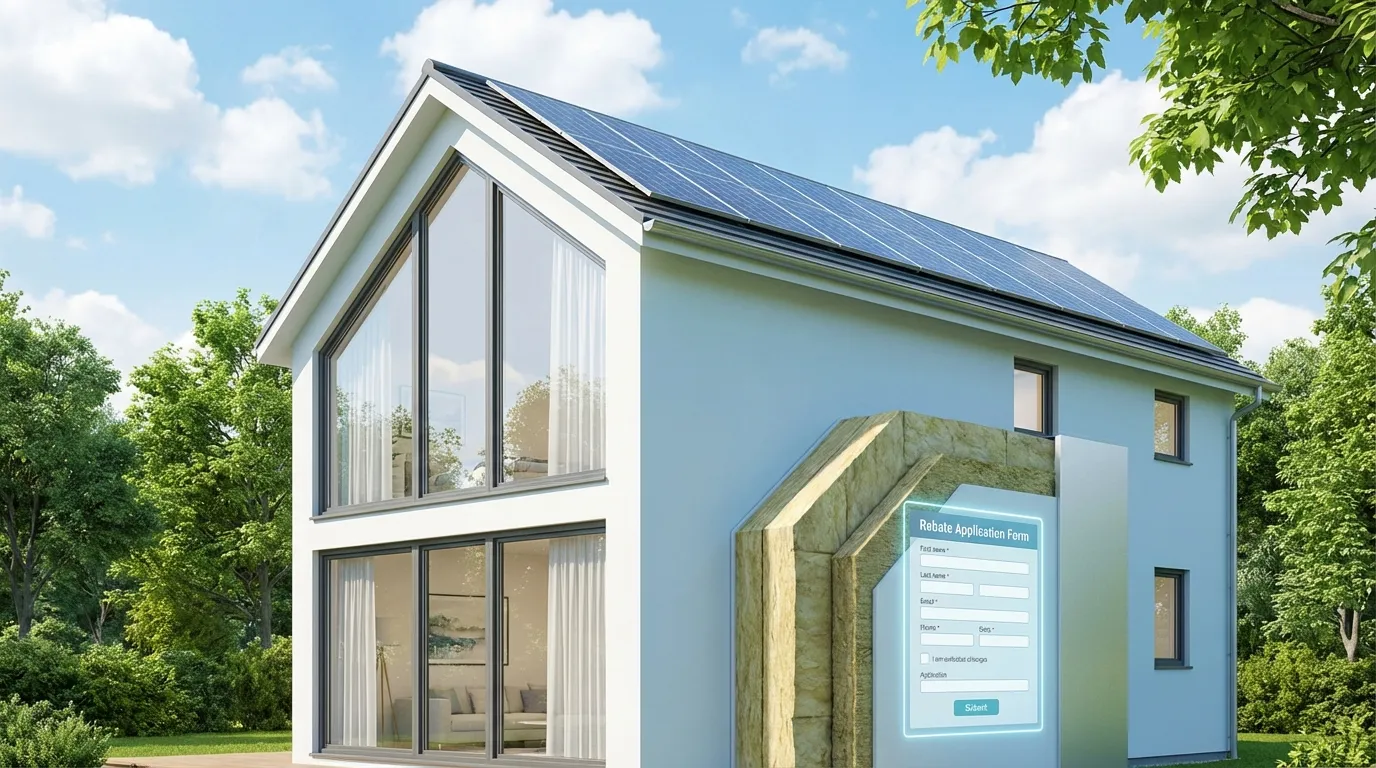
Up to 35% of a home's heat escapes directly through poorly insulated walls, forcing your HVAC system to work overtime just to maintain a comfortable temperature. This constant energy loss translates directly into higher utility bills month after month. So addressing this thermal weak point isn't just about comfort; it's a direct financial calculation that impacts your budget every single day.
How Much Can I Save on Wall Insulation with Rebate Programs?
The federal Energy Efficient Home Improvement Credit (Section 25C) ended for property placed in service after December 31, 2025 (IRS FS-2025-05). Federal tax credits for this work have ended, but state, local and utility rebates may still apply; check what is available at your address with the DuloCore rebate calculator. But state and utility programs offer additional point-of-sale rebates, often ranging from $200 to $1,500, depending on location and income level for projects completed in 2026.
The total savings on a wall insulation project come from multiple sources. And the federal government offers the Energy Efficient Home Improvement Credit (25C (now expired, replaced by the Energy Efficient Home Improvement Credit)), which provides a 30% tax credit on qualifying insulation materials and installation costs, capped at $1,200 per year. But this is just the beginning. So state energy offices and local utility companies offer their own direct rebates that reduce the upfront cost. For example, a homeowner in Massachusetts can receive up to 75% off approved insulation projects. So combining these programs reduces the net cost of a $5,000 insulation project by $2,000 or more. These stacked incentives make the return on investment for insulation projects happen in under 5 years for many households. The specific energy tax credits you can claim depend entirely on your location and the scope of your project.
Do I Qualify? Understanding Eligibility for Wall Insulation Rebates
Eligibility for 2026 wall insulation rebates depends on homeownership, location, and income level. But federal credits have no income cap, while state programs often require income below 150% of the area median. So the insulation must also meet specific R-value standards for the climate zone.
Qualification criteria are strict and vary by program. The federal Energy Efficient Home Improvement Credit (Section 25C) ended for property placed in service after December 31, 2025 (IRS FS-2025-05). But state-level programs, especially those funded by the Inflation Reduction Act's HEAR rebates, have income caps. So households earning below 80% of their Area Median Income (AMI) can receive up to 100% of the project cost covered. The insulation material itself must meet specific performance standards.
So homeowners must confirm their project meets these technical specifications before beginning work. Check DuloCore’s database for local insulation rebates and requirements.
What is the Application Process for Wall Insulation Rebates?
The application process for 2026 wall insulation rebates typically involves getting pre-approval from the utility or state agency. So homeowners must hire a qualified contractor, complete the installation, and then submit paid invoices and project documentation. But the final rebate is issued via check or bill credit.
Navigating the application process requires careful documentation. And the first step is almost always an energy audit to identify insulation needs and qualify for the program. So you must then select a contractor, who is often required to be certified or listed in a program-approved network. After the work is complete, you will submit a rebate application packet. This packet includes the contractor's invoice, proof of payment, and specification sheets for the installed insulation materials. But some programs offer instant rebates through the contractor, simplifying the process. So you don't have to wait for a check in the mail. The key is to get pre-authorization before any work begins to ensure the project is eligible for reimbursement.
Wall Insulation Rebate Program Comparison
| Program Type | Rebate Amount | Key Eligibility | Typical Deadline |
|---|---|---|---|
| Federal Tax Credit (25C) | Ended Dec 31, 2025 | — | Ended Dec 31, 2025 |
| State Rebate (e.g., NYSERDA) | Up to $4,000 | NY resident, income requirements apply | Funds deplete annually |
| Utility Rebate (e.g., PG&E) | $0.50 per square foot | Must be a PG&E customer | Varies, often year-end |
What Are the Deadlines and Funding Status of Wall Insulation Rebate Programs? (See also: attic insulation rebate programs.) (See also: attic insulation cost and savings.) (See also: insulation rebates for manufactured homes.) (See also: geothermal tax credit.)
The federal Energy Efficient Home Improvement Credit (Section 25C) ended for property placed in service after December 31, 2025 (IRS FS-2025-05). But state and utility rebate programs operate on annual funding cycles and often close once funds are depleted. So applicants must check local program deadlines, as many expire by December 31, 2024.
Timing is critical when applying for these programs. The federal Energy Efficient Home Improvement Credit (Section 25C) ended for property placed in service after December 31, 2025 (IRS FS-2025-05). But state and local utility programs are different. And their funding is allocated annually and operates on a first-come, first-served basis. So popular programs often run out of money well before the official end-of-year deadline.
"Many states offer programs that are funded on a yearly basis. Once the funds for a particular program are exhausted, the program will close until the next funding cycle." — DSIRE
So it's essential to check the funding status of your local program before committing to a project. Waiting too long into the year means you risk the program closing, leaving you to cover the full project cost without financial assistance.
Can I Combine Wall Insulation Rebates with Other Energy Incentives?
Homeowners can frequently combine wall insulation rebates with other incentives in 2026. But rules vary by jurisdiction. So federal tax credits are stackable with state rebates and utility incentives for projects like heat pump installations, maximizing total savings up to 100% of project costs.
Stacking incentives is the best strategy for maximizing your financial return. And the federal 25C tax credit can be applied on top of any state or utility rebate you receive. So if a state program covers $1,000 of your $4,000 insulation project, you can still claim the 30% federal tax credit on the remaining $3,000 out-of-pocket cost. But some local programs have rules against combining their rebate with another from a different local entity. Insulation projects are often done alongside other upgrades. So you can also claim separate rebates for air sealing or installing new, efficient heating systems. This whole-home approach creates a comprehensive thermal envelope, and you can often find incentives for each component, like heat pump rebates.
Frequently Asked Questions
What are the eligibility requirements for wall insulation rebate programs?
Eligibility typically requires you to be the homeowner of the property. And the insulation must meet specific R-value requirements set by the Department of Energy for your climate zone. But many state and utility programs also have income limits, particularly for enhanced rebates.
How much money can I get back from a wall insulation rebate?
The federal Energy Efficient Home Improvement Credit (Section 25C) ended for property placed in service after December 31, 2025 (IRS FS-2025-05). So state and utility rebates add to this, often providing another $200 to $1,500. And low-income households can qualify for programs covering up to 100% of the cost.
What is the application process for a wall insulation rebate?
The process generally involves a pre-installation energy audit, hiring a program-approved contractor, and submitting a post-installation application with paid invoices and material spec sheets. But some utilities offer instant rebates directly through the contractor.
When do wall insulation rebate programs typically expire?
The federal Energy Efficient Home Improvement Credit (Section 25C) ended for property placed in service after December 31, 2025 (IRS FS-2025-05). But state and local utility programs are funded annually. So they often expire at the end of the calendar year or whenever their allocated funds are depleted.
Can I combine wall insulation rebates with other home energy efficiency incentives?
Yes, in most cases. And the federal tax credit can be combined with state and utility rebates. So you can also stack insulation rebates with incentives for other projects like air sealing, window replacement, or heat pump installation to maximize total savings.
Find out exactly which wall insulation rebates you qualify for in seconds. Calculate Your Rebates
Ready to Save on Your Home Improvement?
Use our free rebate calculator to find every federal, state, and utility incentive you qualify for.
Updated: April 14, 2026 — fact-checked by DuloCore Research. About our editorial process.
Check your California insulation rebate eligibility — see the programs you qualify for and the dollar amounts on our California insulation rebate finder.