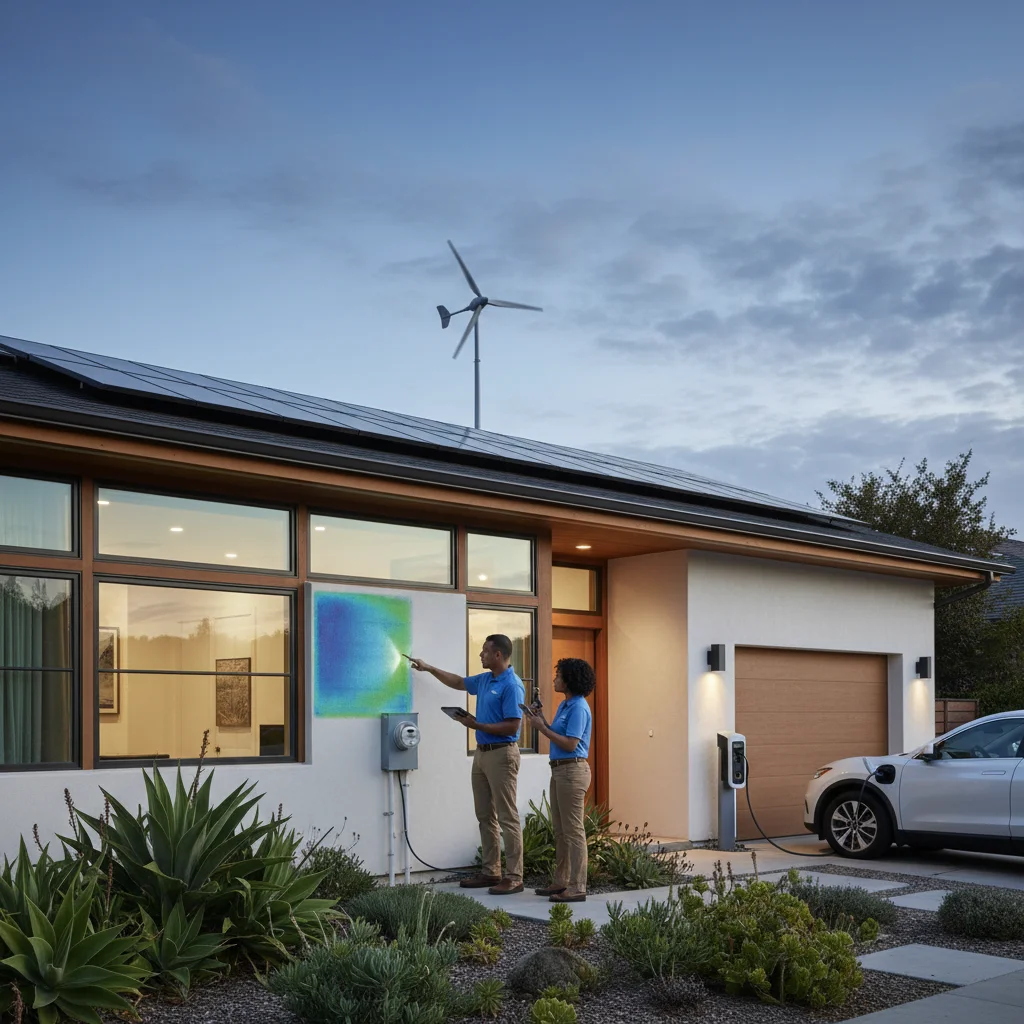
California homeowners spend an average of $2,847 annually on energy costs, but a professional energy audit can identify savings opportunities worth 20-40% of that total. And the state's updated 2026 energy efficiency programs now offer free or subsidized audits for households earning up to 80% of area median income. But finding a certified auditor who meets both state requirements and federal IRA program standards isn't straightforward.
What Qualifications Should I Look for in a California Home Energy Auditor?
California's 2026 energy audit programs require auditors hold BPI (Building Performance Institute) certification or equivalent RESNET HERS certification. The California Energy Commission mandates these credentials for any audit used to qualify for state rebates, which totaled $412 million in residential energy efficiency funding this year. And federal IRA tax credit claims require audits from certified professionals meeting DOE Workforce Guidelines effective January 2026.
BPI-certified energy auditors complete 72 hours of training covering building science, combustion safety, and diagnostic testing. RESNET HERS raters undergo similar training but focus specifically on California's Title 24 energy code compliance. Both certifications require passing a written exam and field evaluation. The California Association of Building Energy Consultants maintains a searchable database of 1,847 certified auditors statewide as of March 2026.
So homeowners should verify three credentials before hiring: active BPI or RESNET certification (check certification number on BPI.org or RESNET.us), liability insurance coverage of at least $1 million, and contractor's license for any recommended work. The California Contractors State License Board provides free license verification at cslb.ca.gov.
"Homeowners should confirm their auditor's certification is current and recognized by their specific rebate program before scheduling service." — U.S. Department of Energy
How Much Does a Professional Energy Audit Cost in California?
Professional home energy audits in California cost $300-$600 for standard homes under 2,500 square feet, with prices reaching $800-$1,200 for larger properties or comprehensive assessments. But income-qualified households pay $0 through programs like the Energy Savings Assistance Program, which served 287,000 California homes in 2025. And some utilities offer $150-$200 rebates that reduce net audit costs to $100-$400.
The price variation reflects scope differences. Basic audits ($300-$400) include visual inspection, combustion safety testing, and a blower door test to measure air leakage. Comprehensive audits ($500-$800) add infrared thermal imaging, duct leakage testing, and detailed modeling of upgrade scenarios with projected ROI calculations. Premium audits ($800+) incorporate post-upgrade verification testing.
| Program Type | Cost Range | Qualification | Report Delivery |
|---|---|---|---|
| Basic Walk-Through | $300-$400 | None required | 3-5 business days |
| Comprehensive Audit | $500-$800 | None required | 5-10 business days |
| Income-Qualified Free | $0 | ≤80% AMI | 10-15 business days |
But the upfront cost typically generates 5-10x returns through identified savings. California audits in 2025 identified an average of $3,200 in annual energy waste per household, with recommended upgrades averaging 7.2 years payback through combined utility savings and rebates.
Use our free rebate calculator to estimate your potential savings from audit recommendations.
Which California State Agencies Administer Energy Audit Programs and Rebates?
The California Energy Commission (CEC) administers the primary residential audit programs through its Energy Upgrade California initiative, which allocated $127 million specifically for home energy assessments in fiscal year 2026. The CEC works with four investor-owned utilities—PG&E, SCE, SoCalGas, and SDG&E—plus 46 publicly-owned utilities to deliver local programs. And the California Public Utilities Commission (CPUC) regulates the Energy Savings Assistance Program, which provides free audits and upgrades to low-income households.
Each utility operates distinct programs with different audit requirements. PG&E's Home Upgrade Program requires BPI-certified auditors and offers $250 audit rebates for participants who complete recommended upgrades worth $3,000+. SCE's Home Energy Advisor program provides free virtual audits but requires in-person certified audits for rebates exceeding $500. SoCalGas partners with certified contractors to offer $200 audit rebates when customers install qualifying natural gas equipment.
The California Alternative Energy and Advanced Transportation Financing Authority (CAEATFA) manages Property Assessed Clean Energy (PACE) financing, which requires comprehensive energy audits before approving loans. So homeowners pursuing PACE financing must use auditors certified under California's CalCERTS program, a subset of the 1,847 statewide BPI-certified professionals.
Learn more about qualifying upgrades in our guide to energy tax credits.
What Are the Income Eligibility Requirements for California's Energy Audit Assistance?
California's Energy Savings Assistance Program (ESAP) provides free energy audits to households at or below 250% of federal poverty guidelines, which equals $75,000 annual income for a family of four in 2026. The program served 287,000 homes in 2025 and expanded to 340,000 projected participants in 2026. And middle-income households earning up to 80% of area median income qualify for subsidized audits through Energy Upgrade California, with copays ranging from $50-$150 based on income tier.
Income verification requires documentation submitted at application: two recent pay stubs, most recent tax return, or proof of enrollment in qualifying assistance programs like CalFresh, Medi-Cal, or SSI. The California Public Utilities Commission updated verification requirements in January 2026 to accept IRS Form 1040 directly without additional documentation for returns filed within 12 months.
| Income Level | Audit Cost | Annual Income Limit (Family of 4) | Documentation Required |
|---|---|---|---|
| ≤250% FPL | $0 | $75,000 | Tax return or program enrollment |
| 250-400% FPL | $50-$150 | $120,000 | Tax return + pay stubs |
| >400% FPL | Full cost | No limit | None |
But geographic variations matter. San Francisco's area median income sits at $141,400 for four-person households, while Fresno's median reaches only $78,600. So 80% AMI thresholds range from $62,880 in rural counties to $113,120 in the Bay Area. Application portals at energyupgradeca.org automatically calculate eligibility based on zip code and household size.
Explore additional rebate opportunities through heat pump rebates.
What Is the Application Process and Deadline for California Energy Audit Programs?
Most California utility energy audit programs accept applications year-round with no specific deadline, but funding operates on a first-come, first-served basis until annual budgets deplete. PG&E's 2026 audit rebate fund of $18.4 million exhausted in November 2025, leaving a 4-month gap until the January 2026 renewal. And SCE's program hit capacity in August 2025, creating a 6-month waitlist for subsidized audits.
The application process starts at your utility's website or energyupgradeca.org. Homeowners enter property details (address, square footage, year built, heating/cooling systems) and income documentation if pursuing subsidized rates. The system matches applicants with certified auditors within 25 miles, displaying availability calendars and pricing. Booking typically occurs within 48 hours, with audit appointments scheduled 1-3 weeks out depending on seasonal demand.
Post-audit, homeowners receive detailed reports within 5-15 business days identifying specific upgrades, estimated costs, projected savings, and available rebates. The report remains valid for rebate applications for 12 months from audit date under 2026 program rules. But contractors must pull permits within 180 days to lock in rebate amounts, as utility programs adjust incentive levels quarterly based on budget availability.
"Energy efficiency program funds are limited and available on a first-come, first-served basis until exhausted." — DSIRE USA
So strategic timing matters. Applications submitted January-March face shortest wait times of 1-2 weeks for appointments, while July-September peak season creates 4-6 week backlogs. And submitting complete rebate applications within 60 days of upgrade completion ensures processing before quarterly budget reviews that can reduce incentive levels by 10-25%.
How Do California Energy Auditors Compare by Certification and Service Area?
California's 1,847 certified energy auditors break down into three primary certification categories: 1,203 BPI Building Analyst professionals (65%), 487 RESNET HERS raters (26%), and 157 dual-certified specialists (9%). BPI-certified auditors concentrate in Northern California, with 547 serving the nine-county Bay Area. RESNET raters cluster in Southern California, particularly the 312 serving Los Angeles, Orange, and San Diego counties where new construction activity drives Title 24 compliance work.
Geographic coverage creates service gaps. Rural counties like Alpine, Modoc, and Trinity each have fewer than three certified auditors, forcing homeowners to pay $150-$300 travel fees for professionals driving from urban centers 100+ miles away. But population-dense regions show saturation—San Francisco County averages one certified auditor per 1,240 housing units, while Sacramento County reaches one per 987 units.
Service breadth varies significantly. Single-certification auditors typically offer basic assessments ($300-$500) meeting minimum program requirements. Dual-certified professionals command premium rates ($600-$1,200) but provide comprehensive reports qualifying for multiple rebate programs simultaneously, eliminating the need for separate audits when pursuing both state and federal incentives.
And response times differ by region. Bay Area auditors report 2-3 week booking windows during off-peak months (January-April, October-December) extending to 6-8 weeks in summer. Central Valley auditors maintain 1-2 week availability year-round due to lower demand relative to certified professional supply.
Review our comprehensive guide to home energy audits for detailed preparation steps.
Official Sources
- U.S. Department of Energy - Save Energy, Save Money — Federal energy efficiency guidance, rebate programs, and IRA tax credit information (note: the federal 25C and 25D credits ended for projects completed after December 31, 2025)
- DSIRE USA — Database of state incentives for renewables and efficiency, including California programs
- California Energy Commission — State energy policy, building standards, and Energy Upgrade California programs
Related Reading: Learn more about Demand Response Home Energy and Electric Vehicle Home Energy Impact.
Related Reading: Learn more about Energy Audit Mobile Home and Energy Audit Old Home Pre-1970.
Related Reading: Learn more about Best Home Energy Auditors Bay Area.
Frequently Asked Questions
How do I find a certified energy auditor in California?
The Building Performance Institute maintains a searchable database of certified auditors at bpi.org/professionals, with filters for location, certifications, and specialties. The California Association of Building Energy Consultants offers a similar directory at cabec.org with 1,847 professionals listed as of March 2026. And most utility companies provide pre-screened auditor lists through their energy efficiency program portals—PG&E lists 412 approved contractors, while SCE maintains 287 qualified professionals. Homeowners should verify current certification status and request three quotes before selecting an auditor.
What qualifications should a home energy auditor have?
California energy auditors must hold BPI Building Analyst certification or RESNET HERS Rater credentials to qualify for state rebate programs as of 2026. BPI certification requires 72 hours of training, written and field exams, and covers combustion safety, building science, and diagnostic testing. RESNET certification focuses on Title 24 compliance and new construction standards. Both require renewal every three years through continuing education. And auditors should carry $1 million general liability insurance plus a valid California contractor's license (C-2, C-20, or C-46) if performing any installation work beyond assessment.
How much does a home energy audit cost in California?
Standard residential energy audits cost $300-$600 for homes under 2,500 square feet, with comprehensive assessments reaching $800-$1,200 for larger properties or premium services including thermal imaging and detailed modeling. But income-qualified households at or below 250% of federal poverty guidelines ($75,000 for a family of four in 2026) receive free audits through the Energy Savings Assistance Program. Middle-income households up to 80% area median income pay subsidized rates of $50-$150. And many utilities offer $150-$250 rebates when customers complete recommended upgrades, reducing net audit costs substantially.
What does a professional home energy audit include?
Comprehensive California energy audits include visual inspection of insulation, HVAC systems, water heaters, and windows; blower door testing to measure whole-house air leakage (reported in CFM50); combustion safety testing for gas appliances; duct leakage testing (CFM25); and infrared thermal imaging to identify hidden insulation gaps. Auditors analyze 12 months of utility bills to establish baseline consumption patterns. The final report details current energy use, identifies specific upgrades with cost estimates, projects annual savings for each measure, lists applicable rebates, and calculates ROI. Reports typically run 15-30 pages and remain valid for rebate applications for 12 months under 2026 program rules.
How long does it take to get results from a home energy audit?
Most California auditors deliver comprehensive reports within 5-10 business days of the on-site assessment, which typically lasts 2-4 hours for standard single-family homes. Rush services from some providers reduce delivery to 2-3 business days for an additional $75-$150 fee. Income-qualified audits through utility programs take longer—10-15 business days—due to additional quality control reviews required for subsidized services. And the on-site audit itself requires homeowner presence for equipment access and typically schedules 1-3 weeks after booking during off-peak months (January-April, October-December) or 4-8 weeks during summer peak demand.
Take Action on Your Energy Savings
Ready to identify your home's biggest energy waste and qualify for thousands in rebates? Use our free rebate calculator to discover exactly how much you can save through California's 2026 energy efficiency programs. Enter your zip code, home details, and planned upgrades to see instant estimates for federal tax credits, state rebates, and utility incentives—then connect with certified auditors in your area to get started.
Last updated April 14, 2026 — reviewed by DuloCore Editorial. About our authors.