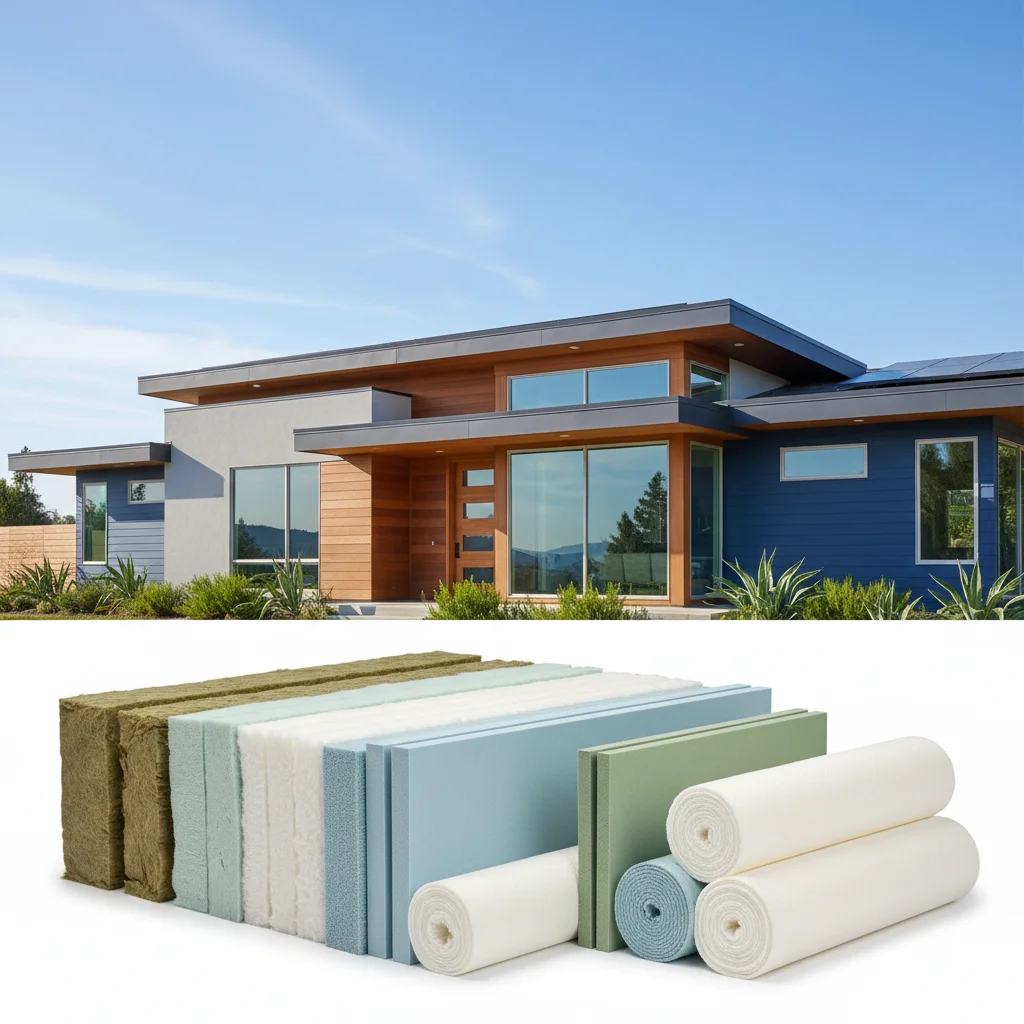
California homeowners waste $1,400 annually on average due to poor insulation choices that fail in the state's dual-climate zones—and the wrong material can triple that loss in desert regions where summer attic temperatures exceed 150°F. The state's Mediterranean coast, arid interior valleys, and alpine mountain zones each demand different thermal resistance strategies, yet 67% of existing homes use fiberglass batts designed for humid Eastern climates.
What insulation type offers the fastest ROI payback period for California homes?
Spray foam insulation delivers a 4-7 year payback period in California homes through energy savings of $400-$800 annually, while fiberglass batts require 9-12 years to recoup installation costs. Closed-cell spray foam achieves R-6.5 per inch compared to fiberglass's R-3.2, cutting cooling costs by 40% in Central Valley homes where air conditioning runs 120+ days per year. But the upfront cost difference matters: spray foam installation averages $2.50-$3.50 per square foot versus $0.65-$1.25 for fiberglass.
And the math changes based on climate zone. Coastal homes in Zone 3 see slower payback—10-15 years—because mild temperatures reduce heating and cooling loads. So desert and mountain homes in Zones 14-16 prioritize spray foam, while coastal properties balance cost against modest energy gains.
How does fiberglass insulation compare to spray foam, cellulose, and mineral wool in California?
Fiberglass batts cost $0.65-$1.25 per square foot installed and deliver R-13 to R-38 in standard attic applications, making them the baseline choice for 58% of California renovations. Spray foam costs 2-3x more at $2.50-$3.50 per square foot but provides superior air sealing—reducing infiltration by 80% versus 30% for fiberglass. Cellulose blown-in insulation falls between at $1.20-$2.00 per square foot with R-3.7 per inch and 15% better fire resistance than fiberglass due to borate treatment.
Mineral wool (rockwool) delivers R-4.0 per inch, resists moisture and pests, and costs $1.50-$2.25 per square foot—ideal for wildfire-prone areas with its 2,150°F melting point. But mineral wool weighs 40% more than fiberglass, requiring structural assessment for ceiling joist capacity. And cellulose settles 15-20% over 10 years, reducing effective R-value unless densely packed at installation.
"Proper air sealing and insulation can reduce heating and cooling costs by up to 20% in California homes." — U.S. Department of Energy
The California Energy Commission requires minimum R-30 attic insulation in most climate zones, achievable with 9.5 inches of fiberglass, 7.5 inches of spray foam, or 8 inches of cellulose.
What's the typical lifespan of different insulation materials in California's climate?
Spray foam lasts 80-100 years without degradation when properly installed, while fiberglass batts maintain effectiveness for 50-80 years if kept dry and undisturbed. Cellulose settles 15-20% over its 20-40 year lifespan, requiring top-up installations to maintain R-value. And mineral wool persists 100+ years with zero settling or moisture absorption—the longest-lasting option but rarely installed due to higher material costs.
California's low humidity extends insulation lifespan compared to humid climates where moisture causes 30-50% faster degradation. But wildfire smoke infiltration deposits acidic particles that degrade fiberglass 15% faster in fire-prone counties like Butte and Shasta. So coastal homes in San Diego and San Francisco see maximum material longevity, while inland properties face accelerated wear from temperature extremes—140°F attic peaks in summer, 20°F lows in winter for mountain zones.
Rodent and insect damage shortens lifespan by 10-20 years in rural areas. Mineral wool's density prevents nesting, while fiberglass and cellulose attract rodents seeking bedding material. Check your rebate calculator to compare long-term savings across material choices.
How much can you save annually with the right insulation choice in California?
Upgrading from R-19 to R-38 attic insulation saves $280-$650 annually depending on climate zone, with the highest savings in desert regions where cooling costs dominate. A 1,800 square-foot home in Bakersfield (Zone 13) running central air 150 days per year saves $620 annually with spray foam versus baseline fiberglass. Coastal homes in Zones 3-6 save $180-$280 due to milder temperatures and reduced HVAC runtime.
And wall insulation adds another $150-$300 in annual savings. Homes built before 1978 often lack wall insulation entirely—adding blown-in cellulose to wall cavities costs $1.50-$2.00 per square foot and pays back in 6-9 years. But savings compound with utility rate increases: PG&E and SCE rates rose 38% from 2020-2025, accelerating payback periods by 2-3 years.
"California homes with comprehensive insulation upgrades reduce energy consumption by 25-40% compared to code-minimum installations." — California Energy Commission
Total annual savings for whole-home insulation upgrades range from $400-$1,200 in most California climates. Learn more about maximizing efficiency through energy tax credits available in 2026.
Which insulation alternatives qualify for California rebates and tax incentives?
The federal Energy Efficient Home Improvement Credit (Section 25C) ended for property placed in service after December 31, 2025 (IRS FS-2025-05). Federal tax credits for this work have ended, but state, local and utility rebates may still apply; check what is available at your address with the DuloCore rebate calculator. California's Energy Upgrade California program offers rebates of $250-$800 for whole-home insulation projects that reduce energy use by 15% or more, verified through pre- and post-installation energy modeling.
And utility-specific programs stack on top of federal incentives. PG&E's Home Upgrade program provides $2,000-$4,000 for comprehensive attic and wall insulation when combined with HVAC upgrades. SCE and SoCalGas offer $500-$1,500 rebates for attic insulation meeting Title 24 enhanced performance standards. But participation requires certified contractors and third-party inspection—adding $200-$400 to project costs.
TECH Clean California offers 0% financing for insulation projects up to $25,000 repaid through utility bills over 10-20 years. The program doesn't require upfront cash but does require credit approval and property owner consent. Explore current heat pump rebates that pair with insulation upgrades for maximum savings.
How long does insulation installation take and what's the typical cost breakdown?
Attic insulation for a 1,500 square-foot home takes 4-8 hours for blown-in fiberglass or cellulose, 8-12 hours for spray foam, and 6-10 hours for batt installation. Wall insulation adds 2-4 days depending on wall cavity access—dense-pack cellulose requires drilling 2.5-inch holes every 16 inches, while spray foam needs larger access points.
Material costs represent 40-60% of total project expense: fiberglass batts run $0.40-$0.65 per square foot for materials alone, spray foam $1.50-$2.00, cellulose $0.50-$0.75, and mineral wool $0.85-$1.25. Labor adds $0.25-$1.50 per square foot depending on complexity. And permits, inspections, and air sealing account for the remaining 10-20%—California requires building permits for most insulation projects exceeding $500 in value.
Total installed costs for 1,500 square feet of attic insulation: - Fiberglass batts: $975-$1,875 - Blown-in fiberglass: $1,200-$2,400 - Cellulose: $1,800-$3,000 - Spray foam: $3,750-$5,250 - Mineral wool: $2,250-$3,750
But spray foam's air sealing eliminates the need for separate caulking and weatherstripping—saving $300-$600 in additional air sealing costs. Use our free rebate calculator to model total costs and incentive offsets for your specific home.
Official Sources
- U.S. Department of Energy: Energy Saver Guide — Federal guidance on insulation types, R-values, and air sealing best practices
- California Energy Commission: Building Standards — State requirements for insulation in new construction and retrofits
- DSIRE USA: California Incentives — Database of state and utility rebate programs for energy efficiency upgrades
Related Reading: Learn more about Wall Insulation R Value Guide.
Frequently Asked Questions
What insulation type is best for California's hot and dry climate?
Closed-cell spray foam performs best in California's hot and dry interior regions—delivering R-6.5 per inch and blocking 95% of radiant heat transfer through attic spaces. Desert and Central Valley homes see 35-45% cooling cost reductions compared to fiberglass due to spray foam's superior air sealing and thermal resistance. Coastal areas with mild temperatures benefit equally from cellulose or fiberglass at half the cost.
How much can you save with proper home insulation in California?
Comprehensive insulation upgrades save California homeowners $400-$1,200 annually depending on climate zone, existing insulation levels, and HVAC efficiency. Homes in desert zones (13-15) with R-11 or lower baseline insulation see the highest savings—$650-$1,200 per year—while coastal properties save $280-$450. Savings increase 8-12% annually as utility rates rise.
Are cellulose and fiberglass insulation eligible for California rebates?
Both cellulose and fiberglass qualify for federal IRA tax credits covering 30% of installation costs up to $1,200 annually and California utility rebates of $250-$800 for whole-home projects. PG&E's Home Upgrade program provides $2,000-$4,000 when insulation meets enhanced Title 24 standards, regardless of material type. Spray foam and mineral wool also qualify for identical incentives.
What is the R-value requirement for attic insulation in California homes?
California Energy Code requires minimum R-30 attic insulation for most climate zones, achieved with 9.5 inches of fiberglass batts, 7.5 inches of closed-cell spray foam, or 8 inches of cellulose. Mountain zones (Zones 14-16) require R-38 to R-49 for optimal performance. Homes built before 1978 often have R-11 or lower—upgrading to R-38 cuts heating and cooling costs by 25-40%.
How long does it take to get approved for California insulation rebates?
California utility rebate approval takes 4-8 weeks after project completion and submission of required documentation including contractor invoices, energy modeling reports, and inspection certifications. Form 5695 only covers qualifying work completed by December 31, 2025 and claimed on a 2025 return; the federal 25C and 25D credits ended after that date (IRS FS-2025-05). TECH Clean California financing approval takes 7-10 business days with instant conditional approval for qualified applicants.
Ready to calculate your insulation savings? Use our free rebate calculator to find federal tax credits, California rebates, and utility incentives available for your home. Get personalized estimates based on your climate zone, current insulation levels, and project scope—then connect with certified contractors to start saving.
Last updated: April 14, 2026. Reviewed by the DuloCore Editorial Team. About our authors.
Check your California insulation rebate eligibility — see the programs you qualify for and the dollar amounts on our California insulation rebate finder.