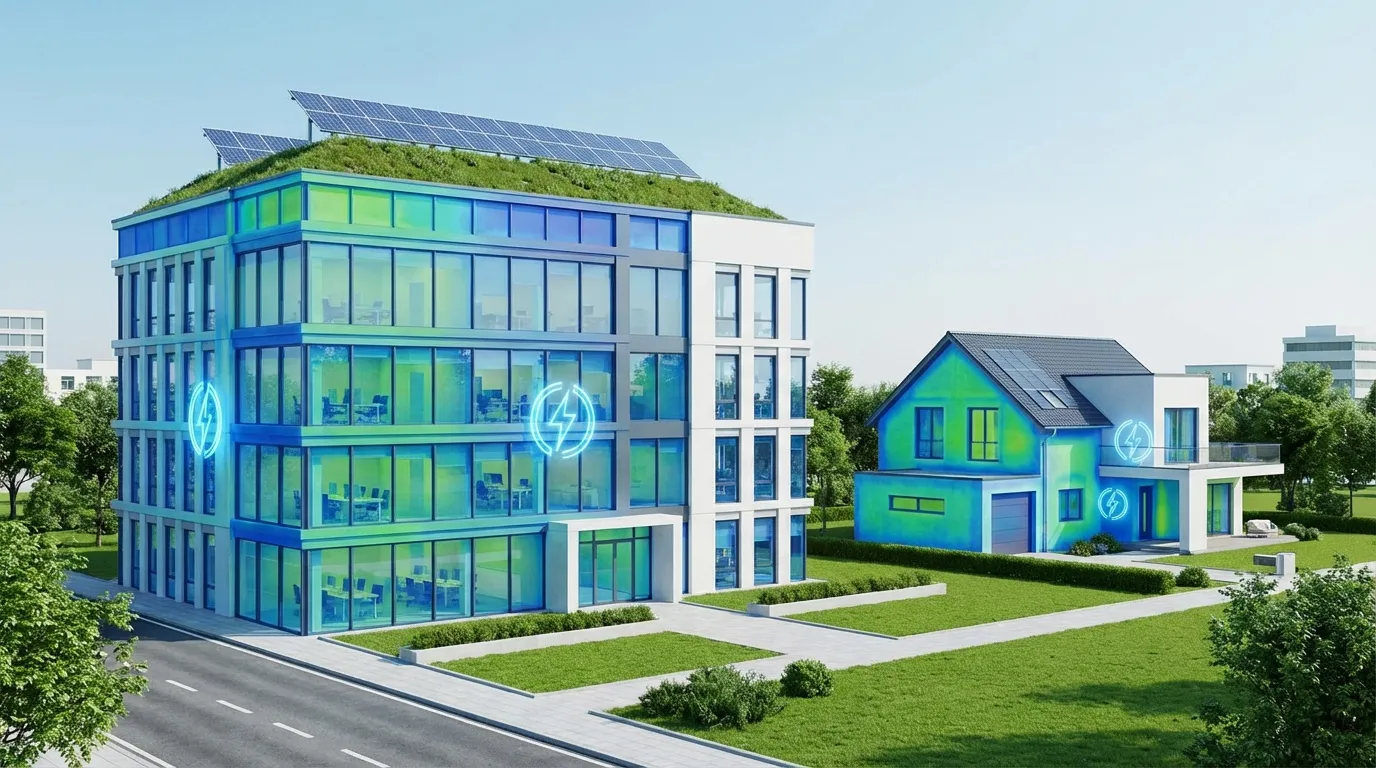
Heating and cooling account for over 35% of the energy consumed in a typical U.S. commercial building. Without proper insulation, a staggering 25% to 40% of that conditioned air escapes through roofs, walls, and floors, directly inflating utility bills every single month. So businesses are essentially paying to heat and cool the outdoors, a financial drain that new rebate programs are designed to plug permanently.
How Much Can Your Business Save with Commercial Insulation Rebates and for What Equipment?
Commercial insulation rebates offer businesses cash back, typically ranging from $0.15 to $1.50 per square foot, for installing qualifying materials like rigid foam, spray foam, or fiberglass. So, these programs from utilities and states directly reduce the project's net cost by up to 50% in 2026.
Businesses can capture these savings for a range of insulation types, each with specific performance criteria. So utility programs frequently offer rebates calculated per square foot, such as $0.75/sq. ft. for R-20 roof insulation or $0.50/sq. ft. for R-13 wall insulation. And eligible equipment includes spray polyurethane foam (SPF), rigid foam boards (XPS, EPS, Polyiso), and blown-in fiberglass or cellulose. But the exact rebate amount depends entirely on the material's R-value and the total square footage of the upgraded area. For a 10,000-square-foot roof upgrade, a $0.75/sq. ft. rebate translates to an immediate $7,500 project cost reduction. Or a business can find programs that cover a percentage of the total project cost, often between 15% and 50%, capped at a maximum like $20,000 per building. These incentives make achieving a 3-5 year payback period on the insulation investment a realistic goal for many commercial properties.
Who Qualifies for Commercial Insulation Rebates in Your State and Utility Service Area?
Eligibility for commercial insulation rebates is determined by the business's physical location within a specific state and utility service territory. So, programs often require the building to be a commercial ratepayer in good standing, with eligibility confirmed through the utility provider's online portal for 2026 programs.
Qualification is geographically precise. And a business must be a paying commercial customer of the utility offering the rebate, such as Con Edison, PG&E, or Duke Energy. So if your business is located in one service area but gets its power from a different provider, it won't qualify for that specific program. But most states have multiple utilities with distinct programs, creating a complex landscape of opportunities. Building type is also a factor; rebates are generally available for offices, retail spaces, warehouses, and multi-family buildings with five or more units. The key is that the building must be on a commercial or industrial electricity or natural gas rate. Verifying your building's utility provider and rate class is the first step. You can find detailed program rules and service area maps on DSIRE, the Database of State Incentives for Renewables & Efficiency. Explore comprehensive insulation rebates available in your area.
"Many state and local governments, as well as utilities, offer incentives for energy-efficiency upgrades. These can include rebates, tax credits, or low-interest loans." — U.S. Department of Energy
What Are the Contractor Requirements for Commercial Insulation Rebate Eligibility?
Commercial insulation rebate programs mandate that installation be performed by a licensed, insured, and program-approved contractor. So, businesses must use a professional from the utility's pre-vetted list to ensure the project meets specific R-value and air-sealing standards required for 2026 reimbursement.
Utilities don't allow DIY installations for commercial rebate programs. And this requirement ensures the work is done correctly, safely, and achieves the projected energy savings. So contractors must typically hold specific certifications, carry liability insurance of at least $1 million, and be registered with the utility's trade ally network. But this isn't just red tape; using a pre-approved contractor simplifies the process. These professionals are familiar with the rebate application paperwork, performance standards, and inspection requirements. They often handle the submission on the business's behalf. Finding a qualified installer usually involves searching the online portal or directory provided by the rebate program administrator. Choosing a contractor not on this list will result in an automatic denial of the rebate application, making this a critical step for securing your incentive funds. A proper installation is key to maximizing savings from the project.
Commercial Insulation Incentive Comparison
| Program Type | Typical Rebate Amount | Key Eligibility Requirement |
|---|---|---|
| Utility Program | $0.25 - $1.50/sq. ft. | Must be a customer of the specific utility |
| State Program | 10-25% of project cost | Business must operate within the state |
| Federal Tax Credit | Up to $5.00/sq. ft. (179D) | Must meet IRS energy efficiency standards |
What is the Application Process, Key Deadlines, and Current Funding Status?
The application process for commercial insulation rebates involves a pre-approval application before purchase, followed by submitting final invoices and contractor certifications. So, key deadlines are often rolling, but program funding is limited and allocated on a first-come, first-served basis throughout 2024.
Timing is everything. And the first step is always to submit a pre-application before any work begins or materials are purchased. So this reserves your spot in the funding queue and confirms your project's eligibility. Once you receive pre-approval, you can proceed with the installation using a program-approved contractor. After completion, you'll submit the final application package, which includes the contractor's invoice, proof of payment, and specification sheets for the insulation materials used. Deadlines are critical; most programs have a fiscal year end date (e.g., December 31st) or close once funds are exhausted. For 2024, many programs opened with funding pools between $5 million and $20 million, but popular incentives can be depleted by Q3. Always check the program's website for its current funding status before starting a project to avoid disappointment.
Can You Stack Commercial Insulation Rebates with Other Energy Efficiency Programs?
Businesses can often stack a utility rebate with federal energy tax credits, but typically not with another state-level incentive for the same insulation project. So, program rules dictate that the total incentive amount from all sources cannot exceed 100% of the project's total cost in 2026.
Combining incentives maximizes your return on investment. And a business can frequently pair a prescriptive rebate from its local utility (e.g., $1.00/sq. ft. for roof insulation) with a federal tax incentive like the 179D Commercial Buildings Energy-Efficiency Tax Deduction. So this federal deduction allows building owners to claim up to $5.00 per square foot for comprehensive energy efficiency projects. But you generally can't stack two similar rebates, such as one from your electric utility and another from your gas utility for the exact same insulation work. The rules are designed to prevent "double-dipping." Always review the terms and conditions of each program, as they explicitly state which incentives can and can't be combined. Stacking a utility rebate with federal tax benefits and financing options like C-PACE creates the most compelling financial case for an upgrade, often alongside incentives for new heat pump rebates.
"These policies and incentives can help you save money on your energy bills and reduce your carbon footprint. They are available for a variety of technologies, including renewable energy systems, energy efficiency upgrades, and alternative fuel vehicles." — DSIRE
Related Reading: Learn more about How To Apply For Insulation Rebates and Insulation And Air Sealing Rebates.
Frequently Asked Questions
What are the eligibility requirements for commercial building insulation rebates?
Eligibility primarily depends on being a commercial ratepayer of the utility offering the program. And the building must be located within that utility's designated service territory. So some programs also have requirements based on building size or age.
How much can a business expect to receive from commercial insulation rebate programs?
Amounts vary widely, from $0.15 to $1.50 per square foot of installed insulation. Or, some programs offer a percentage of the total project cost, typically between 15% and 50%, with a maximum cap like $20,000 per project.
What is the application process for commercial building insulation rebates?
The process usually requires a pre-approval application before work starts. And after installation by a certified contractor, a final application is submitted with paid invoices and project documentation. So approval and payment can take 4-8 weeks.
Are there specific deadlines for commercial insulation rebate submissions?
Yes. Most programs operate on an annual cycle and either have a hard deadline (e.g., December 31) or close once the allocated program funds are fully claimed. So it is critical to apply early in the year.
How do federal, state, and utility commercial insulation rebates differ?
Utility rebates are direct cash payments from your power or gas company. So state rebates are similar but funded by state energy offices. And federal incentives are typically tax credits or
Ready to Save on Your Home Improvement?
Use our free rebate calculator to find every federal, state, and utility incentive you qualify for.
Official Sources
Updated on April 14, 2026. Fact-checked by DuloCore Editors. About our research team.
Check your California insulation rebate eligibility — see the programs you qualify for and the dollar amounts on our California insulation rebate finder.