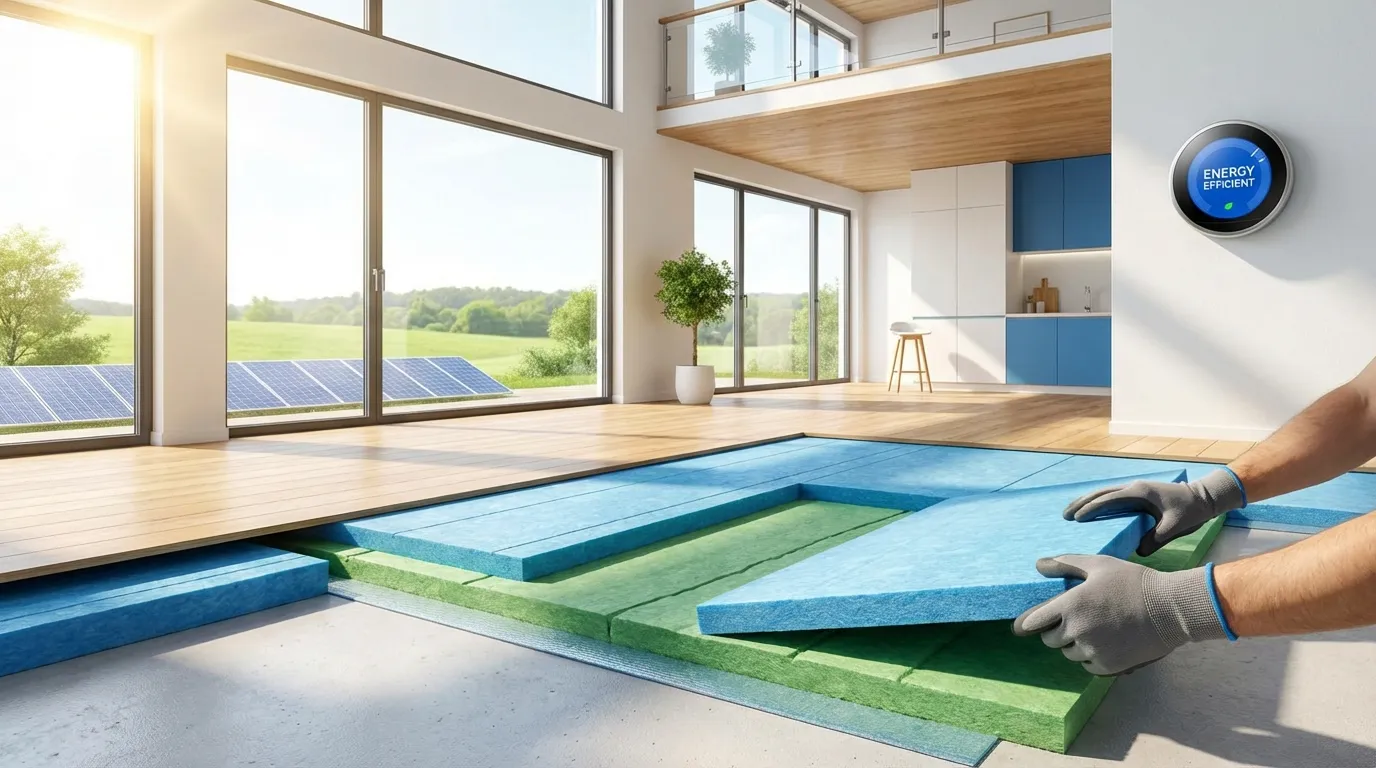
Up to 15% of a home's heating and cooling energy escapes directly through an uninsulated or under-insulated floor, especially in homes with basements or crawl spaces. This constant energy leak forces HVAC systems to work overtime, inflating utility bills month after month. So fixing this thermal weak point with new insulation is one of the most effective energy efficiency upgrades a homeowner makes. And government and utility programs are now paying homeowners to do it.
Where Can I Find Floor Insulation Rebates in My State and From My Utility?
Floor insulation rebates are state and utility-run programs offering homeowners direct cash incentives for improving underfloor, basement, or crawl space insulation. These 2026 programs are searchable by zip code on databases like DSIRE and the DuloCore platform, providing access to localized energy efficiency funding opportunities.
The availability of these rebates is entirely dependent on your location. So a homeowner in California will have different program options than one in Massachusetts. Utility companies like Con Edison or Duke Energy manage their own rebate portfolios, often offering between $200 and $1,000 for specific insulation projects. And state energy offices provide another layer of incentives, sometimes targeting low-income households or specific climate zones. The key is using a comprehensive search tool that aggregates both state and local utility offers. DuloCore’s rebate calculator filters over 1,000 active programs nationwide to pinpoint the exact incentives available for your address. But you must check eligibility before purchasing materials, as many programs require pre-approval to qualify for the funding.
So what? The average U.S. household spends over $2,000 on energy bills annually, with up to $300 of that escaping through poorly insulated floors. These rebates directly address this financial drain by lowering the upfront cost of a project that delivers immediate, measurable savings on monthly energy costs.
How Much Can I Get and What Floor Insulation Qualifies for Rebates?
Rebate amounts for floor insulation typically range from $0.50 to $1.50 per square foot, with maximums often capped between $500 and $2,000. Qualifying materials for 2026 programs include spray foam, rigid foam board, and fiberglass batts that meet specific R-value requirements, usually R-19 or higher.
The exact incentive is calculated based on the project's scope and the insulation's thermal resistance, or R-value. For example, a utility may offer $0.75 per square foot for adding R-19 insulation to a 1,000-square-foot crawl space, resulting in a $750 rebate. And some programs offer tiered incentives, providing a 25% higher rebate for insulation exceeding the minimum R-value. Qualifying materials must be new and professionally installed. So DIY projects rarely qualify for these utility-sponsored programs. Always check the program's specific technical requirements sheet to ensure the product you choose, whether it's closed-cell spray foam or mineral wool batts, is on the approved materials list.
"To get the marked R-value, it is essential that the insulation be installed properly. If it is compressed, it will not provide the full rated R-value." — U.S. Department of Energy
Do I Meet the Eligibility Requirements, Including Income Limits, for Floor Insulation Rebates?
Eligibility for 2026 floor insulation rebates hinges on home ownership, primary residence status, and sometimes income level. Low-to-moderate income households often qualify for enhanced rebates up to 100% of project costs, with income thresholds typically set at 80% of the Area Median Income (AMI).
Most standard rebates require you to be a customer of the sponsoring utility and own the home where the insulation is being installed. But many states also run enhanced programs for income-qualified residents. For instance, a household earning less than 80% of the AMI may receive a rebate covering the full $2,500 project cost, while a higher-income household receives a standard $750 rebate for the same job. These programs often require documentation like tax returns or pay stubs to verify income. Additionally, some programs require a pre-installation energy audit to confirm the need for insulation. Or they may have rules about the age of the home. Checking these specific criteria on the program website is a critical first step. These details are separate from federal energy tax credits, which have different eligibility rules.
What is the Application Process, When Do I Need to Apply, and Is Funding Still Available?
The application process for 2026 floor insulation rebates involves a pre-approval application, professional installation with itemized invoices, and a post-installation submission. Funding is often first-come, first-served, so applying early in the program's fiscal year, typically starting January 1st, is critical before funds are depleted. (See also: insulation upgrade financing options.) (See also: attic insulation cost and savings.) (See also: whole home insulation upgrade rebates.) (See also: geothermal tax credit.)
The process is straightforward but requires attention to detail. First, you or your contractor submit an application with a project proposal. And once you receive a reservation number or pre-approval, the installation proceeds. After completion, you submit the final invoice, proof of payment, and any required photos or permits. But timing is everything. Rebate programs are funded with a fixed annual budget, and popular programs for insulation rebates can run out of money by the third quarter. For example, New Jersey's Clean Energy Program often sees its insulation funding fully committed by late summer. So waiting until fall to apply means you will likely miss out. Always check the program's website for a funding status indicator or deadline before starting your project.
Can I Stack Floor Insulation Rebates and Are There Specific Contractor Requirements?
Homeowners can often stack a utility floor insulation rebate with federal energy tax credits, maximizing savings up to 30% of the project cost, capped at $1,200 annually. But stacking two utility rebates for the same measure is typically prohibited, and contractor requirements often mandate licensed and certified professionals.
Combining incentives is the best way to reduce your out-of-pocket cost. For a $3,000 floor insulation project, you can receive a $750 utility rebate and then claim a 30% federal tax credit ($900) on the remaining $2,250 cost, for a total savings of $1,650. But you cannot claim a rebate from both your electric and gas utility for the same insulation. Programs also mandate the work be done by a licensed and insured contractor, and some require specific certifications, like from the Building Performance Institute (BPI). So using an uncertified or out-of-network installer is the fastest way to have your rebate application denied. Always use the program's online portal to find a list of approved contractors. This same stacking logic applies to other upgrades like heat pump rebates.
"The DSIRE database is a comprehensive source of information on state, local, utility, and federal incentives and policies that promote renewable energy and energy efficiency." — DSIREUSA.org
Floor Insulation Incentive Comparison
| Incentive Type | Typical Amount | Key Eligibility | Common Deadline |
|---|---|---|---|
| Utility Rebate | $0.50-$1.50/sq. ft. (up to $2,000) | Must be a utility customer; professional installation | Annually, funds are first-come, first-served |
| State Program | Varies; up to 100% for low-income | Residency; often income-qualified (e.g., <80% AMI) | Varies by state; often tied to fiscal year |
| Federal Tax Credit | 30% of project cost (up to $1,200/year) | Primary residence; meets material requirements | December 31st, annually |
Frequently Asked Questions
What are the eligibility requirements for floor insulation rebates?
Eligibility typically requires you to be the homeowner and a customer of the sponsoring utility. The property is usually required to be your primary residence. And some programs have specific income requirements, offering larger rebates to households below 80% of the Area Median Income.
How much can I expect to receive from a floor insulation rebate?
Rebate amounts generally fall between $0.50 and $1.50 per square foot. The total incentive is often capped, with maximums ranging from $500 to $2,000 per project, depending on the specific state or utility program.
What is the process for applying for floor insulation rebates?
The process involves submitting a pre-approval application before work begins, having the insulation installed by a qualified contractor, and then submitting a final application with the paid invoice. Documentation is key to a successful claim.
Are there specific deadlines to apply for floor insulation rebates?
Yes. Most programs operate on an annual basis with a fixed budget. So funding is limited and distributed on a first-come, first-served basis. It's best to apply early in the calendar year before funds are exhausted.
Can floor insulation rebates be combined with other home energy efficiency programs?
Yes, you can typically combine or "stack" a local utility rebate with federal incentives like the 30% Energy Efficient Home Improvement Credit. But you usually can't claim two utility rebates for the exact same insulation project.
Calculate Your Rebates with the DuloCore Rebate Calculator.
Ready to Save on Your Home Improvement?
Use our free rebate calculator to find every federal, state, and utility incentive you qualify for.
Official Sources
Last updated April 14, 2026 — reviewed by DuloCore Editorial. About our authors.
Check your California insulation rebate eligibility — see the programs you qualify for and the dollar amounts on our California insulation rebate finder.