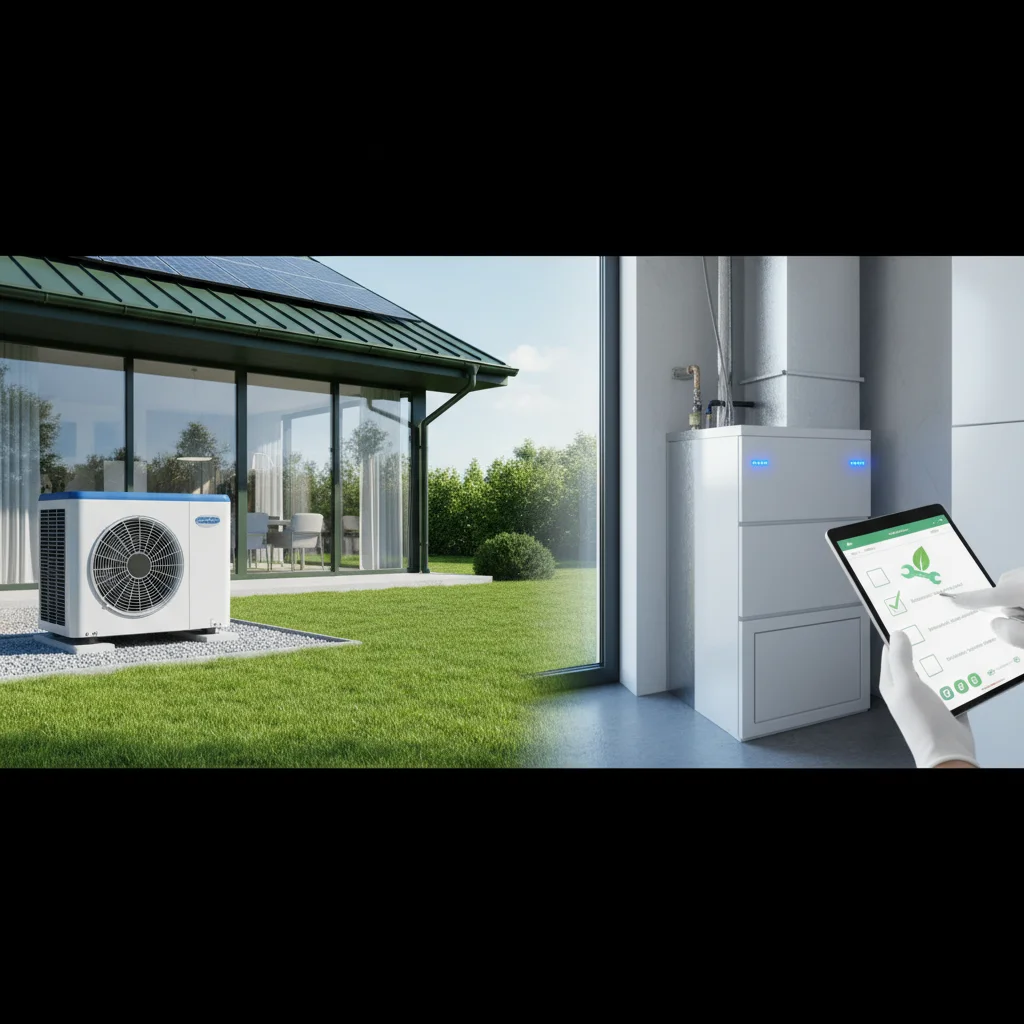
A neglected HVAC system loses 5% efficiency per year, costing California homeowners an extra $180-$340 annually in wasted energy. And that's before accounting for the $3,000-$8,000 emergency repair bills that hit when filters, coils, and refrigerant levels go unchecked. Seasonal maintenance isn't a suggestion—it's the difference between a 10-year system lifespan and a 20-year one.
How Much Does Regular HVAC Seasonal Maintenance Cost vs. Emergency Repairs?
Routine HVAC seasonal maintenance costs $150-$300 per visit in California, totaling $300-$600 annually for spring and fall tune-ups. Emergency repairs average $450 for minor fixes and $3,000-$8,000 for major component failures like compressor or heat exchanger replacement, typically occurring in systems without preventive care.
Preventive maintenance catches refrigerant leaks ($150 to refill vs. $1,200-$2,500 for compressor replacement), dirty coils ($120 cleaning vs. $800-$1,500 replacement), and worn fan motors ($85 lubrication vs. $450-$850 replacement). And annual contracts reduce per-visit costs to $120-$200 through service agreements with guaranteed response times.
The ENERGY STAR program estimates that neglected systems operate 20-30% less efficiently than maintained units, adding $240-$420 annually to utility bills for a typical 2,000-square-foot California home. But emergency service calls during peak summer or winter demand carry $100-$200 surcharges on top of standard repair costs. So a $600 annual maintenance investment prevents an average $2,400 in emergency repairs and efficiency losses over a system's lifespan.
"Regular maintenance can prevent up to 95% of HVAC breakdowns and extend equipment life by 40%." — U.S. Department of Energy
What's the ROI and Payback Period for Year-Round HVAC Maintenance Plans?
Annual HVAC maintenance plans deliver 300-500% ROI through avoided repairs, efficiency gains, and extended equipment lifespan, with payback periods of 3-8 months. A $600 yearly plan prevents $1,800-$3,000 in typical emergency repairs while recovering 15-20% lost efficiency worth $180-$340 annually in California's climate zones.
The immediate payback comes from efficiency restoration. Dirty filters reduce airflow by 15%, costing $120-$180 annually in extra runtime. And clogged evaporator coils drop cooling capacity by 30%, forcing systems to run 40% longer to achieve set temperatures. Seasonal cleaning restores nameplate efficiency within the first 3-4 months of service.
Extended equipment lifespan provides long-term ROI. Maintained systems last 18-22 years vs. 10-14 years for neglected units. That's an extra $4,000-$8,000 in replacement costs deferred per decade for a typical 3-ton central air system. But the warranty benefit matters too—most manufacturers require documented annual maintenance to honor 10-year parts warranties, protecting $2,000-$5,000 in covered components.
California homeowners in HVAC efficiency zones 3 and 13 see faster payback due to 2,000+ annual cooling hours. Maintenance plans also include priority scheduling during peak demand, eliminating 3-5 day emergency wait times worth $300-$600 in hotel or portable AC rental costs.
How Does Seasonal Maintenance Compare to Alternative Solutions Like System Replacement?
Seasonal maintenance costs $600 annually vs. $5,500-$12,000 for full HVAC system replacement, making preventive care 9-20x more cost-effective over a 15-year period. Maintenance extends existing system lifespan to 18-22 years, while skipping service forces replacement at 10-14 years, accelerating $6,000-$10,000 capital outlays by 4-8 years.
The break-even calculation favors maintenance until systems exceed 15 years old or require repairs exceeding 50% of replacement cost. A 12-year-old system needing a $2,800 compressor replacement still justifies repair if annual maintenance keeps remaining components functional for 6-8 more years. But a 16-year-old system with multiple component failures ($3,500+) crosses the replacement threshold.
New system benefits include 18-25 SEER efficiency vs. 13-16 SEER for older maintained units, saving $240-$420 annually in California's climate. And 2026 heat pump rebates through TECH Clean California offer $3,000-$7,000 for qualifying heat pump replacements, reducing net system costs to $2,500-$8,000. So the replacement decision depends on age, repair costs, and available incentives.
Hybrid approaches work best. Maintain systems under 12 years old religiously, budget for replacement at years 15-18, and leverage rebates when available. Seasonal maintenance maximizes the value of existing equipment while delaying capital expenditure until incentive programs align with replacement timing.
| Option | Upfront Cost | Annual Cost | Lifespan Extension | Net 15-Year Cost |
|---|---|---|---|---|
| No Maintenance | $0 | $420 efficiency loss + $1,200 avg repairs | 10-14 years | $24,300 + early replacement |
| Seasonal Maintenance | $600/year | $600 | 18-22 years | $9,000 |
| Full Replacement (2026) | $5,500-$12,000 | $0 (first 5 years) | 15-20 years | $5,500-$12,000 + maintenance |
How Long Will Your HVAC System Last With Proper Seasonal Maintenance?
Well-maintained HVAC systems last 18-22 years in California's climate zones, compared to 10-14 years for neglected units—a 57-75% lifespan increase worth $4,000-$8,000 in deferred replacement costs. Seasonal maintenance prevents the three primary failure modes: refrigerant system degradation, heat exchanger stress cracks, and compressor burnout from dirty coils.
Component longevity depends on maintenance frequency. Evaporator coils last 15-20 years with annual cleaning vs. 8-12 years when neglected, saving $800-$1,500 in replacement costs. And compressors run 18-25 years with proper refrigerant levels and airflow vs. 10-15 years when starved of lubrication or overheating from dirty condenser coils. Blower motors last 20+ years with annual lubrication vs. 12-15 years without service.
California's dry climate extends outdoor unit longevity to 20-25 years with seasonal condenser coil cleaning, compared to 15-18 years in humid coastal zones where corrosion accelerates. But desert areas (Palm Springs, Bakersfield) see 30-40% higher runtime due to extreme temperatures, making twice-yearly maintenance critical for reaching the 20-year threshold.
The warranty factor matters. Most manufacturers void 10-year parts warranties without documented annual maintenance by licensed HVAC technicians. That's $2,000-$5,000 in covered components (compressor, heat exchanger) at risk. So the real lifespan question isn't just durability—it's warrantied durability backed by service records.
"Proper maintenance can extend HVAC equipment life by up to 40% and prevent 95% of all breakdowns." — ENERGY STAR
What Should Be on Your Spring and Fall Maintenance Checklist?
Spring and fall HVAC maintenance checklists include 14 critical tasks: filter replacement, coil cleaning, refrigerant level verification, electrical connection tightening, condensate drain clearing, thermostat calibration, blower motor lubrication, belt tension adjustment, ductwork inspection, capacitor testing, contactor cleaning, safety control verification, airflow measurement, and combustion analysis for gas furnaces.
Spring pre-cooling checklist focuses on AC components. Clean outdoor condenser coils (removing 90% efficiency-killing debris), verify 15-20 PSI refrigerant charge, test capacitors for 5-10% voltage drop indicating imminent failure, and calibrate thermostats within 2°F accuracy. And inspect ductwork for 10-30% leakage common in California attics, costing $180-$340 annually in conditioned air loss.
Fall pre-heating checklist emphasizes furnace safety. Inspect heat exchangers for cracks (carbon monoxide risk), test flame sensors for proper ignition, verify 80-96% combustion efficiency with flue gas analysis, and check gas pressure at 3.5-7 inches water column. But California's mild winters mean many systems run minimal heating cycles—focus maintenance budget on cooling components in hot inland zones.
DIY homeowners can handle monthly filter changes ($20-$40 annually for standard filters) and quarterly condensate drain flushing with bleach solution. But refrigerant work requires EPA 608 certification, and combustion testing needs calibrated analyzers. Licensed HVAC technicians complete 18-point inspections in 60-90 minutes, catching issues invisible to homeowners.
Use our free rebate calculator to find savings on new high-efficiency systems if maintenance reveals replacement makes financial sense.
When Are the Best Times to Schedule Seasonal Maintenance Before Peak Seasons?
Schedule spring HVAC maintenance in March-April before California's May-October cooling season, and fall maintenance in September-October before November-February heating demand. Booking 4-6 weeks before peak seasons secures preferred appointment times and avoids $100-$200 emergency surcharges during 100°F summer heatwaves or rare winter freezes.
Spring maintenance timing prevents Memorial Day weekend failures when HVAC companies face 3-5 day backlogs and hotels charge $120-$200 nightly for heat refugees. March service appointments cost $150-$250 vs. $300-$450 for July emergency calls. And early scheduling catches refrigerant leaks before $1,200-$2,500 compressor damage occurs from low-charge operation.
Fall maintenance matters less in coastal California (San Diego, San Francisco) where heating degree days total only 1,200-2,400 annually. But Central Valley and mountain regions (Fresno, Redding, Tahoe) with 2,500-5,000 heating degree days justify September-October furnace inspections before first frost. Desert areas (Palm Springs, Bakersfield) skip fall maintenance entirely, focusing budget on twice-yearly AC service.
Annual maintenance contracts include automatic seasonal scheduling, eliminating the booking burden. But month-to-month service calls require 2-3 week lead times during shoulder seasons (April, October). So homeowners without contracts should set phone reminders for March 1 and September 1 to book before demand spikes.
California utilities offer time-of-use rates penalizing 4-9 PM summer usage when poorly maintained AC units run longest. Spring maintenance restoring 15-20% efficiency saves $40-$80 monthly during peak-rate hours. Check current energy tax credits and utility rebates before scheduling maintenance to coordinate with any upgrade decisions.
Official Sources
- U.S. Department of Energy - Energy Saver — Federal guidance on HVAC maintenance and efficiency improvements
- ENERGY STAR HVAC Maintenance Guide — EPA-backed best practices for seasonal HVAC care and energy savings
- DSIRE USA — Database of state and utility rebates for HVAC upgrades and efficiency programs
Related Reading: Learn more about Home Energy Audit Checklist and Hvac Maintenance Energy Savings.
Frequently Asked Questions
What should be included in a spring HVAC maintenance checklist?
Spring HVAC maintenance includes 8 cooling-focused tasks: outdoor condenser coil cleaning, refrigerant charge verification at 15-20 PSI, capacitor voltage testing, thermostat calibration within 2°F, condensate drain clearing, electrical connection tightening, blower motor lubrication, and ductwork inspection for 10-30% leakage. Technicians complete these in 60-90 minutes, preventing 95% of summer breakdowns.
When is the best time to schedule HVAC seasonal maintenance?
Schedule spring maintenance in March-April (4-6 weeks before California's May cooling season) and fall maintenance in September-October before winter heating. Early booking avoids $100-$200 emergency surcharges and 3-5 day wait times during peak demand. Annual contracts include automatic seasonal scheduling.
How often should HVAC systems be serviced throughout the year?
HVAC systems require service twice yearly—spring for AC components and fall for heating systems—costing $300-$600 annually. California's hot inland zones (Fresno, Bakersfield) benefit from additional mid-summer condenser coil cleaning due to dust buildup. Monthly filter changes and quarterly condensate drain flushing are homeowner DIY tasks.
Can seasonal HVAC maintenance help lower energy bills?
Seasonal maintenance reduces energy bills by 15-30% through restored efficiency, saving $180-$340 annually for California homeowners. Cleaning dirty coils recovers 20-30% lost cooling capacity, and replacing clogged filters improves airflow by 15%. Systems lose 5% efficiency yearly without maintenance, compounding energy waste over time.
What's the difference between seasonal maintenance and HVAC repairs?
Seasonal maintenance prevents failures through 18-point inspections costing $150-$300 per visit, while repairs fix broken components at $450-$8,000 per incident. Maintenance includes cleaning, calibration, and adjustment of working parts. Repairs replace failed components like compressors ($1,200-$2,500), heat exchangers ($800-$2,000), or blower motors ($450-$850).
Ready to maximize your HVAC system's lifespan and efficiency? Use our rebate calculator to discover $3,000-$7,000 in available California rebates for high-efficiency heat pump upgrades when your maintained system eventually needs replacement.
Last updated: April 14, 2026. Reviewed by the DuloCore Editorial Team. About our authors.
Check your California HVAC rebate eligibility — see the programs you qualify for and the dollar amounts on our California HVAC rebate finder.