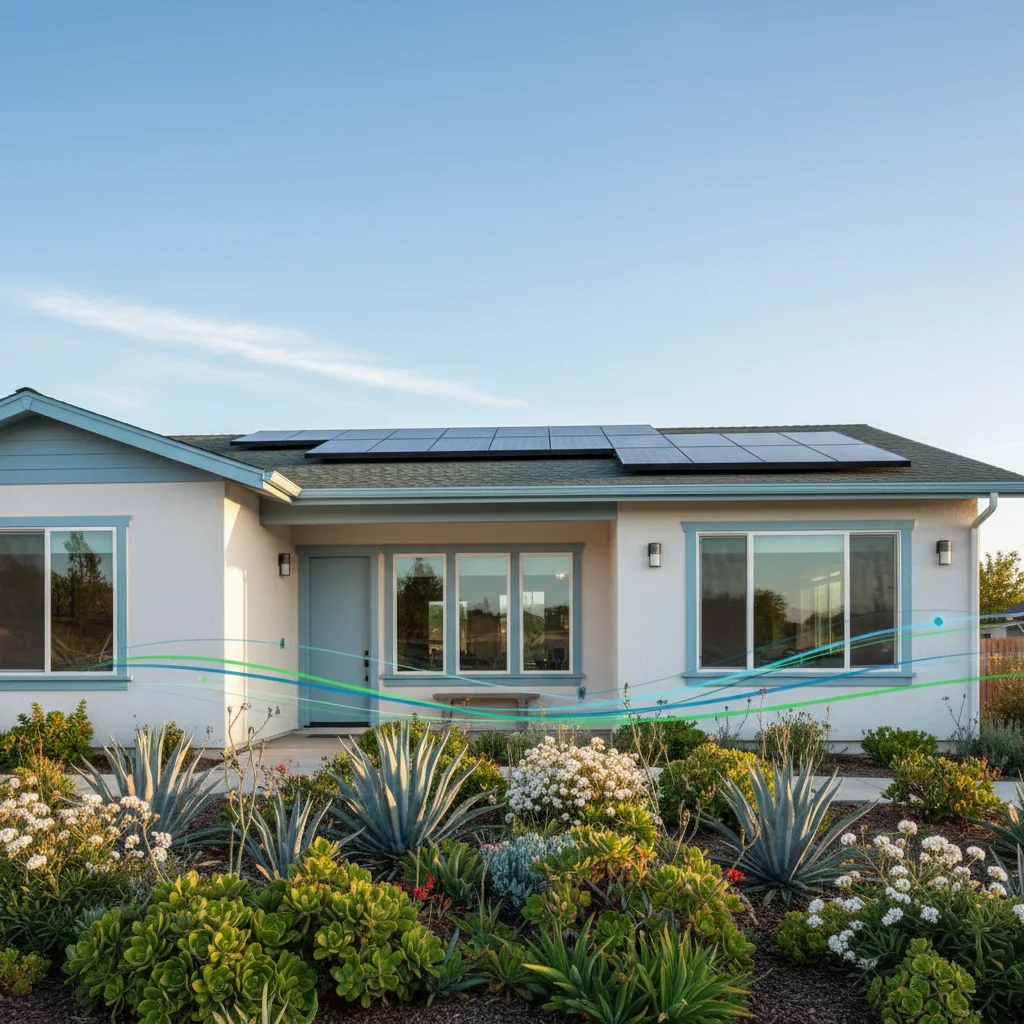
Fresno homeowners spent an average of $2,847 on cooling costs in 2025—41% higher than the California state average. And most of that money escaped through poorly insulated attics, walls, and crawl spaces. With summer temperatures regularly exceeding 105°F and winter lows dropping to 37°F, Fresno's extreme temperature swings make insulation one of the fastest-payback energy upgrades available.
What insulation rebates are available for Fresno homeowners in 2026?
Fresno homeowners qualify for three stackable insulation rebate programs in 2026: the federal IRA Home Efficiency Rebate (up to $1,600 for attic insulation), PG&E's Energy Efficiency Program ($500-$2,000 based on square footage), and California's TECH Clean California initiative ($800-$1,200 for whole-home envelope upgrades). Combined maximum rebates reach $4,800 for comprehensive insulation projects.
The federal IRA Home Efficiency Rebate covers up to 50% of insulation costs for households earning below 80% of Area Median Income (AMI), with lower rebate percentages for higher incomes. PG&E's program doesn't include income restrictions but requires pre-approval through participating contractors. And California's TECH Clean California program prioritizes homes built before 1990, which represent 68% of Fresno's housing stock.
So homeowners installing blown-in attic insulation (R-38 or higher) save an average of $684 annually on combined heating and cooling costs. But the upfront investment ranges from $1,800-$3,500 for a typical 1,500-square-foot home. Rebates reduce the net cost to $800-$1,400, creating a payback period of 1.2-2.0 years.
"Attic insulation delivers the highest return on investment of any home energy upgrade, with typical savings of 15-25% on annual energy bills." — U.S. Department of Energy
Fresno's climate zone 13 designation requires minimum R-38 attic insulation for rebate eligibility. But upgrading to R-49 increases cooling savings by an additional 8-12% during summer months when Fresno temperatures average 97°F. The incremental cost of $200-$400 pays back within 18 months through reduced AC runtime.
Wall insulation rebates require whole-wall retrofit (not just cavity fill), which costs $4,000-$8,000 for a standard home. And crawl space insulation qualifies when combined with air sealing, which prevents the stack effect responsible for 20-30% of cooling losses in single-story homes.
How much can you save with Fresno insulation rebates?
Fresno homeowners save an average of $2,150 through combined rebate programs when installing comprehensive insulation upgrades in 2026. Federal IRA rebates contribute $1,600 maximum, PG&E programs add $500-$2,000, and TECH Clean California provides $800-$1,200. Total project costs range from $3,500-$8,500, with net out-of-pocket expenses dropping to $1,350-$6,350 after rebates.
The largest savings come from attic insulation in homes built before 1990, where existing insulation often measures R-11 or lower—far below the R-38 minimum standard. Upgrading from R-11 to R-49 reduces cooling costs by $512-$847 annually based on a 1,500-square-foot home with central AC. And heating savings add another $137-$203 during Fresno's November-February heating season.
But rebate amounts scale with household income under the federal IRA program. Households earning below 80% AMI ($72,400 for a family of four in Fresno County) qualify for 50% cost coverage up to $1,600. Households earning 80-150% AMI receive 30% coverage up to $960. Incomes above 150% AMI don't qualify for federal rebates but still access PG&E and state programs.
So a comprehensive insulation project costing $6,000 receives maximum combined rebates of $4,800 for qualifying low-income households, reducing net cost to $1,200. Annual energy savings of $684 create a payback period of 1.75 years. Over the typical 20-year lifespan of blown-in insulation, total savings reach $13,680 minus the initial $1,200 investment.
Wall and floor insulation add incremental savings of $180-$340 annually but require higher upfront costs of $4,000-$8,000. And crawl space insulation combined with vapor barriers prevents moisture damage that costs California homeowners an average of $3,200 in repairs over 10 years.
Check our rebate calculator to estimate your specific savings based on home size, existing insulation levels, and household income.
What are the eligibility requirements for insulation rebates in Fresno?
Fresno insulation rebate eligibility requires three core criteria in 2026: home location within PG&E service territory, installation by licensed contractors with C-2 or C-61 certification, and achievement of minimum R-value thresholds (R-38 attic, R-13 walls, R-19 floors). Federal IRA rebates add income limits of 150% Area Median Income ($135,750 for a family of four), while PG&E and state programs don't restrict by income.
Attic insulation qualifies when final R-value reaches R-38 minimum, but R-49 maximizes savings in Fresno's climate zone. Pre-1990 homes often start at R-11 or lower, requiring 10-12 inches of blown-in fiberglass or cellulose to reach code. And homes with existing R-19 insulation need an additional 8-10 inches to hit R-38, which takes 4-6 hours for professional installation teams.
Wall insulation rebates require documentation of existing R-value below R-7, verified through thermal imaging or physical inspection. Drill-and-fill cavity insulation doesn't qualify—only full wall retrofits with exterior or interior access meet program standards. So most qualifying projects involve major renovations already planned by homeowners.
But all rebate programs mandate energy audits before and after installation, performed by certified Home Energy Rating System (HERS) raters. Pre-installation audits cost $300-$500 and identify the specific insulation gaps causing the highest energy losses. Post-installation verification ensures contractors achieved the specified R-values and completed air sealing work.
"Combining insulation upgrades with air sealing delivers 30-40% greater energy savings than insulation alone." — ENERGY STAR
Fresno homes built before 1978 require lead-safe work practices during insulation installation, adding $200-$400 to project costs. And mobile homes qualify for separate rebate programs with lower R-value thresholds (R-30 attic, R-11 walls) due to construction differences.
Rental properties qualify when landlords apply directly, but tenant-initiated applications require written landlord approval. And multifamily buildings with 5+ units access different rebate programs through PG&E's Multifamily Energy Efficiency Rebates, which offer up to $15,000 per building for comprehensive upgrades.
What documentation do you need to claim insulation rebates in Fresno?
Fresno insulation rebate applications require seven mandatory documents in 2026: contractor license verification (C-2 or C-61), pre-installation HERS energy audit report, itemized invoice showing R-values and square footage, proof of payment, post-installation HERS verification, household income documentation for federal rebates, and utility account number for PG&E programs. Missing any document delays processing by 3-6 weeks.
Income verification accepts IRS Form 1040, W-2 statements, or three months of pay stubs for federal IRA rebates. And California's TECH Clean California program requires the same documentation plus proof of home ownership through property tax records or mortgage statements. PG&E rebates skip income verification entirely, processing applications within 6-8 weeks after document submission.
The pre-installation HERS audit generates a detailed report showing current R-values, air leakage rates (measured in CFM50), and thermal imaging results. Contractors submit this report with rebate applications to establish baseline conditions. Post-installation audits verify achievement of target R-values and document air sealing improvements, which often contribute 15-25% of total energy savings.
But itemized invoices must break down costs by insulation type, R-value achieved, and square footage treated. Generic line items like "attic work $3,500" get rejected—applications need specific entries like "1,400 sq ft blown-in fiberglass R-49, $2,800" and "attic air sealing 850 CFM50 reduction, $700." And invoices showing permit numbers accelerate approval for projects requiring building permits.
So photograph documentation before, during, and after installation strengthens applications. Photos showing existing insulation depth, areas of air leakage, and final insulation coverage help auditors verify work quality without site visits. The federal IRA program requires photos for all rebates exceeding $1,000.
Payment documentation accepts canceled checks, credit card statements, or contractor payment receipts showing full transaction details. And financing documentation works for homeowners using PACE loans or other energy upgrade financing programs, which 31% of Fresno applicants use for projects exceeding $5,000.
For comprehensive guidance on federal incentives, see our article on energy tax credits.
What is the deadline for applying for Fresno insulation rebates?
Fresno insulation rebate deadlines vary by program in 2026: federal IRA Home Efficiency Rebates accept applications through December 31, 2031, PG&E's Energy Efficiency Program operates on a first-come basis until annual funding exhausts (typically September-October), and TECH Clean California runs through June 30, 2027, with possible extension. Applications submitted after PG&E funding depletion roll to the following year's allocation, delaying rebates by 8-12 months.
The federal program's five-year window provides flexibility, but California's State Energy Program funding—which supports the federal rebates—runs out when allocated dollars exhaust. And Fresno County received $8.4 million in 2026 IRA funding, supporting approximately 2,800 home insulation projects. By March 2026, 41% of funds were already committed, suggesting depletion by Q4 2026.
PG&E releases new funding each January 1, with 2026's allocation of $12.6 million for Fresno County insulation rebates. But demand spiked 73% in 2025 compared to 2024, and 2026 funding exhausted on September 18, 2025—the earliest depletion in program history. So contractors recommend submitting PG&E applications between January-April to avoid rollover delays.
But TECH Clean California operates differently, with quarterly funding releases and no annual reset. Applications submitted in Q1-Q2 see 6-8 week processing, while Q3-Q4 applications face 10-14 weeks due to volume. And the program prioritizes disadvantaged communities, which include Fresno neighborhoods with median incomes below $58,000.
So the optimal application strategy combines immediate PG&E application (January-April), federal IRA application within 60 days of project completion, and TECH Clean California application targeting Q1-Q2 submission windows. Stacking all three programs requires completing work between January-June to hit all deadlines.
Projects started before rebate program launch don't qualify retroactively—installations must begin after official program start dates. And homeowners who installed insulation in late 2025 can't claim 2026 rebates unless they complete additional work qualifying as a separate project.
How do insulation rebates stack with other energy efficiency incentives in Fresno?
Fresno insulation rebates stack with four additional incentive categories in 2026: federal IRA heat pump rebates (up to $8,000), California solar tax credits (26% of system cost through 2032), PG&E's Home Upgrade program ($2,000-$4,000 for whole-home retrofits), and local weatherization assistance for low-income households ($3,000-$6,500). Combined incentives reach $24,300 for comprehensive energy upgrades pairing insulation with HVAC replacement and solar installation.
The federal IRA heat pump rebate requires completing insulation upgrades first, since inadequate insulation forces oversized HVAC systems that waste energy. And homes achieving R-38+ attic insulation qualify for heat pump rebates covering 30-50% of equipment and installation costs. Fresno's climate zone allows heat pumps to replace both furnaces and AC units, saving $840-$1,320 annually on combined heating and cooling.
But stacking rules prohibit double-dipping—homeowners can't claim the same insulation project through both federal IRA and PG&E programs for identical work. The strategy maximizes value by splitting projects: claim attic insulation through federal IRA ($1,600) and wall insulation through PG&E ($500-$2,000). And TECH Clean California covers air sealing and crawl space work not included in other programs.
So a whole-home energy retrofit combining R-49 attic insulation ($3,200), R-13 wall insulation ($6,500), heat pump installation ($12,000), and rooftop solar (5kW, $15,000) totals $36,700 before incentives. Stacked rebates and tax credits reduce net cost to $12,400—a 66% savings unlocking annual energy cost reductions of $2,100-$2,850.
California's SGIP (Self-Generation Incentive Program) adds battery storage rebates of $150-$250 per kWh, supporting whole-home backup systems paired with solar. And Fresno's frequent summer power outages (averaging 3.2 events annually) make battery storage increasingly valuable for homes with medical equipment or home offices.
Low-income households earning below 60% AMI ($54,300 for a family of four) qualify for weatherization assistance covering 100% of insulation costs up to $6,500. But weatherization programs require separate applications through Community Action Partnership of Kern (CAPK), which serves Fresno County residents. And processing times extend 12-16 weeks due to income verification requirements.
For details on heat pump incentives, read our guide to heat pump rebates.
Official Sources
- U.S. Department of Energy - Energy Saver — Federal guidance on home insulation, R-values, and efficiency rebate programs
- DSIRE USA — Comprehensive database of California and federal energy incentives, including IRA rebates and PG&E programs
- ENERGY STAR — EPA standards for insulation installation and air sealing best practices
Frequently Asked Questions
What insulation rebates are available in Fresno?
Fresno homeowners access three primary rebate programs in 2026: federal IRA Home Efficiency Rebates ($1,600 maximum for attic insulation), PG&E Energy Efficiency Program ($500-$2,000 based on square footage and R-value improvement), and TECH Clean California ($800-$1,200 for whole-envelope upgrades including air sealing). These programs stack, creating combined maximum rebates of $4,800 for comprehensive insulation projects meeting all eligibility requirements.
How much can I save with insulation rebates in Fresno?
Combined rebates reduce insulation project costs by $2,150-$4,800 depending on household income, home size, and existing insulation levels. A typical 1,500-square-foot home upgrading attic insulation from R-11 to R-49 costs $2,800-$3,500 and receives $1,600-$2,400 in rebates, creating net costs of $1,100-$1,900. Annual energy savings of $684 generate payback periods of 1.6-2.8 years, with total 20-year savings exceeding $13,000.
Am I eligible for insulation rebates in Fresno?
Eligibility requires home location in PG&E service territory, installation by C-2 or C-61 licensed contractors, achievement of minimum R-values (R-38 attic, R-13 walls), and completion of pre/post HERS energy audits. Federal IRA rebates add income limits of 150% Area Median Income ($135,750 for a family of four in Fresno County), while PG&E and state programs don't restrict by income. Rental properties qualify with landlord approval.
What is the process for getting an insulation rebate in Fresno?
The process requires six steps: schedule pre-installation HERS energy audit ($300-$500), obtain contractor quotes from licensed C-2/C-61 installers, submit rebate pre-approval applications to PG&E and state programs, complete installation work meeting R-value specifications, schedule post-installation HERS verification, and submit final rebate applications with invoices and income documentation. Federal IRA applications process within 8-12 weeks, PG&E within 6-8 weeks, and TECH Clean California within 10-14 weeks.
When is the deadline for insulation rebates in Fresno?
Federal IRA rebates accept applications through December 31, 2031, but California's annual funding allocation typically exhausts by Q4 each year. PG&E rebates operate first-come basis with annual resets on January 1, and 2026 funding depleted on September 18. TECH Clean California runs through June 30, 2027, with quarterly funding releases. The optimal application window runs January-June to access all three programs before funding constraints delay processing.
Ready to calculate your insulation rebate savings? Use our free rebate calculator to get a personalized estimate based on your home's size, existing insulation, and household income. Enter your Fresno ZIP code to see exact federal, state, and utility rebate amounts available for your project—and find licensed contractors in your area offering free energy audits.
Last updated: April 14, 2026. Reviewed by the DuloCore Editorial Team. About our authors.
Check your California insulation rebate eligibility — see the programs you qualify for and the dollar amounts on our California insulation rebate finder.