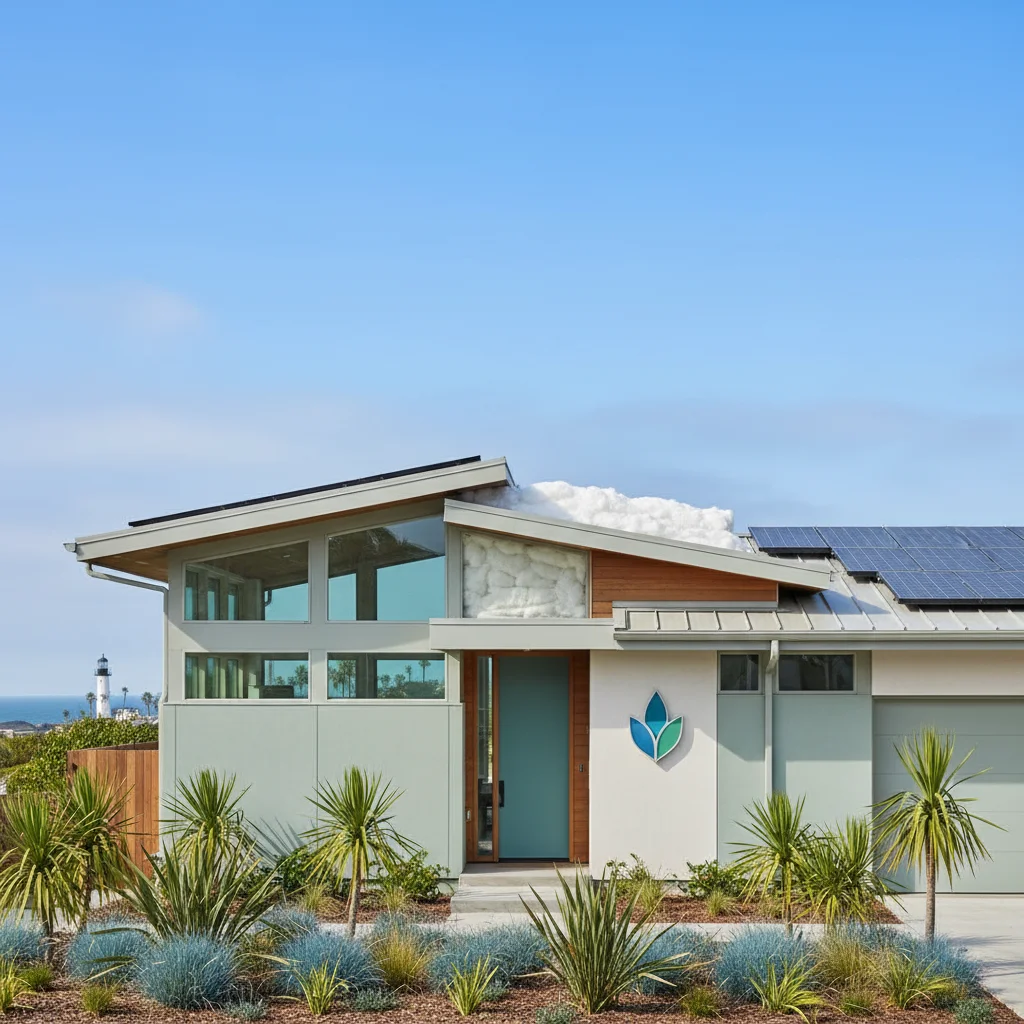
Insulation Rebates Long Beach California
Insulation Rebates Long Beach California: everything you need to know about eligibility, amounts, and the application process.
Long Beach homeowners lose an average of $420 annually through poorly insulated walls and attics, yet only 18% claim available rebates that cover 50-100% of insulation upgrade costs. With 2026 utility rates up 12% from last year and Southern California Edison offering stackable rebates with federal tax credits, the financial case for upgrading insulation has never been stronger. And the application window for the largest rebate programs closes in just eight months.
What Are the Latest Insulation Rebates Available in Long Beach, California?
Southern California Edison offers Long Beach homeowners $300-$1,200 in attic and wall insulation rebates through its 2026 Energy Efficiency Program, while the federal Energy Efficient Home Improvement Credit provides 30% tax credit (currently available through December 2032 under the Inflation Reduction Act) up to $1,200 annually. California's Self-Generation Incentive Program allocates an additional $400-$800 for whole-home envelope upgrades when combined with heat pump installation, creating a total rebate package of $1,900-$3,200 for qualifying projects.
But not all insulation types qualify for maximum rebates. Spray foam insulation in attics earns the full $1,200 SCE rebate when it reaches R-38 or higher, while blown-in fiberglass at R-30 receives only $600. The federal credit covers insulation materials and installation labor, but excludes windows and doors unless they meet ENERGY STAR Most Efficient 2026 criteria. And the state incentive requires pairing insulation with electrification upgrades like heat pump water heaters or HVAC systems, which means insulation-only projects don't qualify for SGIP funds.
Long Beach sits in Climate Zone 6 under California's building code, where code-compliant new construction requires R-38 ceiling insulation and R-13 wall insulation. So existing homes built before 2008 typically need $2,500-$4,500 in upgrades to meet current efficiency standards. The SCE rebate reimburses 40-50% of these costs for most projects, with higher percentages available to income-qualified customers through the Energy Savings Assistance Program.
"Attic insulation delivers the fastest payback of any home efficiency upgrade, with most California homeowners recovering costs in 3-4 years through lower cooling bills." — U.S. Department of Energy
How Much Money Can You Save with Long Beach Insulation Rebates?
Long Beach homeowners who upgrade from R-19 to R-38 attic insulation save $380-$520 annually on cooling costs, while claiming $900-$1,800 in combined rebates and tax credits that reduce net project costs to $1,200-$2,100. The average payback period runs 2.8-4.2 years depending on home size and current insulation levels. And homes with both attic and wall insulation upgrades see cooling energy use drop by 35-42% according to ENERGY STAR data.
The math works differently for income-qualified households. SCE's Energy Savings Assistance Program covers 100% of insulation installation costs for residents earning below 200% of federal poverty level, eliminating all upfront expenses. So a family of four earning under $62,400 annually pays nothing for attic insulation that saves $450 per year, achieving immediate positive cash flow. The federal tax credit doesn't apply to ESA participants since there's no out-of-pocket cost to credit.
Wall insulation delivers smaller annual savings of $140-$220 but qualifies for $400-$800 rebates, creating a 3.5-5.5 year payback. But homes built before 1978 face added costs for asbestos testing and potential abatement, which can add $800-$2,200 to project expenses. These testing costs don't qualify for rebates. So pre-1978 homes should prioritize attic upgrades first unless wall cavity inspection confirms asbestos-free conditions.
The 30% federal tax credit applies to both materials and labor, capped at $1,200 per year. And the credit carries forward to future tax years if total eligible expenses exceed annual limits. Homeowners who install insulation in 2026 and a heat pump in 2027 can claim $1,200 in credits each year, totaling $2,400 across both projects. Calculate potential savings with our free rebate calculator to model your specific home.
What Is the Application Process for Insulation Rebates in Long Beach?
Southern California Edison requires pre-approval through its online marketplace before insulation installation begins, with applications processed in 3-7 business days. Homeowners select SCE Trade Ally contractors from the approved list, receive a virtual or in-person home assessment, then submit the completed application with contractor bid and current utility bills. And the SCE rebate pays directly to the contractor within 45-60 days after inspection, reducing the customer's final invoice by the rebate amount.
But the federal tax credit follows a different timeline. Homeowners claim the Energy Efficient Home Improvement Credit when filing 2026 tax returns using IRS Form 5695, attaching manufacturer certification statements and contractor invoices as documentation. So the tax benefit arrives 4-16 months after installation depending on filing date, unlike the SCE rebate which reduces upfront costs. The IRS doesn't require pre-approval, just proof of qualifying equipment and installation dates within the tax year.
California's SGIP program demands the most complex application process. Homeowners must first apply for a heat pump or battery storage rebate through the main SGIP portal, then add the insulation envelope upgrade as a qualifying measure within the same application. And SGIP only approves insulation rebates when combined with electrification equipment, never as standalone projects. The program requires energy modeling reports from HERS raters, adding $350-$600 to project costs but qualifying for reimbursement within the SGIP incentive.
DIY installation doesn't qualify for any Long Beach rebate programs. SCE requires licensed C-2 insulation contractors for all rebate projects, while the federal credit demands manufacturer certification statements that only professionals can provide. So homeowners who install insulation themselves forfeit $900-$1,800 in available incentives to save $600-$1,200 in labor costs, creating a net financial loss of $300-$600.
What Documentation Do You Need to Apply for Insulation Rebates?
SCE rebate applications require contractor license verification, signed installation contract, current utility bill showing account number, and property ownership proof through tax records or title. Post-installation submissions add product specification sheets showing R-value ratings, installation photos of completed work, and final paid invoice itemizing materials and labor separately. And SCE conducts random inspections on 15% of rebate projects, requiring attic access and cooperation with third-party verifiers within 30 days of installation.
Federal tax credit documentation centers on IRS Form 5695 and manufacturer certification statements. Each insulation product must include a Manufacturer Certification Statement confirming the material meets 2026 IECC efficiency standards, which contractors provide at project completion. So homeowners file Form 5695 with their 1040 return, listing total project costs, certification statement reference numbers, and installation dates. The IRS doesn't require invoice submission unless audited, but recommends retaining all documentation for seven years.
"Keep manufacturer certification statements and contractor invoices for at least three years after filing. The IRS can request this documentation during audits of energy tax credits." — Internal Revenue Service
SGIP applications demand the most extensive documentation package. Required materials include HERS rater energy modeling report, contractor C-2 license and insurance certificates, signed installation agreement, property utility usage history for 12 months, and income verification for equity budget applicants. And SGIP reviews applications in queue order with 45-90 day processing times, during which the program may request additional technical specifications or revised energy calculations.
Income-qualified ESA applicants submit simpler documentation since SCE pre-screens eligibility. Required items include proof of income through tax returns or pay stubs, current utility bill, and property ownership or landlord authorization letter for renters. But ESA doesn't require contractor bids or product specifications since SCE assigns contractors and equipment through the program. Processing takes 14-21 days from application to installation scheduling.
Do You Need Pre-Approval Before Installing Insulation in Long Beach?
Southern California Edison mandates pre-approval for all rebate amounts exceeding $50, which includes every insulation project since minimum rebates start at $300. Applications submitted after installation completion are automatically rejected with no appeals process. So homeowners must receive SCE approval confirmation via email before contractor work begins, typically within 3-7 business days of application submission. And approval expires after 180 days, requiring project completion and final documentation within six months.
But the federal tax credit operates on a post-installation basis with no pre-approval requirement. Homeowners install qualifying insulation anytime during the 2026 tax year, then claim credits when filing returns between January and October 2027. The IRS doesn't verify eligibility before installation, placing responsibility on taxpayers to confirm equipment meets efficiency standards through manufacturer certifications. So mistakes in product selection discovered after installation can't be corrected, resulting in forfeited credits.
SGIP follows SCE's pre-approval model but with longer timelines. Applications enter a processing queue upon submission, with approval taking 45-90 days depending on program demand and budget availability. And SGIP reservation confirmations lock in the incentive rate at application date even if the program reduces incentives before installation. This protection matters since SGIP has reduced rebate amounts by 15-25% mid-year in previous cycles when budgets approach depletion.
Income-qualified ESA participants skip the traditional pre-approval process since SCE manages all aspects of eligible projects. Once ESA enrollment confirms eligibility, SCE schedules a home assessment within 14-28 days and coordinates contractor installation without requiring homeowner-submitted applications. So ESA moves directly from eligibility screening to installation scheduling, compressing the timeline from 90-120 days for standard rebates to 30-45 days for no-cost installations.
Learn more about combining insulation rebates with heat pump rebates to maximize total incentives through coordinated electrification upgrades.
What Are the Deadlines for Insulation Rebate Programs in Long Beach?
Southern California Edison's 2026 Energy Efficiency Program operates on a fiscal year running from January 1 through December 31, with rebate applications accepted until program budgets deplete. Historical data shows SCE's insulation rebate budget exhausts in late October or early November, after which applications enter a waitlist for the following year's funding. And SCE requires project completion within 180 days of approval, so applications submitted after July 1 risk timeline compression that forces rushed installations.
The federal Energy Efficient Home Improvement Credit runs through December 31, 2032, under current IRS code. Homeowners claim credits for installations completed within each tax year, with 2026 installations credited on 2026 returns filed by the October 15, 2027 extension deadline. But the $1,200 annual cap doesn't carry forward, so splitting insulation and other efficiency upgrades across multiple years maximizes total credits. And Congress has historically extended or modified these credits near expiration dates, though relying on potential extensions creates financial risk.
SGIP's insulation incentive availability depends on the program's Equity Budget, which prioritizes low-income and disadvantaged communities. The 2026 allocation of $47 million typically depletes by September based on 2024-2025 spending patterns, with applications submitted after budget exhaustion denied without waitlist options. So Long Beach homeowners in SGIP-eligible zip codes should submit applications by June 30 to ensure processing before funding runs out. And SGIP allows 18 months from approval to installation, the longest timeline of any California efficiency program.
ESA program funding operates continuously through California Public Utilities Commission mandates, with no annual budget caps that close enrollment. But ESA prioritizes the most cost-effective measures first, and Long Beach's mild climate means attic insulation ranks below weatherization in inland California cities. So ESA applicants in Long Beach may wait 60-90 days for installation scheduling versus 30-45 days in hotter climate zones where cooling savings justify faster deployment.
Official Sources
- U.S. Department of Energy - Save Energy, Save Money — Federal guidance on home insulation standards, R-value requirements, and energy efficiency rebates
- DSIRE - Database of State Incentives for Renewables & Efficiency — Comprehensive database of federal, state, and utility rebate programs including California insulation incentives
- Internal Revenue Service - Energy Incentives for Individuals — Official IRS guidance on residential energy tax credits including Form 5695 filing requirements
Related Reading: Learn more about Insulation Rebates By State and Insulation Rebates For Mobile Homes.
Frequently Asked Questions
What insulation rebates are available in Long Beach California?
Long Beach homeowners access $300-$1,200 rebates through Southern California Edison's Energy Efficiency Program, 30% federal tax credit up to $1,200 via the Energy Efficient Home Improvement Credit, and $400-$800 through California's SGIP when paired with heat pump installation. Combined incentives total $1,900-$3,200 for qualifying whole-home insulation upgrades. And income-qualified residents earning below 200% federal poverty level receive 100% cost coverage through SCE's Energy Savings Assistance Program with no out-of-pocket expenses.
How much money can I get for installing insulation in Long Beach?
Attic insulation upgrades to R-38 qualify for $900-$1,200 from SCE plus $800-$1,200 federal tax credit, totaling $1,700-$2,400 in combined incentives. Wall insulation adds $400-$800 SCE rebate and $400-$600 federal credit. So comprehensive attic and wall insulation projects receive $2,500-$3,800 in total rebates and credits, covering 50-75% of typical installation costs of $3,500-$6,000 depending on home size and insulation type.
Am I eligible for insulation rebates in Long Beach California?
Southern California Edison customers who own single-family homes, condos, or rental properties in Long Beach qualify for standard rebates regardless of income. Federal tax credits require sufficient tax liability to claim the 30% credit against, with unused credits carrying forward to future years. And SGIP eligibility requires installation of qualifying electrification equipment like heat pumps or battery storage in the same project. Income-qualified homeowners earning below 200% federal poverty level access enhanced benefits through ESA with 100% cost coverage. Explore qualification details with our energy tax credits guide.
What is the deadline for applying for insulation rebates in Long Beach?
SCE accepts applications through December 31, 2026, but historical budget depletion occurs in late October or early November, creating an effective deadline of July 1 for projects requiring 180-day completion windows. Federal tax credits allow installations through December 31, 2026, with claims filed on 2026 tax returns by October 15, 2027. And SGIP's Equity Budget typically exhausts by September, requiring applications by June 30 to ensure funding availability before the $47 million allocation depletes.
Do I need a contractor to claim insulation rebates in Long Beach California?
All Long Beach rebate programs require licensed C-2 insulation contractors for installation work, with DIY projects ineligible for any incentives. SCE maintains a Trade Ally contractor network with pre-vetted installers who handle rebate paperwork directly, while federal tax credits demand manufacturer certification statements that only professional contractors provide. So attempting DIY installation to save $600-$1,200 in labor costs forfeits $1,900-$3,200 in available rebates, creating net financial losses of $700-$2,000 compared to professional installation.
Ready to claim your insulation rebates? Use our free rebate calculator to calculate your exact savings and find pre-approved contractors in Long Beach. Get your personalized rebate estimate in under 60 seconds and start saving on cooling costs this year.
(note: the original Section 25C/25D credits expired December 31, 2025; they were replaced by updated credits under the Inflation Reduction Act) - Attic Insulation Cost - Attic Insulation Cost And Savings
Last updated April 14, 2026 — reviewed by DuloCore Editorial. About our authors.
Find Your Rebates
Use our calculator to see how much you can save on your home improvement project.
Calculate My Savings