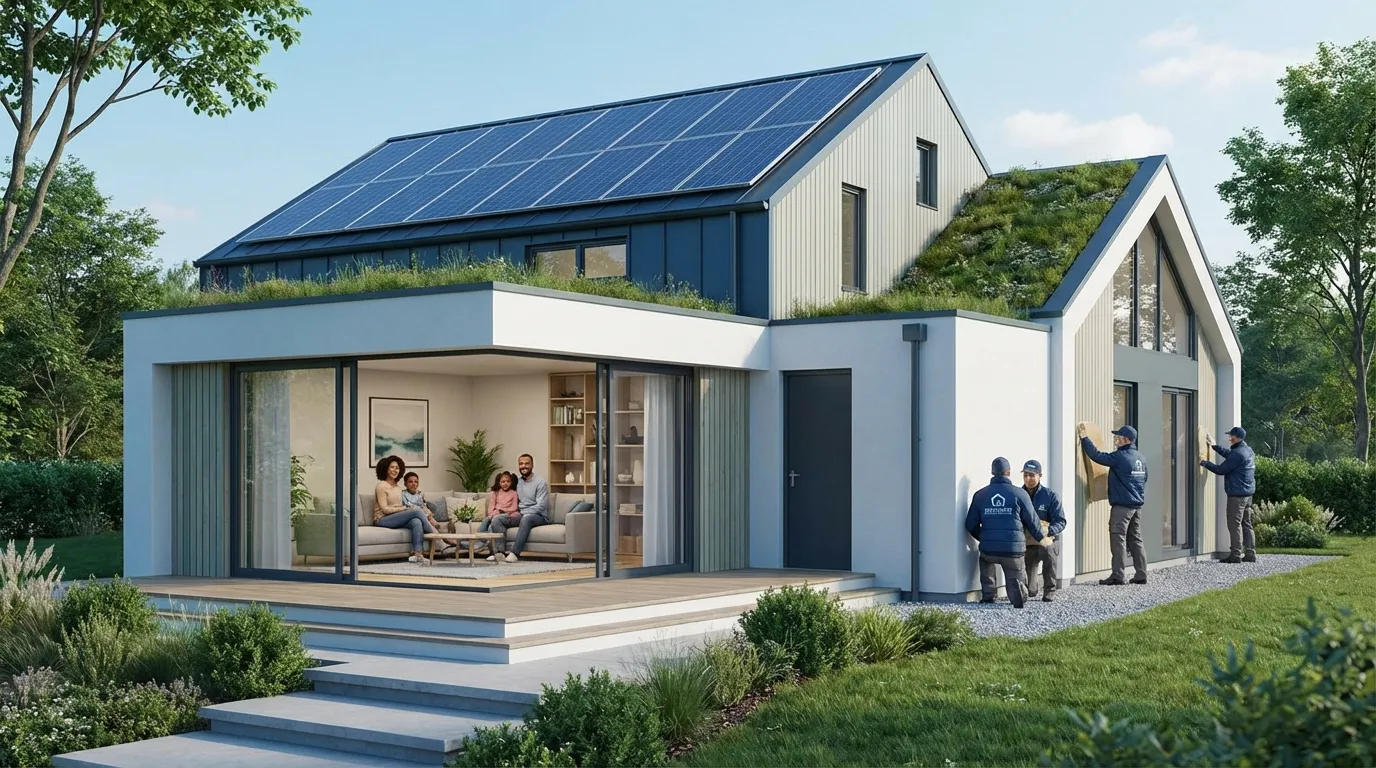
An estimated 25 million U.S. households face a high energy burden, spending more than 6% of their income on utility bills. For families living in poorly insulated homes, that percentage skyrockets, forcing a choice between heating their home and paying for other necessities. So these programs address a critical financial strain that affects millions of Americans right now, with winter energy costs projected to increase by 5.4% this year.
What Low-Income Insulation Programs Are Available and Am I Eligible Based on My Climate Zone?
The U.S. Department of Energy's Weatherization Assistance Program (WAP) is a primary federal initiative providing free home energy upgrades, including insulation, to eligible low-income households. So eligibility is typically set at or below 200% of the federal poverty level, with priority given to homes with elderly members, individuals with disabilities, or children. But your specific climate zone, from 1 (hot) to 8 (subarctic), dictates the recommended insulation levels and types of upgrades funded. For example, homes in cold Climate Zone 5 (e.g., Chicago) receive funding for higher R-value attic insulation than homes in warm Climate Zone 2 (e.g., Houston). And local community action agencies manage the application and qualification process, tailoring the assistance to regional needs and building codes. You can learn more about general insulation rebates available in your area.
"The U.S. Department of Energy's (DOE) Weatherization Assistance Program (WAP) reduces energy costs for low-income households by increasing the energy efficiency of their homes, while ensuring their health and safety." — U.S. Department of Energy
The core tension is the gap between knowing your home is inefficient and having the $2,000 to $6,000 needed to fix it. So this financial barrier keeps families in a cycle of high energy bills and uncomfortable living conditions. And the Weatherization Assistance Program (WAP) directly addresses this by providing an average of $8,000 in free energy efficiency upgrades per eligible home, permanently reducing a household's annual energy costs by an average of $372.
How Much Do Low-Income Insulation Programs Cover, Including Installation, and What Specific Insulation Types, Brands, and Efficiency Ratings Qualify?
Low-income insulation programs like WAP cover 100% of the cost for materials and professional installation up to an average of $8,000 per home as of 2026. So this funding is a grant, not a loan, and never needs to be repaid by the homeowner. The program qualifies several insulation types based on a home's specific needs identified during an energy audit. Common materials include fiberglass batts (R-13 to R-38), blown-in cellulose or fiberglass for attics (achieving R-49 to R-60), and spray foam for air sealing. And while the programs don't mandate specific brands, materials from manufacturers like Owens Corning, Johns Manville, and CertainTeed are frequently used, provided they meet the required Department of Energy R-value specifications for the home's climate zone. But the focus is always on performance and safety standards, not brand names.
What is the Typical ROI Payback Period, Lifespan, and Maintenance for Insulation Upgrades Through These Programs?
The direct return on investment (ROI) for program-funded insulation is immediate, as the homeowner pays $0 for an upgrade valued at thousands. So the true payback comes from sustained energy savings, which average $372 annually per household. And the lifespan of the installed materials is exceptionally long. Fiberglass and spray foam insulation last 80-100 years or more, while cellulose insulation has a lifespan of 20-30 years before it may settle. But maintenance requirements are minimal. Homeowners should conduct a visual inspection of the attic or crawlspace annually to check for any signs of moisture, pest damage, or settling, which can compromise the insulation's R-value. So correcting any water leaks promptly is the most critical maintenance task to ensure the insulation performs for its full lifespan without issue.
How Do Low-Income Insulation Programs Compare to Other Energy-Saving Alternatives or Self-Funded Options?
Low-income insulation programs offer a distinct advantage: no out-of-pocket cost. But a self-funded attic insulation project typically costs between $1,500 and $3,500, creating an immediate financial barrier. So the program eliminates this entirely. When compared to other energy-saving alternatives, insulation often provides a better return. For instance, replacing windows costs between $3,000 and $10,000 and saves less on energy bills than comprehensive air sealing and insulation. While upgrades like high-efficiency HVAC systems offer savings, they also come with a price tag of $5,000 to $12,000. And these programs focus on the building envelope first because it's the most cost-effective way to reduce a home's overall energy demand, complementing other upgrades like heat pump rebates. (See also: attic insulation rebate programs.) (See also: insulation rebates for veterans.) (See also: insulation rebates 2026.) (See also: geothermal tax credit.)
| Feature | Weatherization Assistance Program (WAP) | LIHEAP | Self-Funded Insulation |
|---|---|---|---|
| Primary Goal | Permanent energy efficiency upgrades | Short-term utility bill payment assistance | Homeowner-led efficiency project |
| Coverage | Avg. $8,000 for insulation, air sealing, etc. | Varies by state; direct payment to utility | 100% of cost ($1,500-$3,500 avg.) |
| Eligibility | Income-based (≤200% of poverty level) | Income-based (varies, often ≤150% of poverty level) | None |
| Application | Via local community action agency | Via state social services agency | N/A |
What's the Step-by-Step Application Process and Are There Deadlines for Low-Income Insulation Assistance?
The application process for low-income insulation assistance is managed at the state and local levels, not directly by the federal government. So the first step is to contact your local WAP provider, which is often a community action agency. Second, you will complete an application and provide proof of income for all household members, recent utility bills, and proof of homeownership or a landlord agreement form. Third, if you are deemed eligible, the agency schedules a free, comprehensive home energy audit to identify the most critical upgrades. Finally, the agency hires qualified contractors to perform the work at no cost to you. And while most programs accept applications year-round, funding is allocated annually and can be exhausted. It is best to apply early in the fiscal year. The federal home energy tax credits (Sections 25C and 25D) ended for projects completed after December 31, 2025 (IRS FS-2025-05).
"DSIRE is the most comprehensive source of information on incentives and policies that support renewables and energy efficiency in the United States." — DSIRE
Frequently Asked Questions
What are the income and residency requirements for low-income insulation programs?
Eligibility is primarily based on household income, typically at or below 200% of the federal poverty guidelines. So you must also be a resident of the state where you are applying. And both homeowners and renters (with landlord permission) can qualify for assistance.
How much financial assistance can I expect to receive for insulation through these programs?
The U.S. Department of Energy reports that the Weatherization Assistance Program (WAP) provides an average of $8,000 worth of energy efficiency services per home. So this covers 100% of the cost for the audit, materials, and professional installation.
What is the step-by-step application process for low-income insulation grants?
The process involves four main steps: 1) Find and contact your local WAP agency. 2) Submit an application with income and residency documentation. 3) If eligible, undergo a free home energy audit. 4) The agency will then schedule and manage the approved insulation and weatherization work.
Are there specific application deadlines for low-income insulation assistance?
Most state programs accept applications on a rolling basis throughout the year. But funding is granted annually and is finite. So applying earlier in the year increases the likelihood of receiving assistance before funds are depleted for that cycle.
Can I combine low-income insulation programs with other home energy efficiency rebates?
Generally, you cannot "double-dip" by claiming a separate rebate or tax credit on work that was paid for entirely by a grant program like WAP. But you can use other rebates for separate energy efficiency projects that you fund yourself.
Ready to see what other savings you qualify for? Calculate Your Rebates
Ready to Save on Your Home Improvement?
Use our free rebate calculator to find every federal, state, and utility incentive you qualify for.
Updated: April 14, 2026 — fact-checked by DuloCore Research. About our editorial process.
Check your California insulation rebate eligibility — see the programs you qualify for and the dollar amounts on our California insulation rebate finder.