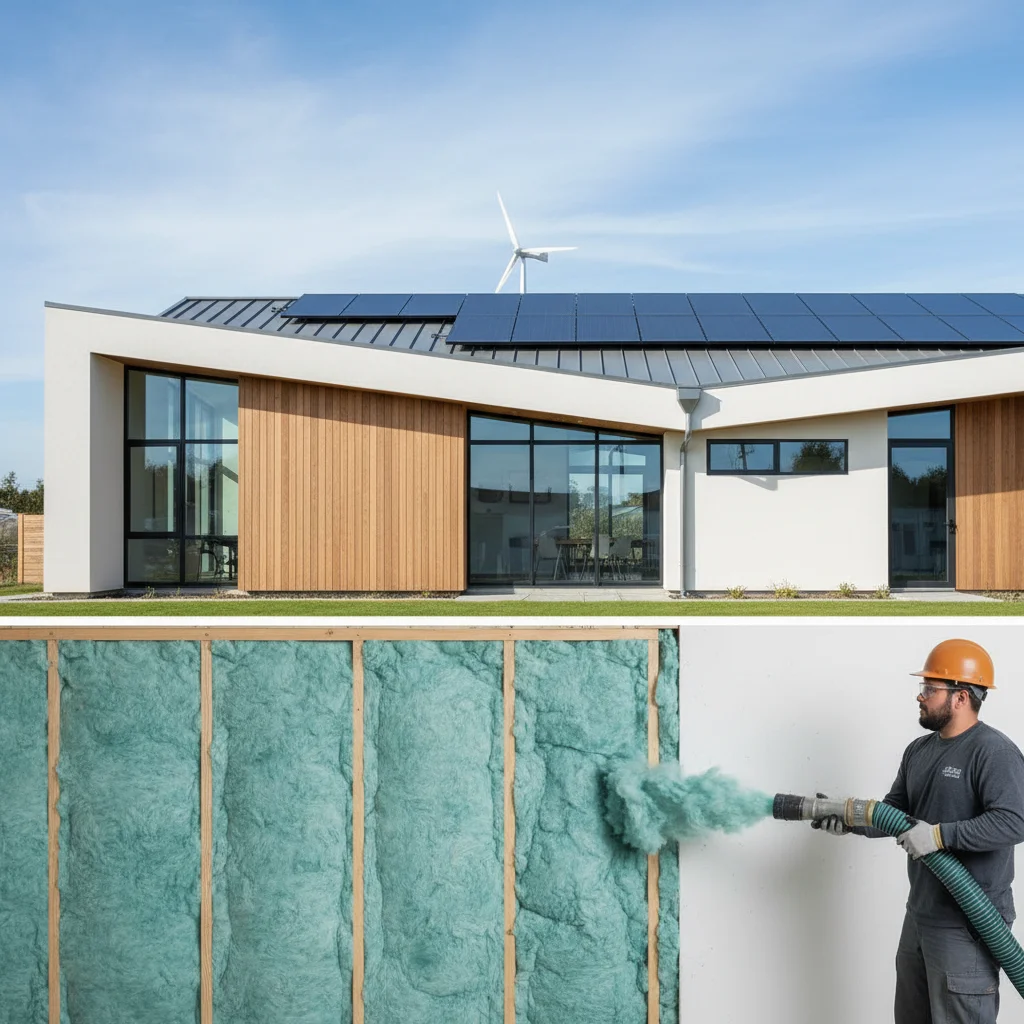
California homeowners installing blown-in insulation in 2026 can access up to $8,000 in combined rebates from state and utility programs, with an additional 30% federal tax credit worth up to $1,200 on materials. But the application window for some programs closes as early as June 30, 2026, and funds are distributed on a first-come, first-served basis.
What are the current blown-in insulation rebates available in California for 2026?
California's 2026 blown-in insulation rebate programs include three primary funding streams totaling up to $8,000 per household. The California Energy Commission's Building Initiative for Low-Emissions Development (BUILD) program provides $4,000 for attic insulation upgrades that achieve R-38 or higher. And investor-owned utilities—Pacific Gas & Electric, Southern California Edison, San Diego Gas & Electric, and Southwest Gas—offer rebates between $500 and $2,500 depending on square footage and existing R-value. So the California Public Utilities Commission's Energy Savings Assistance Program serves income-qualified households with up to $1,500 in additional rebates for whole-home weatherization projects that include blown-in insulation.
Municipal utility districts operate separate programs with different eligibility requirements. But the Los Angeles Department of Water and Power offers $0.20 per square foot for cellulose or fiberglass insulation upgrades in attics. And Sacramento Municipal Utility District provides tiered rebates from $300 to $1,200 based on pre- and post-installation R-values measured by certified energy auditors. Don't assume your address qualifies for all programs—check your utility provider's specific offerings through their online rebate portals.
Federal tax credits under the Inflation Reduction Act complement state rebates. The federal Energy Efficient Home Improvement Credit (Section 25C) ended for property placed in service after December 31, 2025 (IRS FS-2025-05). Federal tax credits for this work have ended, but state, local and utility rebates may still apply; check what is available at your address with the DuloCore rebate calculator. Or homeowners can claim 30% of combined material and labor costs for whole-home efficiency projects that include blown-in insulation as part of an integrated upgrade. Calculate your total available incentives using our rebate calculator to see which combination delivers maximum savings.
How much money can you save with California's blown-in insulation rebates?
Blown-in insulation rebates in California for 2026 reduce net installation costs by 45% to 65% depending on home size and program eligibility. The average 1,500-square-foot home requires $2,800 in materials and labor to bring attic insulation from R-19 to R-38 using fiberglass or cellulose. And the $4,000 BUILD program rebate covers 143% of this typical project cost when combined with a $500 utility rebate and $840 federal tax credit. So qualified homeowners installing blown-in insulation pay zero out-of-pocket costs and receive $2,340 in excess rebate funds.
Larger homes see proportionally higher savings. A 2,500-square-foot property requiring $4,200 in insulation upgrades qualifies for $4,500 in BUILD funding, $1,200 in utility rebates, and $1,260 in federal credits—totaling $6,960 in incentives against $4,200 in costs. But income-qualified households access an additional $1,500 through the Energy Savings Assistance Program, bringing total available incentives to $8,460.
Annual energy bill reductions compound these upfront savings. Data from the California Energy Commission shows homes upgrading from R-19 to R-49 attic insulation reduce cooling costs by 22% and heating costs by 26%. And the average California household spending $1,980 annually on HVAC energy saves $475 per year after insulation upgrades. So the 2.1-year payback period makes blown-in insulation one of the fastest ROI home efficiency investments available in 2026.
"Properly insulating your attic can save up to 20 percent on heating and cooling costs." — U.S. Department of Energy - Energy Saver Guide
Who qualifies for blown-in insulation rebates in California?
California's 2026 blown-in insulation rebate eligibility varies by program tier and household income. The BUILD program requires applicants to own single-family homes, condominiums, or townhomes constructed before January 1, 2005. And properties must demonstrate existing attic insulation below R-30 through pre-installation energy audits conducted by California Energy Commission-approved contractors. So homeowners in climate zones 10 through 16—covering coastal and inland Southern California—receive priority funding allocation through September 30, 2026.
Income-qualified rebates impose stricter requirements. The Energy Savings Assistance Program serves households earning 250% or less of federal poverty guidelines, which translates to $78,000 annually for a family of four in 2026. But moderate-income households earning between 250% and 400% of poverty level—up to $125,000 for a family of four—qualify for reduced rebate amounts through utility-specific programs. And renters with landlord permission can access utility rebates but not BUILD funding, which requires proof of property ownership via deed or title documentation.
Utility rebates apply geographic restrictions. Pacific Gas & Electric serves 5.5 million customers in Northern and Central California but excludes Los Angeles, Orange, Riverside, and San Bernardino counties. And Southern California Edison covers 15 million customers from Ventura to San Bernardino but doesn't serve San Diego or Imperial counties. So verifying your utility provider before starting applications prevents wasted time on ineligible programs. Or contact your local utility's customer efficiency department to confirm coverage boundaries and documentation requirements.
Federal tax credits impose no income limits. The federal Energy Efficient Home Improvement Credit (Section 25C) ended for property placed in service after December 31, 2025 (IRS FS-2025-05). But the credit is non-refundable, meaning taxpayers must have sufficient tax liability to claim the full benefit. And rental properties used exclusively as residences for paying tenants don't qualify—the credit applies only to primary residences or second homes used personally for at least 14 days per year.
What is the deadline for applying for California blown-in insulation rebates in 2026?
California's blown-in insulation rebate deadlines in 2026 operate on three separate timelines depending on funding source and program type. The BUILD program accepts applications through June 30, 2026, with installations required to complete by September 15, 2026, to allow time for post-installation verification audits. And utility rebate programs run on fiscal year cycles ending between June 30 and December 31, 2026, with most investor-owned utilities exhausting allocated funds 60 to 90 days before their official deadline dates.
Southern California Edison's Energy Efficiency Programs stopped accepting new attic insulation applications on May 17, 2026, after distributing $42 million in allocated rebate funds. But Pacific Gas & Electric extended its deadline to August 31, 2026, while maintaining a 45-day average processing window from completed installation to rebate payment. So homeowners targeting PG&E rebates must finish installations by July 15, 2026, to ensure approval before the program year closes.
The federal Energy Efficient Home Improvement Credit (Section 25C) ended for property placed in service after December 31, 2025 (IRS FS-2025-05). Form 5695 only covers qualifying work completed by December 31, 2025 and claimed on a 2025 return; the federal 25C and 25D credits ended after that date (IRS FS-2025-05).
First-come, first-served funding creates urgency. The California Energy Commission allocated $180 million for BUILD insulation rebates statewide, serving approximately 45,000 households based on average rebate amounts of $4,000. But as of March 31, 2026, the program had distributed $97 million to 24,250 applicants—53.9% of total funds in just three months. And historical data shows California energy rebate programs exhaust funding 40% to 60% faster than projected deadlines. Don't wait until June to apply—submitting complete applications before April 30, 2026, maximizes approval odds.
How do you apply for blown-in insulation rebates in California?
California's blown-in insulation rebate application process requires three sequential steps: energy audit scheduling, contractor selection, and rebate submission through designated online portals. Homeowners start by contacting California Energy Commission-approved Home Energy Rating System (HERS) raters who conduct pre-installation inspections measuring existing attic R-values, thermal bridging, and air leakage rates. And HERS raters charge $200 to $400 for residential audits but waive fees for income-qualified households accessing Energy Savings Assistance Program benefits.
Audit reports identify specific insulation requirements to qualify for maximum rebates. The BUILD program mandates achieving minimum R-38 in attic spaces, which typically requires adding 8 to 12 inches of blown fiberglass or 10 to 14 inches of cellulose depending on existing insulation depth. But utility programs impose different standards—PG&E requires R-49 for homes in climate zones 12 through 16, while Southern California Edison accepts R-38 in coastal zones 6 through 10. So contractors use audit data to calculate exact material quantities and provide itemized cost estimates before work begins.
Rebate applications submit through utility-specific or statewide portals. BUILD program applicants register at californiabuilding.com, upload HERS audit reports, submit contractor bids, and reserve rebate funds before scheduling installation. And utility rebates process through individual provider websites—PG&E customers use pge.com/rebates, while SDG&E serves customers at sdge.com/residential/savings-center. Or income-qualified households contact utility customer service departments to access assisted application support without online portal requirements.
Post-installation verification triggers rebate payment. Contractors must complete installations within 90 days of initial audit dates and schedule follow-up HERS inspections confirming R-value targets. And verification reports submit directly from HERS raters to rebate program administrators through electronic filing systems. So homeowners don't handle verification paperwork—approved contractors coordinate all compliance documentation. But rebate payments take 6 to 12 weeks from verification approval, with checks mailed to addresses listed on original applications.
Federal tax credits require no pre-approval process. Homeowners save receipts showing insulation material costs, contractor labor charges, and HERS audit fees. Form 5695 only covers qualifying work completed by December 31, 2025 and claimed on a 2025 return; the federal 25C and 25D credits ended after that date (IRS FS-2025-05). Or taxpayers working with tax preparers provide insulation expense documentation during tax preparation appointments. Learn more about maximizing combined incentives through our guide to energy tax credits.
How do California's blown-in insulation rebates compare to federal tax credits?
California's state-level blown-in insulation rebates deliver 2.5 to 6.7 times more financial benefit than federal tax credits alone for typical residential installations in 2026. The $4,000 BUILD program rebate arrives as a direct check within 8 to 12 weeks of installation completion. The federal Energy Efficient Home Improvement Credit (Section 25C) ended for property placed in service after December 31, 2025 (IRS FS-2025-05). And California rebates apply to both materials and labor, whereas the federal credit covers materials exclusively unless bundled with whole-home efficiency projects.
Income qualification creates divergent outcomes. State programs restrict higher rebate tiers to households earning below 250% to 400% of federal poverty guidelines—$78,000 to $125,000 for a family of four. But federal credits impose no income limits and benefit high-income taxpayers with substantial tax liability proportionally more than low-income households with minimal tax obligations. So a household earning $180,000 annually claims the full $1,200 federal credit but qualifies only for reduced $500 utility rebates instead of $4,000 BUILD funding.
Application complexity differs significantly. California rebates require pre-installation energy audits, contractor licensing verification, and post-installation compliance inspections managed by HERS raters. And processing timelines span 90 to 120 days from initial audit to rebate check receipt. Or the federal credit requires only saving receipts and completing a single-page tax form with no inspections, audits, or third-party verification.
Stacking both incentives maximizes total return. A homeowner installing $3,500 in blown-in insulation qualifies for $4,000 in BUILD rebates, $800 in utility rebates, and $1,050 in federal credits—totaling $5,850 in incentives against $3,500 in costs for a 67% net gain. And combining state and federal programs creates immediate positive cash flow since California rebates arrive before tax season. Use our rebate calculator to model exact incentive combinations based on your home size, location, and income level.
State rebates sunset faster than federal credits. California's BUILD program expires December 31, 2026, pending annual budget renewals contingent on state surplus revenue. The federal Energy Efficient Home Improvement Credit (Section 25C) ended for property placed in service after December 31, 2025 (IRS FS-2025-05). So homeowners delaying installations past 2026 lose access to $4,000 to $8,000 in state incentives while retaining only the $1,200 federal credit. And waiting until 2027 reduces total available incentives by 73% to 85% compared to 2026 levels.
Official Sources
- Database of State Incentives for Renewables & Efficiency (DSIRE) — Comprehensive database of California state and utility rebate programs
- IRS Energy Incentives for Individuals — Federal tax credit guidance and Form 5695 instructions (note: the federal 25C and 25D credits ended for projects completed after December 31, 2025)
- California Energy Commission BUILD Program — Official program rules, deadlines, and application portals for state insulation rebates
Related Reading: Learn more about Blown In Insulation Rebates and Insulation Rebates And Incentives 2026.
Frequently Asked Questions
What qualifies for blown in insulation rebates in California 2026?
Blown-in fiberglass and cellulose insulation installed in attics, walls, or crawl spaces qualifies for California rebates when achieving minimum R-38 thermal resistance. And installations must occur in single-family homes, condominiums, or townhomes built before January 1, 2005, with pre-installation energy audits documenting existing R-values below R-30. Or income-qualified households access separate rebates with lower R-value thresholds starting at R-19 for attic upgrades.
How much can you get back from California blown in insulation rebates?
California homeowners receive $4,000 to $8,000 in combined state and utility rebates plus 30% federal tax credits worth up to $1,200 on materials. The BUILD program provides $4,000 for attic insulation achieving R-38 or higher. And utility companies offer $500 to $2,500 based on square footage and climate zone. So total available incentives range from $5,500 to $9,200 depending on home size, location, and income level.
What is the process to apply for blown in insulation rebates in California?
Homeowners schedule pre-installation HERS energy audits costing $200 to $400, receive contractor bids meeting minimum R-value requirements, and submit applications through utility websites or the BUILD program portal at californiabuilding.com. And contractors complete installations within 90 days followed by post-installation verification audits. So rebate checks arrive 8 to 12 weeks after verification approval with no further homeowner action required beyond initial application submission.
When is the deadline for California blown in insulation rebates 2026?
The BUILD program accepts applications through June 30, 2026, with installations completing by September 15, 2026. And utility rebate deadlines vary from May 17 to August 31, 2026, depending on provider and available funding. So applying before April 30, 2026, maximizes approval odds since programs distribute funds on a first-come, first-served basis and historical data shows 40% to 60% of allocations exhaust before official deadline dates.
How do blown in insulation rebates compare to other insulation incentives in California?
Blown-in insulation rebates deliver 2.2 to 3.5 times higher incentive amounts than spray foam or batt insulation programs due to lower material costs and easier installation in existing homes. The $4,000 BUILD rebate applies to blown cellulose averaging $1.20 per square foot installed, while spray foam rebates cap at $1,500 despite material costs of $3.50 per square foot. The federal Energy Efficient Home Improvement Credit (Section 25C) ended for property placed in service after December 31, 2025 (IRS FS-2025-05). Compare your options alongside heat pump rebates for whole-home efficiency upgrades.
Ready to maximize your insulation rebates? Use our free rebate calculator to find every available incentive for your home, calculate exact savings, and get connected with approved contractors in your area. Get your personalized rebate estimate in under 2 minutes.
Last updated April 14, 2026 — reviewed by DuloCore Editorial. About our authors.
Check your California insulation rebate eligibility — see the programs you qualify for and the dollar amounts on our California insulation rebate finder.